
Preparing Youth for Agri-preneurship Development

Agriculture has long been the backbone of India’s economy, sustaining millions of livelihoods and delivering 18.4% (https://www.upag.gov.in/dash-reports/gvaagri) of the nation’s Gross Value Added (GVA) in recent years. It remains the largest source of employment, especially in rural areas. Yet, the sector faces persistent and emerging challenges such as climate change, land degradation, fragmented small land holdings, limited technological integration in farming, optimizing water use, harnessing monsoon rains, over-reliance on monsoons, crop and livestock diseases, post-harvest losses, and highly volatile market prices. Addressing these complex issues requires a workforce that is not only skilled and knowledgeable but also innovative and entrepreneurial underscoring the vital role of agricultural education in securing the sector’s future profitability and sustainability. There is the need for technology integration and entrepreneurship in agriculture to address challenges such as population growth and decreasing land holdings. Also, there is a need to prepare students for future scenarios with limited land availability and the importance of diversifying agricultural education to include animal husbandry. The education system should shift focus from producing job seekers to nurturing job creators through entrepreneurship and startup-ecosystem training. A brainstorming session on “Preparing Future-Ready Youths for Entrepreneurship Development in Agriculture” was organized to stimulate policy innovations and also Institutional reforms in academics, paving way in building students for more meaningful lives and work roles and enabling economic independence of learners capable of global competence. This would encourage higher agricultural education (HAE) Institutions to shape new generation youth in agriculture and allied fields and motivate all stakeholders, educationists, policy makers in contributing to fulfilling the aspiration of the Viksit Bharat.
- Published in AGRIPRENEURSHIP, POLICY, YOUTH
The Rural Youth Action Plan

The FAO Conference in 2017 endorsed the call to develop a rural youth action plan that addresses the importance of making rural areas more attractive for young women and men. Under the aegis of the Committee on Agriculture (COAG), the Rural Youth Action Plan (RYAP) was developed and presented at COAG’s Twenty- seventh Session in 2020. The Plan presents a five-year Action Plan (2021–2025), aligned to five thematic areas (or pillars) with the goal of contributing to the realization of the Sustainable Development Goals (SDGs) by equally empowering rural young women and men. The RYAP is embedded in FAO’s Medium Term Plan (2022–2025), and serves as a key performance indicator (KPI) for the cross cutting theme on youth.
- Published in YOUTH
Creating resilient livelihoods for youth in small-scale food production

A collection of projects to support young people in achieving sustainable and resilient livelihoods and food security
This publication showcases initiatives that have been successfully implemented to help youth build resilience in the agrifood system, despite the severe consequences of climate change and formidable social and economic challenges. It aims to inspire potential policies and programmes by portraying key needs, challenges and initiatives, as well as lessons learned and opportunities for helping to improve the resilience of livelihoods for youth in small-scale food production. The aim is to draw recommendations from these initiatives, building on the Koronivia Joint work on Agriculture (KJWA) – a landmark decision under the United Nations Framework Convention on Climate Change (UNFCCC) that recognizes the unique potential of agriculture in tackling climate change.
- Published in YOUTH
Investment guidelines for youth in agrifood systems in Africa
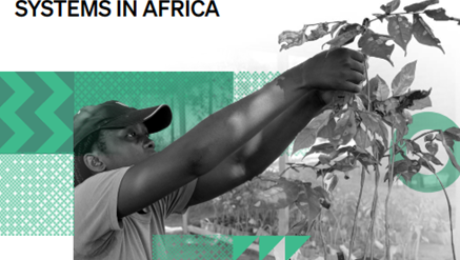
The Investment guidelines for youth in agrifood systems in Africa, developed jointly by FAO and the African Union Commission (AUC) through a multi-stakeholder and participatory process, highlight the importance of youth as change agents and key stakeholders contributing to sustainable agrifood systems. The guidelines aim to accelerate investments in and by youth in agrifood systems by providing practical guidance – including tools and examples – to design, develop, implement, monitor and evaluate youth-focused and youth-sensitive investment programmes and to engage youth fully as partners in the entire process.
The guidelines were prepared with the support of the AUC and FAO Technical Cooperation Programme (TCP) “Partnership to Support AU’s Strategies on Social Protection, School Feeding and Rural Youth Employment” of the FAO Regional Office for Africa (RAF) and from the Investment Centre (CFI). This publication is part of the Investment Toolkits series under the FAO Investment Centre’s Knowledge for Investment (K4I) programme.
- Published in YOUTH
Youth-sensitive value chain analysis and development
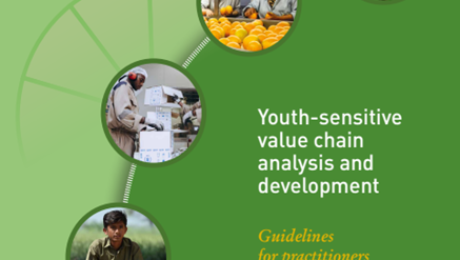
This publication is intended to assist field practitioners, youth organizations and other stakeholders to identify binding constraints and viable opportunities to youth engagement in value chains that can translate into greater youth inclusion. Considering youth heterogeneity and inequalities, the youth sensitive framework for value chain analysis gives guidance to assess factors that push and pull youth into employment and entrepreneurship in value chains. The youth-sensitive value chain (YSVC) analysis is a starting point for youth-inclusive agricultural value chain development, since it identifies entry points and key actions expected to bring about the desired increase in employment and business opportunities for youth within a more attractive agriculture sector.
- Published in YOUTH
Let the Youth Lead in Nutrition
The theme of the INO 2021 was “Let the Youth Lead in Nutrition” focusing the youth in the forefront to address malnutrition and aligned with the global mandates set in UN Food Systems Summit (UN FSS) and Nutrition for Growth (N4G) Summit 2021. A variety of engaging and interesting activities and discussion sessions were organised at INO 2021.
A Dhaka Declaration has been drafted based on the discussion and recommendations as an outcome of the Olympiad.
Career challenges for young independent researchers in India
The scientific enterprise in India has grown dramatically in the past few decades, with research emerging as a viable and important career option for students of science. The country thus has a large population of young scientists in the early stages of establishing their independent research careers. While this demographic is arguably the most important group that will determine the future of scientific research in India, their status and concerns are poorly understood. The Indian National Young Academy of Sciences conducted a national survey to better understand and present the challenges faced by them. Through a structured questionnaire, we sought the views of researchers below 45 years of age. Here, we summarize the responses from 854 participants across multiple early career stages. We highlight key challenges faced by these scientists in establishing an independent research career, and suggest steps to address them.
- Published in YOUTH
Empowering rural youth through farmers’ organizations

This paper captures and synthesizes key approaches, strategies and lessons for empowering rural youth in the Asia-Pacific region from farmers’ organizations (FOs) and regional and international development agencies.
The paper dives deep into the initiatives and strategies employed in the region and beyond that empower rural communities, especially rural youth. It presents a synthesis of what has worked well in the field, strategies and approaches employed by FOs and development agencies, and methods for leveraging the comparative advantage of FOs in offering sustainable rural livelihoods for youth. It also highlights the efforts by FOs to address the challenges rural youth face in terms of productivity and socio-economic factors.
- Published in YOUTH
Youth and the Rural Economy in Africa
This book unites recent findings from quantitative and qualitative research from across Africa to illuminate how young men and women engage with the rural economy and imagine their futures, and how development policies and interventions can find traction with these realities. Through framing, overview and evidence-based chapters, this book provides a critical perspective on current discourse, research and development interventions around youth and rural development. Chapters are organized around commonly-made foundational claims: that large numbers of young people are leaving rural areas, have no interest in agriculture, cannot access land, can be the engine of rural transformation, are stuck in permanent waithood, and that the rural economy can provide a wealth of opportunity. This book: Engages with and challenges current research, policy and development debates.Considers social difference as a way of examining the category of youth.Is written by authors from a variety of disciplinary backgrounds, providing varied perspectives.This book draws from existing literature and new analysis of several multi-country and multi-disciplinary studies, focusing on gender and other aspects of social difference. It is suitable for researchers, policy makers and advocates, as well as postgraduate students in international development and agricultural economics.
- Published in YOUTH
Rural Youth Welfare along the Rural-urban Gradient: An Empirical Analysis across the Developing World
We use survey data on 170,000 households from Asia, Latin America and Africa, global geo-spatial data, and an economic geography framework to highlight five findings about rural youth in developing countries. First, the youth share in population is falling rapidly, and youth numbers are stable or falling slowly everywhere, except in Africa. In Africa, youth share is rising very slowly, but numbers are set to double in 40 years. Second, large majorities of rural youth live in spaces that are not inherently limiting: two-thirds live in zones with highest agricultural potential, and one-quarter combine this with highest commercialisation potential. The 4% that do live in inherently challenging spaces are concentrated in pockets of persistent poverty in middle-income countries. Third, rural spaces’ commercial potential has large impacts on welfare outcomes, but their agricultural potential has no detectable impact. Fourth, households with young members face income- and poverty ‘penalties’ in all regions and spaces within them, compared to households without young members. The poverty penalty declines sharply over space as commercial potential rises, but the income penalty shows ambiguous patterns. Fifth, households with young members earn lower relative returns to education, with varying patterns over space.
- Published in YOUTH
- 1
- 2