
New book on value chain development seeks to translate ideas into practice – for impact at scale
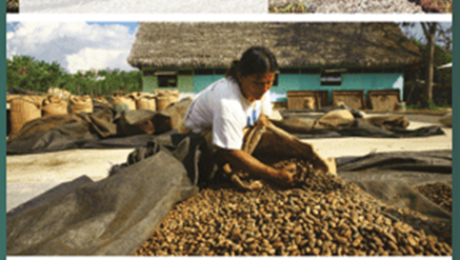
This book looks to fill the gap in the discussions on value chains which have been ongoing for nearly two decades: the need to shed light on how value chain concepts and ideas are translated into development programming and interventions for achieving greater impact at scale. As CGIAR researchers, we felt a commitment for examining value chains from the perspectives of governments, donors, NGOs, and businesses interested in smallholder engagement in value chains.
Dietmar, Jon, and I have been engaged with Practical Action Publishing over the years and highly appreciate their dedication to better development practices, as well as the capacity to get development-oriented books into the hands of practitioners and researchers quickly. We hope that this book encourages reflection on current value chain development (VCD) approaches and on possible innovations in design, implementation, and assessment of VCD outcomes and impacts.
- Published in VALUE CHAIN / MARKETS
Corporate-level Evaluation on IFAD’s Engagement in Pro-Poor Value Chain Development
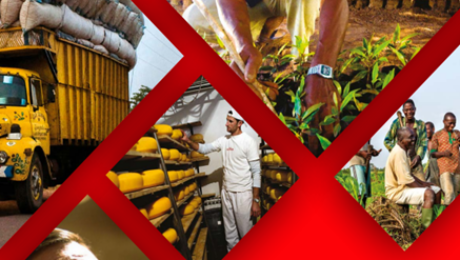
The evaluation found that project design has improved over time, reflecting a better understanding of the value chain concept. However, analytical gaps remain. Few designs have been supported by market intelligence to prioritize the choice of commodities and steps within the value chain in order to achieve pro-poor outcomes.
The evaluation suggests that it is possible to reach out to poor and very poor producers through value chain approaches, but this requires specific attention. The most convincing pro-poor outcomes occurred in projects where IFAD had experience and where multi-stakeholder platforms were created to enable dialogue between value chain actors.
The evaluation recommends that a corporate strategy be prepared for IFAD’s support to pro-poor value chain development that clarifies the objectives and principles of engagement as well as the resources required. It suggests a “programmatic” approach to value chain development, recognizing the need for long-term engagement. Finally, the evaluation emphasizes the importance of promoting an inclusive value chain governance and regulatory environment.
- Published in VALUE CHAIN / MARKETS
Evidence-based strategies to accelerate innovation scaling in agricultural value chains
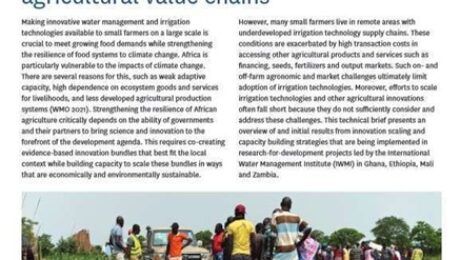
Making innovative water management and irrigation technologies available to small farmers on a large scale is crucial to meet growing food demands while strengthening the resilience of food systems to climate change. Africa is particularly vulnerable to the impacts of climate change. There are several reasons for this, such as weak adaptive capacity, high dependence on ecosystem goods and services for livelihoods, and less developed agricultural production systems (WMO 2021). Strengthening the resilience of African agriculture critically depends on the ability of governments and their partners to bring science and innovation to the forefront of the development agenda. This requires co-creating evidence-based innovation bundles that best fit the local context while building capacity to scale these bundles in ways that are economically and environmentally sustainable.
- Published in NATURAL RESOURCE MANAGEMENT, VALUE CHAIN / MARKETS
Climate resilience and disaster risk analysis for gender-sensitive value chains
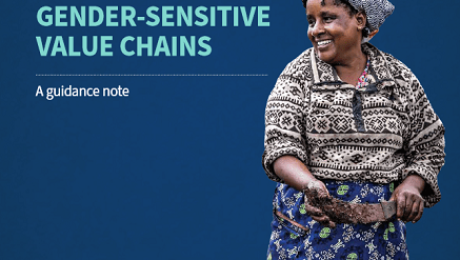
The purpose of this publication is to facilitate gender analysis in value chain operations, considering climate change effects, in order to enhance adaptive capacities of value chain actors. It aims to facilitate the analysis of the factors that determine gender-differentiated vulnerability to climate change and risks. It is intended for use by practitioners and service providers, including governments, civil society and academia, to guide interventions within the agrifood sector.
- Published in GENDER, VALUE CHAIN / MARKETS
Agricultural trade in the Global – An overview of trends in performance, vulnerabilities, and policy frameworks
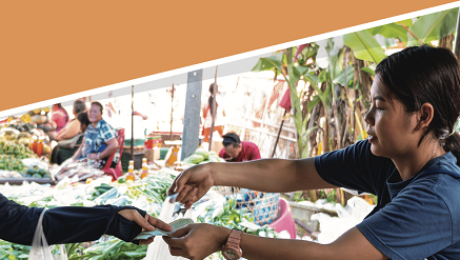
South-South Cooperation (SSC) is increasingly recognized as an effective instrument for catalyzing economic development by fostering the exchange of innovation and good practices, and expanding market opportunities across countries with a similar level of development and shared development objectives, such as those reflected in the Sustainable Development Goals (SDGs). Key to this economic cooperation are trade and investment relationships among South countries. The importance of South countries in global agrifood markets and trade has been increasing over the last two decades, with growth in their participation, as both exporters and importers, having outpaced that of North countries. Agricultural productivity growth has fueled expansion in the production of some products, while population growth and urbanization, rapid economic growth and increasing per capita incomes have contributed to growing demand for diverse food products.
- Published in GUIDE/TOOLS/MANUALS, VALUE CHAIN / MARKETS
The GSMA AgriTech Toolkit for the Digitisation of Agricultural Value Chains
The Toolkit for the Digitisation of Agricultural Value Chains is a collection of resources that illustrate how digital technologies can address pain points for farmers and value chain actors, such as agribusinesses and cooperatives, in the agricultural last mile. These resources support the use of digital technologies for digital procurement, by enabling the transition from paper to digital for a range of systems and processes in the last mile. The toolkit explains how digitising the last mile offers a pathway to financial inclusion for farmers.
The toolkit has been designed to be read either as a complete document from start to finish, or as individual chapters if one is working through a particular challenge. Although each chapter may be more relevant to specific audiences, readers would benefit from reading the report in its entirety.
- Published in GUIDE/TOOLS/MANUALS, ICTs, VALUE CHAIN / MARKETS
Managing risks to build climate-smart and resilient agrifood value chains
This work provides a preliminary analysis of the key climate risks affecting agrifood value chains and opportunities for climate services that reach stakeholders involved in all stages of the value chain, from agrifood production to harvest, storage and refrigeration, processing and packaging, transportation, markets, trade and consumption. Climate services provide opportunities to effectively and comprehensively mainstream climate risk management across the entire agrifood value chain, in addition to increasing sustainability and efficiency in the face of changing climate conditions.
This report provides significant primary information and recommendations on the development of climate services across the agrifood value chain with a view to systematically enhance sustainable and resilient opportunities. It also provides a basis for further research and investment funding in this area. Its findings could spark follow-up research and public and private investment.
- Published in CLIMATE CHANGE, VALUE CHAIN / MARKETS
- 1
- 2