Training Module on Value Chain Extension

Agriculture is critical tothe overall development and transformation of Odisha. With crops covering 35 per cent of the state’s geographical area and more than 60 per cent of its workforce depending on farming for livelihood, the welfare of Odisha’s people cannot be separated from its agriculture. The State Government is keen to increase agricultural production and raise incomes and productivity by leveraging science and technology, improving resource use efficiency, diversifying to high value agriculture and supporting efficient functioning of agricultural markets.
- Published in GUIDE/TOOLS/MANUALS, VALUE CHAIN / MARKETS
Value Chain Toolkit- Harnessing the Power of Markets to Drive Change
The Value chain tool kit provides methods to support male and female farmers in the “Build to Grow to Prosper” phases of the CRS Pathway to Prosperity (Figure 1). Through this work CRS is striving to achieve industry leadership in value chain service delivery and influence that is gender-sensitive. Value chain programming is now synonymous with agricultural development and CRS aims to adopt this approach across our project portfolio.
- Published in GUIDE/TOOLS/MANUALS, VALUE CHAIN / MARKETS
Toolkit for value chain analysis and market development integrating climate resilience and gender responsiveness

This toolkit intends to provide policy makers, planners, project developers, technical advisors and implementers at local, regional or national level, with good practices of climate-resilient and gender-responsive value chain development.1 It aims to act as a repository of relevant tools and methodologies for identifying relevant stakeholders and engaging with them to collect data and analyse it to design interventions. Climate change threatens agricultural value chains and having a genderresponsive value chain approach is useful in analysing the climate risks, as it looks at stages during and beyond production, while using a more systemic approach to risk management.
- Published in GUIDE/TOOLS/MANUALS, VALUE CHAIN / MARKETS
Development of Halal Agricultural Production Systems in Mindanao, Philippines
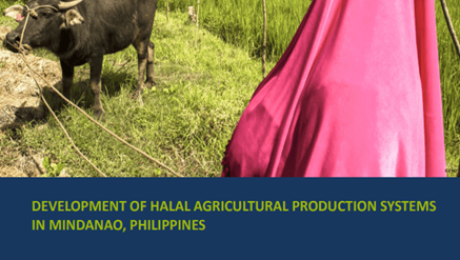
The economy of Mindanao is dominated by the agriculture sector. With one-third of its land area devoted to agriculture, the island has been tagged as the country’s food basket. The majority of the country’s total production of high-value commodities, such as rubber, pineapple, banana and coffee, comes from Mindanao. It also supplies over 40 percent of the country’s food requirements and contributes more than 30 percent to the national food trade. The Department of Agriculture (DA) continues to stimulate productivity and gain wider market niches by harnessing emerging global opportunities for local producers. One such opportunity is the growing global market for Halal foods, known to be worth USD 2.95 billion for meat alone, which other non-Muslim countries such as Thailand, Australia, Brazil and Belgium have already successfully entered. In the 2004-2010 Medium Term Philippine Development Plan, Mindanao was cited as the part of the country most suited to the development of the Halal industry. The plan identified the Autonomous Region in Muslim Mindanao (ARMM), the only region with Muslim identity, as the focal area for Halal development. The Philippine Development Plan (2017-2022) aims to expand the economic opportunities of those currently engaged in producing agriculture, forestry and fisheries products and, at the same time, increase access to economic opportunities for small farmers and fishers in order to achieve inclusive growth. The government will also continue to promote climate change adaptation measures, organic agriculture, urban agriculture and Halal food production.
- Published in VALUE CHAIN / MARKETS
Scaling up inclusive innovations in agrifood chains in Asia and the Pacific
The publication looks at innovations happening at all stages of the food value chain: from production to manufacturing and retailing. This also includes the extended value chain, for example input supply, financial services and agribusiness support services. Yields are improving and primary production is becoming more resilient as a result of digital technologies such as precision agriculture, agricultural drones, and digital farming services and marketplaces; and novel business models such as plant factories, crowdsourcing for farmers. Data and robotics help lift productivity and food safety in the manufacturing process. Online grocery commerce and food delivery services are revolutionizing the way consumers purchase food. Distributed ledger technology, such as blockchain, allows making payments and tracing back food products along the chain in order to increase transparency and trust. New business models are springing up to shorten the chain by removing or shifting stages and to make it fairer and greener, stimulated by enabling technologies and changing customer behaviours. Innovations such as these are discussed and illustrated by almost 200 practical examples from 21 countries in the Asia-Pacific region, across various types of firms and commodities.
- Published in ICTs, VALUE CHAIN / MARKETS
Enhancing the Livelihoods of ‘Hidden Women’ in Global Smallholder Value Chains
Women smallholder farmers often face complex social and economic barriers that prevent them from exercising agency and securing decent livelihoods. This Discussion Summary Paper draws from an online discussion co-hosted by Business Fights Poverty, Unilever and Oxfam, on how companies and their partners can recognize, value, and enhance the contributions of the hidden women on whom our global food supply systems depend. Read it to learn about the key levers of change, case studies and lessons learned, and how to collaborate for transformational change.
- Published in VALUE CHAIN / MARKETS
Patterns of Regional Agri-food Trade in Asia
This paper analyzes the implication of economic structural change and dietary transformation on changing patterns of agri-food trade among 17 Asian development countries. Sub-regional trade in Central, South, and Southeast Asia is the focus of the paper, along with trade with other partners outside the sub-regions. The paper finds that Asian markets for total agri-food exports and exports of nutritious foods are generally more important than the markets outside of Asia and for many of them, the importance of Asian markets increases over time. While net exporters and importers co-exist in each sub-region, with a few exceptions, sub-regional trade is often less important. Many small countries trade only with one or two large neighbors and less so with each other.
The dietary transformation impacts trade in nutritious foods in diverse ways. With income growth, increased domestic demand for nutritious foods seem to lead to more imports of these foods. While many South and Southeast Asian countries have a comparative advantage in exports of some nutritious food products, growth in these exports can be negatively affected by rising domestic demand. Although nutritious food exports continue to play important roles in total agri-food exports, export growth of nutritious food is often slower than overall growth of agri-food exports. The dietary transformation also seems to lead to increases in demand for processed foods which many Asian countries meet through imports, often, accounting for a large component of total agri-food imports. On the other hand, processed foods generally account for a small portion of agri-food exports. However, there are a few countries where processed food export growth is rapid. In these cases, the sub-regional market is expanding, but with few exceptions, it is still less important than trade with countries outside the sub-regions.
- Published in SRI LANKA, VALUE CHAIN / MARKETS
Value chain and policy interventions to accelerate adoption of zero tillage in rice-wheat farming systems across the Indo-Gangetic Plains

This project aimed to accelerate the adoption of Zero-Till seed drills (including the Happy Seeder) to reduce crop residue burning and boost sustainable food energy water security.
Stubble burning, combined with the traditional practice of tillage prior to crop establishment has a detrimental impact on soil health and quality. The development of Conservation Agriculture (CA) practices, characterised by the direct sowing of crop into standing (retained) stubble, is termed Zero-Till and provides a real alternative to traditional farming techniques. The Happy Seeder developed specifically for the intensive rice-wheat cropping system of the Indo-Gangetic Plains (with significant project investment by ACIAR) is presented as the single most viable option for direct sowing of wheat crops into standing rice stubble. As State Governments move towards enforcing a ban of the burning of stubble across India, it is likely that there will be an increased motivation by farmers to adopt the Happy Seeder. However, experience to date has indicated that Happy Seeder adoption has been less than optimal, there is a need to identify how farmer adoption can be accelerated.
- Published in VALUE CHAIN / MARKETS
Value Chain Approaches for Social Change
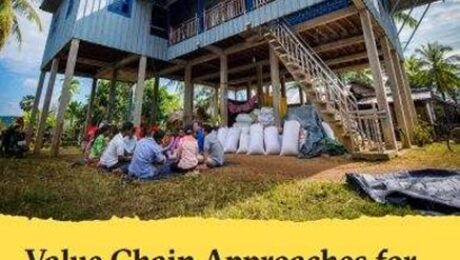
Over the past decades, there has been an extensive transformation in global agri-food value chains, resulting in advances in efficiency, food quality, and food safety. Despite this transformation, many farmers and labourers active as primary producers in these chains have not experienced improvements in their living standards. Based on a study conducted in 2020 by KIT Royal Tropical Institute and Oxfam Novib, this paper explores value chain approaches that reduce social inequality and enable smallholder farmers and labourers to have decent livelihoods.
- Published in VALUE CHAIN / MARKETS
Agriculture supply chain risks and COVID-19: mitigation strategies and implications for the practitioners
The agricultural supply chains (ASCs) are exposed to unprecedented risks following COVID-19. It is necessary to investigate the impact of risks and to create resilient ASC organisations. In this study, we have identified and assessed the ASC risks caused by disruptions. These threats were assessed using Fuzzy Linguistic Quantifier Order Weighted Aggregation (FLQ-OWA). The findings reveal that supply risks, demand risks, financial risks, logistics and infrastructure risks, management and operational, policy and regulation, and biological and environmental risks have a significant impact in ASC depending upon the organisations scope and scale. Various strategies such as adoption of industry 4.0 technologies, supply chain collaboration and shared responsibility is identified for sustainable future. Theoretical and managerial implications are provided based on the outcomes of the study.
- Published in VALUE CHAIN / MARKETS
- 1
- 2