
Farmers’ willingness to pay for a digital extension tool in Sri Lanka
List experiments utilize indirect survey questions to reduce social desirability bias in measures of sensitive behaviours and sentiments. While often used to assess retrospective behaviour or opinions of respondents, list experiments have not been widely applied to assessing “deep” parameters of economic models, such as willingness to pay. Common stated preference methods of estimating willingness to pay may be impacted by social desirability bias, particularly when a product has been provided to survey recipients for free. List experiments can uncover the share of respondents willing to pay a given price while reducing social desirability bias. Repeating the method at a variety of prices recovers a partial demand curve. This study discusses the conditions required to satisfy the list experiment validity assumptions and demonstrates the method in an e-extension platform randomized control trial in Sri Lanka. We show that the “no design effect” assumption for list experiments requires that the budget constraint for a household be non-binding. Under conditions where that assumption is likely to hold, we find direct estimates overstate willingness to pay at low prices. Our findings suggest list experiments may provide a cheap method of more accurately assessing the typically large share of respondents unwilling to pay any non-zero-sum (extensive margin) but are less effective at reducing bias from exaggerated demand (intensive margin).
- Published in NEW PUBLICATIONS, SRI LANKA
Strengthening Agricultural Extension Training in South Asia (India, Sri Lanka and Nepal)

The study undertaken in India, Sri Lanka, and Nepal assessed eight process skills and core competencies-program planning, program implementation, communication and public relations, information and communication technologies (ICTs), program evaluation, personal and professional development, diversity and gender, and technical subject matter expertise. These were assessed on “How important are these competencies?” and “How well does the UG extension curriculum address these process skills and competencies?” on a 1 to 5 scale. The perceptions of agricultural extension professionals on appropriate ways to acquire core competencies and major barriers to effective implementation of extension curriculum were also obtained. A total of 628 respondents completed the online survey. In addition, 12 focus group discussions (FGDs) were conducted in India and Sri Lanka, and the participants included 153 research scholars and 95 extension faculty members / field functionaries. The key FGD questions were related to perceptions of local agricultural extension contexts, critical job skills and core competencies required of extension workers, their coverage in the current UG curriculum, and the barriers to effectively training extension workers.
Development of balanced nutrient management innovations in South Asia: Perspectives from Bangladesh, India, Nepal, and Sri Lanka

Imbalanced application of fertilizers is a major fiscal and environmental problem in South Asia. We review fertilizer policies and extension efforts to promote the balanced application of nutrients in Bangladesh, India, Nepal, and Sri Lanka and draw 4 important lessons. (1) Fertilizer sector reforms need to be fiscally sustainable and politically feasible. Governments in South Asia have abolished fertilizer subsidies on multiple occasions, only to restore them a few years later. (2) The use of phosphate and potash did not decline much even after a sharp increase in their prices in India in 2011–12. Therefore, rationalizing subsidies, while necessary, may not be sufficient to ensure balanced use of fertilizers. Changing farmers’ practice requires combining the right incentives with the right information. (3) Soil test based soil health cards (SHC) hold promise, but there is limited evidence on their utility. India’s SHC program had very little impact on fertilizer use. (4) Direct cash transfer (DCT) of fertilizer subsidies can reduce distortions, but Sri Lanka’s experience shows that implementing it is more challenging than universal subsidies. DCT requires the removal of price controls, integration of land records, farmer identity cards, a cash transfer system with universal coverage, and a competitive fertilizer retail sector.
- Published in BANGLADESH, INDIA, NATURAL RESOURCE MANAGEMENT, NEPAL, RESOURCES, SRI LANKA
Family Farmers’ Cooperatives: Ending Poverty and Hunger in South Asia
Family farming is an integrated farming system, which produces diverse agricultural commodities that significantly contribute to improve food and nutrition security and income of the poor and marginalized group of people in the rural areas. As the reduced level of the economies of scale is a major challenge encountered by family farmers in the South Asia that could be addressed by farmers’ cooperatives approach. Strengthening the farmers’ cooperatives would increase the economies of scale that reduce the cost per unit in production and marketing of the products, and eventually support to improve food security, increase income and reduce poverty. This paper is based on the secondary data and literature review. Ending poverty and hunger targets of the Sustainable Development Goals (SDGs) by 2030 is possible through strengthening the family farmers’ cooperatives in South Asia by adopting some major policy interventions. Such interventions include: i) Effective implementation of the South Asia regional plan of action of UN Decade of Family Farming (UNDFF); ii) Increase the public and private investment in family farming and farmers’ cooperatives; iii) Emphasize the multidimensional approach of program implementation to the poor and marginalized people; iv) Promotion of Future Smart Food System such as nutrition sensitive agriculture and the utilization of neglected and underutilized nutrition rich crops; and v) Effective coordination and cooperation among different agencies at the country level (local, sub-national, and national levels), development partners, South-South counties, and North-South countries to contribute in attaining the targets of Sustainable Development Goals, particularly the No Poverty and Zero Hunger through farmers’ cooperatives in South Asia.
- Published in BANGLADESH, BHUTAN, INDIA, MALDIVES, NEPAL, PAKISTAN, PRODUCER ORGANISATION, SRI LANKA
Investing in rural people in Sri Lanka

IFAD is one of Sri Lanka’s longest-standing development partners. In 1978, the Kirindi Oya Irrigation and Settlement Project was launched as IFAD’s first investment in the country. The goal was to increase food production, provide employment opportunities and raise rural incomes.
Altogether, IFAD has implemented 18 projects in Sri Lanka, benefiting 614,832 households at a total cost of US$590.6 million (with IFAD providing US$337.9 million in financing).
Today, IFAD continues to actively engage in Sri Lanka, with investments aimed at contributing to the achievement of the SDGs, specifically in the areas of food security, sustainable agricultural production and productivity, and improved income opportunities for rural households.
- Published in SRI LANKA
Patterns of Regional Agri-food Trade in Asia
This paper analyzes the implication of economic structural change and dietary transformation on changing patterns of agri-food trade among 17 Asian development countries. Sub-regional trade in Central, South, and Southeast Asia is the focus of the paper, along with trade with other partners outside the sub-regions. The paper finds that Asian markets for total agri-food exports and exports of nutritious foods are generally more important than the markets outside of Asia and for many of them, the importance of Asian markets increases over time. While net exporters and importers co-exist in each sub-region, with a few exceptions, sub-regional trade is often less important. Many small countries trade only with one or two large neighbors and less so with each other.
The dietary transformation impacts trade in nutritious foods in diverse ways. With income growth, increased domestic demand for nutritious foods seem to lead to more imports of these foods. While many South and Southeast Asian countries have a comparative advantage in exports of some nutritious food products, growth in these exports can be negatively affected by rising domestic demand. Although nutritious food exports continue to play important roles in total agri-food exports, export growth of nutritious food is often slower than overall growth of agri-food exports. The dietary transformation also seems to lead to increases in demand for processed foods which many Asian countries meet through imports, often, accounting for a large component of total agri-food imports. On the other hand, processed foods generally account for a small portion of agri-food exports. However, there are a few countries where processed food export growth is rapid. In these cases, the sub-regional market is expanding, but with few exceptions, it is still less important than trade with countries outside the sub-regions.
- Published in SRI LANKA, VALUE CHAIN / MARKETS
Dry zone of Sri Lanka – Climate-smart intensification of upland and lowland crop production systems
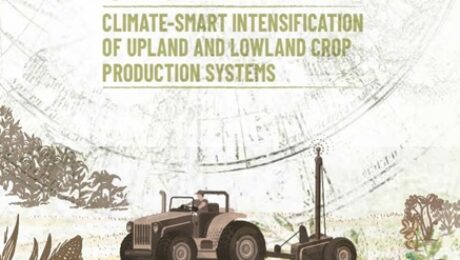
This guide explores the climate-smart intensification of upland and lowland crop production systems in the dry-zone of Sri Lanka and provides technical guidance to achieve the productive objectives of selected strategic crops (as deemed relevant by the Government of Sri Lanka). The first edition focuses on maize and groundnut upland production systems and on rice lowland production. It provides a quick reference for information on crop production and soil management, including crop varieties, nutritional requirements and field equipment. As climate change will result in wider and more severe occurrences of plant pests, the guide relies on integrated pest management practices adapted to climate change. Optimizing the production of these crops calls for the diversification of crop systems using intercrops and cover crops. Additionally, sustainable mechanization is regarded as an essential agricultural production input to optimize labour and land productivity for the sustainable and profitable development of the agriculture sector. Therefore, the guide describes the innovative equipment needed for the sustainable optimization of crop production. To ensure coherent guidance and advice on sustainable farming practices, inputs and technologies, the guide has been developed in cooperation with all stakeholders working in the agriculture sector of Sri Lanka.
- Published in CLIMATE CHANGE, SRI LANKA
The challenge of making climate adaptation profitable for farmers – Evidence from Sri Lanka’s rice sector
Increased incidences of drought and water scarcity due to climate change is an important challenge facing Sri Lanka’s agricultural sector. Identifying farm practices that can reduce its adverse impacts on agricultural production and farmers’ livelihoods is a key policy objective in Sri Lanka. This paper makes use of household survey data collected in Anurādhapura District to evaluate the impacts of 11 drought adaptation practices adopted by farmers in the district. The impacts of the practices are estimated simultaneously along two dimensions: 1) impact on sensitivity to water stress (measured in terms of the probability of experiencing crop loss due to wilting) and 2) impact on household livelihood (measured in terms of total value of crops harvested and total gross household income). After accounting for a wide range of confounding factors, five practices are found to be associated with a reduced sensitivity to water stress. However, only two of these are simultaneously associated with a higher gross value of crops harvested, while none is associated with significant differences in household income relative to non-adopters. The reasons for this vary by practice, but are linked to opportunity costs of household labour and market weaknesses for crops other than rice. Making climate adaptation practices profitable is a key challenge faced by policy-makers and will require a holistic research and extension approach that is bundled with complementary support to market institutions, such as appropriate mechanization services, value chain support for other field crops and input supply systems.
- Published in CLIMATE CHANGE, SRI LANKA
The evolution of agricultural mechanization in Sri Lanka
Sri Lanka’s unique geography and its distinct experiences with machine use in rice and field crop production offer valuable insights into different patterns of mechanization. Rice in Sri Lanka has a substantial irrigation infrastructure, a strong plant breeding system, and historical examples of success in location-specific breeding strategies (Pain 1986). Furthermore, tractor use in rice cultivation grew very quickly, especially given the relatively small amount of arable land in the country and the lack of direct subsidies, but with certain incentives. Though mechanization initially spread for paddy cultivation, machinery has also become popular in varying degrees in the production of other field crops. This chapter explores the spread of mechanization in Sri Lanka, with a focus on the use of four- and two-wheel tractors, and combine harvesters. It first looks at the process of mechanization from a historical perspective. It then conducts demand- and supply-side analysis to identify the opportunities and challenges facing adoption of machinery in agriculture. It concludes with a brief discussion of the implications of the Sri Lankan experience for African countries starting the process of mechanization.
- Published in SRI LANKA