ACIAR–Bangladesh Collaboration Strategy 2021–2030
A 10-year strategy enables the possibility of longer-term and flexible programs that respond to the complex challenges of issues (such as climate change) and enables a recalibration of the relationship that can affirm the changing nature of the partnerships and the role ACIAR plays in catalysing regional collaboration. This strategy acknowledges how the relationship between ACIAR and Bangladesh has evolved to become a strong co-invested partnership, and affirms the importance of the contribution of ACIAR to regional collaboration.
- Published in BANGLADESH, PRIVATE SECTOR EXTENSION /PPP, RESOURCES
Exposing corporate capture of the UN Food Systems Summit through multistakeholderism

This report exposes the rising threat of Multistakeholder Institutions (MSIs) and increasing corporate influence over the governance of food systems via the United Nations Food Systems Summit (UNFSS). At its core the UNFSS is geared toward moving from multilateralism – involving processes and decision making led by States – to multistakeholderism – a practice of governance that brings multiple stakeholders including corporations, corporate platforms, business associations, donors, academics and civil society actors together to formulate and implement responses to jointly perceived problems.
Multistakeholder is allows powerful transnational corporations, their platforms and associations to direct international and national policy making, financing, narratives, and governance, while promoting corporate friendly, false solutions to food systems in crisis.
- Published in PRIVATE SECTOR EXTENSION /PPP
The OIE PPP Handbook: Guidelines for Public-Private Partnerships in the veterinary domain

The OIE has developed this set of guidelines to help you develop impactful and sustainable PPPs in the veterinary domain, whether you operate in the public sector or the private sector.
One of OIE’s core missions is to help strengthen Veterinary Services around the world. This work reveals the huge potential offered by PPP, with benefits to the public sector in fulfilling their missions more efficiently, and also to the private sector, by creating the conditions for better, more sustainable business. This document is short, easy-to-read, and meant to be a call to action!
- Published in PRIVATE SECTOR EXTENSION /PPP
Enhancing Smallholder Farmers’ Access to Seed of Improved Legume Varieties Through Multi-stakeholder Platforms
This open access book shares the experiences of Tropical Legumes III (TLIII) project in facilitating access to seed of improved legume varieties to smallholder farmers through innovation platforms. It highlights practices and guiding principles implemented in eight developing countries of sub-Saharan Africa and South Asia. This book details key processes that respective teams employed to create an innovation space that delivers seed, other inputs, knowledge and financial services to agricultural communities and most importantly, the underserved farmers in remote areas of the drylands.
It offers valuable insights into the pathway to establishing, promoting and operating innovation platforms to enhance the performance and competitiveness of legume crops’ value chains, and addresses critical issues that must be considered to make innovation platforms more sustainable and attractive to beneficiaries. The book offers a wealth of practical insights for development workers, technical staff, and project managers. This publication is all about TLIII community of practice. It will definitely inspire other development workers and scientists to share their own experiences for others to learn from.
- Published in PRIVATE SECTOR EXTENSION /PPP
GOOD PRACTICES: Public Private Partnerships in Extension and Advisory Services
Provision of advice and other services related to farming at the village level is critical for enhancing the incomes of small and marginal farmers. Creation of an eco-system that can support the emergence of agri-entrepreneurs through delivery of these services at the village level is the only way forward if we are keen to enhance farm incomes. In this Good Practices Note, S Baskar Reddy, Rajendra Jog, Parikrama Chowdhry and Aravind Thumbur reflect on their experiences with developing and scaling up a model of agri-entrepreneurship by forging partnerships with a number of agencies.
- Published in PRIVATE SECTOR EXTENSION /PPP
Partners in Research for Development
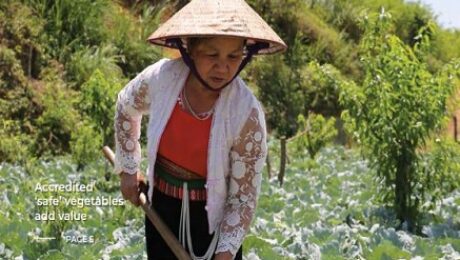
Farmers who can differentiate their products and reliably supply agricultural produce can tap into this global marketplace, which can add both security and value to their farming income. This is as relevant to a cocoa producer from Vanuatu as it is to a beef producer from Australia.
This issue of Partners focuses on globalizing agrifood chains. Under our 10-Year Strategy 2018–27, ACIAR is increasingly working further along supply chains, particularly through our Agribusiness Program. Our focus is on being inclusive of smallholder farmers (especially women), on providing healthy, nutritious, safe food, and developing more sustainable and resilient food systems.
- Published in PRIVATE SECTOR EXTENSION /PPP
UNDFF Regional Action Plan for strengthening family farming in South Asia 2021–2028
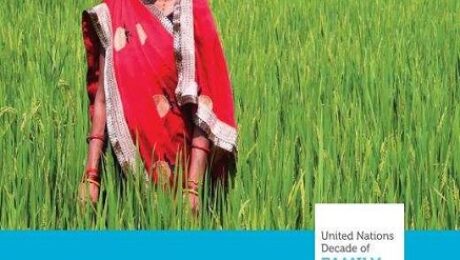
The Regional Action Plan for strengthening family farming in South Asia has been elaborated through a participatory and multi-stakeholder approach in the framework of the UN Decade of Family Farming and in close collaboration with SAARC Agriculture Center, the Asia Farmer Association for Sustainable Rural Development and the International Cooperative Alliance – Asia Pacific. Consultations with farmers’ organizations, cooperatives and other relevant stakeholders at country level first helped identifying and prioritizing key interventions for the region along the seven pillars of the Global Action Plan. These initial inputs then contributed to the overall drafting of the contextualized pillars led by recognized experts from the region. The draft pillars were presented during a first regional virtual consultation on UN Decade of Family Farming: Formulating Strategies and Action Plan to Strengthen Smallholder Family Farmers in South Asia held on the 5–6 November 2020. A follow up regional consultation meeting on review and finalization of the Regional Action Plan for strengthening family farming in South Asia was then organized on 29 July 2021. The objective was to present, discuss and validate the draft Regional Action Plan for strengthening family farming in South Asia. This Regional Action Plan aims at facilitating and accelerating the process of developing national action plans through inclusive multi-stakeholder processes, not only putting family farmers at the centre but recognizing them as critical partners.
- Published in GUIDE/TOOLS/MANUALS, PRIVATE SECTOR EXTENSION /PPP
The People Behind Your Plate

The book is organized around the “5 Ps” of people, planet, prosperity, peace and partnerships. The work that rural people do, including growing food and taking care of precious natural resources, is at the heart of the 2030 Agenda.
The Sustainable Development Goals outline 17 areas for eliminating poverty and hunger, protecting the planet, and promoting peace and prosperity. These priorities are fundamental to the transformation of rural areas. The stories in this book show how IFAD invests in rural people to support their efforts, knowledge and skills as they help solve some of the world’s most urgent challenges.
- Published in PRIVATE SECTOR EXTENSION /PPP