The State of Agricultural Commodity Markets 2022
The State of Agricultural Commodity Markets 2022 (SOCO 2022) discusses how trade policies, based on both multilateral and regional approaches, can address today’s challenges for sustainable development. Trade policies in food and agriculture should aim to safeguard global food security, address the trade-offs between economic and environmental objectives, and strengthen the resilience of the global agrifood system to shocks, such as conflicts, pandemics and extreme weather. The report discusses the geography of trade, analysing food and agricultural trade and its patterns across countries and regions, its drivers and the trade policy environment. Comparative advantage, trade policies and trade costs shape the patterns of trade in food and agriculture. When comparative advantage plays out in the global market, trade benefits all countries. Lowering tariff barriers and reducing trade costs can promote trade and economic growth. Both multilateral and regional trade agreements can facilitate the process of making trade an avenue for growth but the gains of trade are distributed unevenly. When global environmental impacts, such as climate change, are considered, a multilateral approach to trade can help expand the reach of mitigation measures.
- Published in POLICY, VALUE CHAIN / MARKETS
Regional Investment Pioneers in South Asia
This report was conceived under the World Bank Group’s program on building a more positive narrative for regional integration in South Asia, as part of a broader engagement on intraregional cooperation and connectivity. Given that investment and trade are deeply interlinked, it was designed to complement and follow up on the earlier report on trade, A Glass Half Full: The Promise of Regional Trade in South Asia.
- Published in POLICY, VALUE CHAIN / MARKETS
The Rural Youth Action Plan
The FAO Conference in 2017 endorsed the call to develop a rural youth action plan that addresses the importance of making rural areas more attractive for young women and men. Under the aegis of the Committee on Agriculture (COAG), the Rural Youth Action Plan (RYAP) was developed and presented at COAG’s Twenty- seventh Session in 2020. The Plan presents a five-year Action Plan (2021–2025), aligned to five thematic areas (or pillars) with the goal of contributing to the realization of the Sustainable Development Goals (SDGs) by equally empowering rural young women and men. The RYAP is embedded in FAO’s Medium Term Plan (2022–2025), and serves as a key performance indicator (KPI) for the cross cutting theme on youth.
FAO Policy on Gender Equality 2020–2030

Gender equality is essential to achieve FAO’s mandate of a world free from hunger, malnutrition, and poverty. The Organization recognizes that persisting inequalities between women and men are a major obstacle to agriculture and rural development and that eliminating these disparities is essential to building sustainable and inclusive food systems and resilient and peaceful societies.
In alignment with the priorities set by the international agenda, the FAO gender equality policy, first endorsed in 2012, provides the Organization with a corporate framework to orient its technical and normative work towards clear gender equality objectives relevant to its mandate. The Policy recognizes that a gender-responsive organizational environment is necessary to achieve progress towards these objectives. It, therefore, includes a set of minimum standards for gender mainstreaming to ensure that gender dimensions are adequately addressed in all organizational functions, from results-based management to staff learning and evidence generation. Recognizing that all staff has a role to play in advancing gender equality and women’s empowerment, the Policy establishes a shared accountability framework that clearly outlines responsibilities for its implementation across the Organization.
Agricultural Extension in Transition Worldwide: Policies and Strategies for Reform
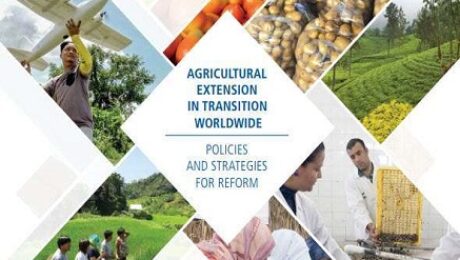
Agricultural Extension in Transition Worldwide: Policies and Strategies for Reform
Food and Agriculture Organization of the United Nations Rome, (2020)
Prepared by Magdalena Blum, Francesca Cofini and Rasheed Sulaiman V
The purposes of the modules are to review the major reforms being considered internationally – reforms that aim to change the policy and institutional structure and operations of public sector agricultural extension systems, and thus enhance a transition to better coordinated pluralistic, demand-led advisory systems. The advantages and disadvantages of each aspect of these reforms are examined and illustrated by the selected case studies. The modules provide a foundation for extension reform affecting the entire set-up and mode of operation of agricultural extension. This review of reforms is intended to provide insights for senior-level officials and others interested in the development of agricultural advisory systems. The modules review trends, concepts and experiences, and, as such, are not intended to be prescriptive, or to adhere necessarily to any one point of view, but instead to provide a basis for informed decision-making by government policy-makers and senior management of extension and advisory services, as well as agricultural advisors.
- Published in EXTENSION AND INNOVATION, POLICY
Just-in-Time Policy Note on Agriculture and Food in Pakistan | Resilient Systems: Moving Beyond the COVID-19 Crisis
The Partnership for Agricultural Transformation in Pakistan (PAT-P) is a coalition of multilateral international agencies that aim to transform agriculture into a dynamic, competitive, efficient and climate smart sector, and to reposition it as an engine of growth in rural areas. The coalition assists the Government in implementing a policy framework and take reform actions that are potentially of high impact and politically critical.
This Just-in-Time Policy Note examines the impact of the COVID-19 pandemic on Pakistan’s food system and provides recommendations on key policy actions and adjustments to make the food systems more resilient to future shocks.
- Published in CLIMATE CHANGE, POLICY
Valuing Biodiversity The economic case for biodiversity conservation in the Maldives

The Maldives’ unique environment is the bedrock of our economy. Fisheries and tourism, our two largest industries, are heavily dependent on a healthy and diverse marine ecosystem. Together, these two industries provide three quarters of our jobs, 90% of our GDP and two thirds of our foreign exchange earnings. Moreover, healthy coral reefs help protect our islands from natural disasters and guard against the adverse affects of climate change.
- Published in AGROECOLOGY, LIVESTOCK / FISHERIES, POLICY