
Dietary diversity and its associated factors among rural labourers in South India

Malnutrition continues to be a major global health challenge affecting millions of vulnerable populations across countries. Despite their critical contribution to agricultural productivity, limited evidence exists regarding the dietary diversity and nutritional status of rural labourers in South India. Therefore, the present study aimed to assess dietary diversity and its associated factors among rural labourers in South India.
- Published in NUTRITION
Research Series 74: Women’s empowerment, food systems, and nutrition

This publication aims to contribute to the improved understanding, dissemination and use of PFP as a development tool in particular in the case of school meals programmes. In Volume 1, researchers, policymakers and development partners can find evidence on how PFP can be used as a development tool and deliver multiple benefits for multiple beneficiaries. It argues that PFP can provide a market for local and smallholder farmers, promote the conservation and sustainable use of agrobiodiversity, and improve the nutrition and health of children and communities. Volume 2 of this publication, available at https://doi.org/10.4060/cb7969en, presents further analysis of the instruments, enablers and barriers for PFP implementation. It also provides case studies with local, regional and national experiences from Africa, Asia, Europe and North and South America.
- Published in NUTRITION
Public food procurement for sustainable food systems and healthy diets – Volume 1
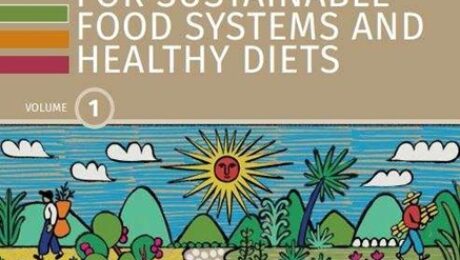
This publication aims to contribute to the improved understanding, dissemination and use of PFP as a development tool in particular in the case of school meals programmes. In Volume 1, researchers, policymakers and development partners can find evidence on how PFP can be used as a development tool and deliver multiple benefits for multiple beneficiaries. It argues that PFP can provide a market for local and smallholder farmers, promote the conservation and sustainable use of agrobiodiversity, and improve the nutrition and health of children and communities. Volume 2 of this publication, available at https://doi.org/10.4060/cb7969en, presents further analysis of the instruments, enablers and barriers for PFP implementation. It also provides case studies with local, regional and national experiences from Africa, Asia, Europe and North and South America.
- Published in NUTRITION
Improving maternal nutrition in India through integrated hot-cooked meal programs: A review of implementation evidence
A notable approach to addressing maternal undernutrition during pregnancy in India in recent years has been the integration of hot-cooked meals (HCM) for pregnant and lactating women together with the provision of other health/nutrition services. Called the One Full Meal (OFM) program, these efforts aim to improve maternal nutrition and health across India by bundling center-based HCM with other nutrition services and behavior change communication implemented through the Integrated Child Development Services (ICDS) scheme. The program is offered at anganwadi centers (AWCs) and has been implemented in eight states in India, including Andhra Pradesh, Chhattisgarh, Gujarat, Karnataka, Maharashtra, Telangana, Madhya Pradesh, and Uttar Pradesh. Although the OFM program has been implemented since 2013, there is limited consolidated insight on its effectiveness or on broader lessons for implementation. The objectives of this evidence review of the OFM program are, therefore, to (1) compare the different state OFM program models on their objectives, implementation elements, cost norms and monitoring mechanisms; (2) develop program impact pathways on the potential ways in which the program could influence intended outcomes; and (3) examine the availability of evidence underpinning the program’s intended pathways to impact.
- Published in NUTRITION
Transforming Food Systems for a Rising India
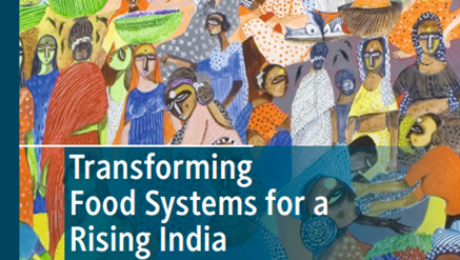
This book explores various challenges and opportunities to achieve a nutrition-secure future through diversified production systems, improved health and hygiene environment and greater individual capability to access a balanced diet contributing to an increase in overall productivity.
The authors bring together the latest data and scientific evidence from the country to map out the current state of food systems and nutrition outcomes. They place India within the context of other developing country experiences and highlight India’s status as an outlier in terms of the persistence of high levels of stunting while following global trends in obesity. This book discusses the policy and institutional interventions needed for promoting a nutrition-sensitive food system and the multi-sectoral strategies needed for simultaneously addressing the triple burden of malnutrition in India.
Creating Enabling Environments for Nutrition-Sensitive Food and Agriculture to Address Malnutrition
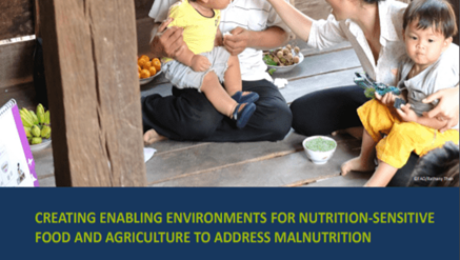
A contributing factor to malnutrition in the Asia and the Pacific region is a lack of crop diversity, which leads to a lack of diversity in diets as well. A major reason for this is that many countries in the region only focus on cultivating a small number of staple foods. Diversifying local crops is a cost-effective and sustainable way to strengthen local agriculture and food systems and combat malnutrition. The first step in supporting local agriculture and food systems by promoting crop and dietary diversification as a means of reducing malnutrition is creating an enabling environment to do so. This TCP project aimed to facilitate the development of this environment through the forming of links, the closing of gaps, and the development of policy recommendations in four countries in the Asia and the Pacific Region: Cambodia, Lao People’s Democratic Republic, Myanmar and Nepal. Its design included national policy reviews, evidence-based studies, and field studies to assess the existing issues related to crop diversity, dietary diversity and malnutrition, and their interdependence, as well as the preparation of national reports and policy documents to be synthesized and disseminated in the region. Drawing on FAO’s previous experience in the region, this project was based on a multisectoral, holistic food system approach that takes into account every step of the food value chain. It involved international development and research institutes, local and national ministries, Non-governmental Organizations (NGOs) and all actors along the food value chain. A major focus of the project was the identification of Neglected and Underutilized Species (NUS) that could be cultivated in the targeted countries and integrated into national policies on food and agriculture. In addition to supporting bio- and production diversity, NUS also address malnutrition, owing to the fact that they can provide essential vitamins, micronutrients and protein. Many are also climate resilient, sustainable, locally available, adaptable to marginal conditions and have commercial potential. These NUS are classified as Future Smart Foods (FSFs), and the project promoted their cultivation, as well as their integration and mainstreaming into national policies and plans.
- Published in NUTRITION
Mountain agriculture: Opportunities for harnessing Zero Hunger in Asia
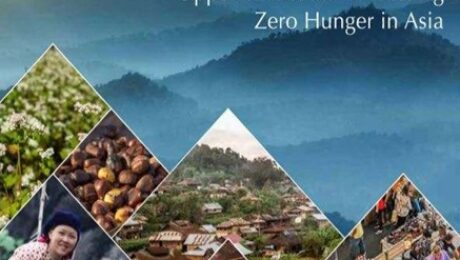
Mountain food security and nutrition are core issues that can contribute positively to the achievement of the Sustainable Development Goals but paradoxically are often ignored in Zero Hunger and poverty reduction-related agenda. Under the overall leadership of José Graziano da Silva, the Former Director-General of FAO, sustainable mountain agriculture development is set as a priority in Asia and the Pacific, to effectively address this issue and assist Member Countries in tackling food insecurity and malnutrition in mountain regions.
This comprehensive publication is the first of its kind that focuses on the multidimensional status, challenges, opportunities and solutions of sustainable mountain agriculture development for Zero Hunger in Asia. This publication is building on the ‘International Workshop and Regional Expert Consultation on Mountain Agriculture Development and Food Security and Nutrition Governance’, held by FAO RAP and UIR in November 2018 Beijing, in collaboration with partners from national governments, national agriculture institutes, universities, international organizations and international research institutes.
Supporting the Development of National Food and Nutrition Security Index
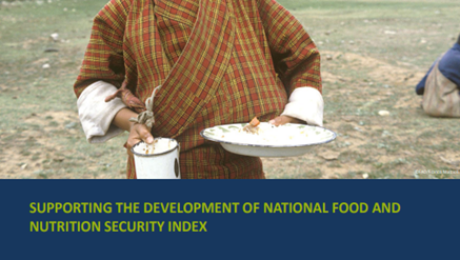
While Bhutan has seen a substantial reduction in poverty from 23 2 percent in 2007 to 8 21 percent in 2017 and increased public investment in agriculture in recent years, it remains a largely agriculture dependent society that continues to face poverty, food insecurity and malnutrition challenges This is particularly pronounced in rural areas where prevalence of poverty stood at 11 94 percent as of 2017 The government has therefore taken action to develop its agriculture sector, while ensuring a longer term Renewable Natural Resources ( Strategy In 2020 the agriculture sector continued to be the main driver of growth in the country and increased by 5 07 percent, while all other sectors experienced a decline, mainly due to the impact of the COVID 19 pandemic In 2019 the Ministry of Agriculture and Forests ( requested the support of FAO for the development of a robust food security and nutrition dashboard to inform policy and strategy development in the country The enhancement of food and nutrition policies has been constrained by a lack of baseline data on the food consumption and nutrition practices of the population, which have not been reviewed since 2014.
Promoting the Development of Livestock Value Chains in Bangladesh to Reduce Poverty
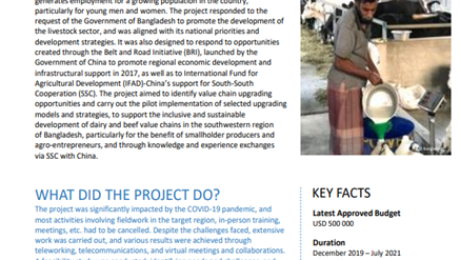
Bangladesh is a low income economy. The livestock sector is not only a source of income and nutritious food for rural households, it also generates employment for a growing population in the country, particularly for young men and women. The project responded to the request of the Government of Bangladesh to promote the development of the livestock sector, and was aligned with its national priorities and development strategies. It was also designed to respond to opportunities created through the Belt and Road Initiative (BRI), launched by the Government of China to promote regional economic development and infrastructural support in 2017, as well as to International Fund for Agricultural Development (IFAD) China’s support for South South Cooperation (SSC). The project aimed to identify value chain upgrading opportunities and carry out the pilot implementation of selected upgrading models and strategies, to support the inclusive and sustainable development of dairy and beef value chains in the southwestern region of Bangladesh, particularly for the benefit of smallholder producers and agro entrepreneurs, and through knowledge and experience exchanges via SSC with China.
- Published in BANGLADESH, NUTRITION, RESOURCES
Securing food for all in Bangladesh

Access to sufficient food by all people at all times to meet their dietary needs is a matter of critical importance. Despite declining arable agricultural land, Bangladesh has made commendable progress in boosting domestic food production. The growth in overall food production has been keeping ahead of population growth, resulting in higher per capita availability of food over time. In the early 1970s, Bangladesh was a food-deficit country with a population of about 75 million. Today, the population is 165 million, and the country is now self-sufficient in rice production, which has tripled over the past three decades. Along with enhanced food production, increased income has improved people’s access to food. Furthermore, nutritional outcomes have improved significantly.
Nevertheless, the challenges to food and nutrition security remain formidable. Future agricultural growth and food and nutrition security are threatened by population growth, worsening soil fertility, diminishing access to land and other scarce natural resources, increasing vulnerability of crop varieties to pests and diseases, and persistent poverty leading to poor access to food. In addition, the impacts of climate change—an increase in the incidence of natural disasters, sea intrusion, and salinity—will exacerbate food and nutrition insecurity in the coming decades if corrective measures are not taken. Aligned with this context, the authors of the book explore policy options and strategies for developing agriculture and improving food security in Bangladesh. Securing Food for All in Bangladesh, with its breadth and scope, will be an invaluable resource for policymakers, researchers, and students dedicated to improving people’s livelihoods in Bangladesh.
- Published in BANGLADESH, NUTRITION, RESOURCES