
Farmers and scientists in AR4D: Looking at a watershed management project through an STS lens
Agricultural Research for Development (AR4D) provides the interface for the meeting of farmers and scientists. This is a meeting of different social worlds, contesting agendas, cultures of cooperation and networks of actors. Like in other disciplines, scientists in AR4D have developed their own culture of science. However, the role of their culture of science in the negotiations and encounters with farmers’ social worlds is rarely discussed. Analysing AR4D with a theoretical framework based on Science and Technology Studies (STS) helps us to highlight important issues of power and access in AR4D. The goal of this paper is to demonstrate how the introduction of certain technologies has interacted with the lives of people in an AR4D project in Ethiopia, and to highlight the potential and limitations of applying STS to AR4D. We interviewed farmers, scientists, extensionists, policy makers and donors associated with an AR4D project in the Ethiopian Highlands using qualitative social research approaches. Akrich’s theory on scripts provided the theoretical framework for analysis. Our findings provide examples for the re-inscription of technology and access in an AR4D project, leading to trade-offs and shifting of power between different actors. We conclude that understanding AR4D as part of a network of actors with its own culture of science provides an essential learning ground. We recommend STS to be applied more widely in AR4D to explore the nature of these networks to highlight what makes technology work for users in the long term.
- Published in NATURAL RESOURCE MANAGEMENT
Recarbonizing global soils: A technical manual of recommended sustainable soil management
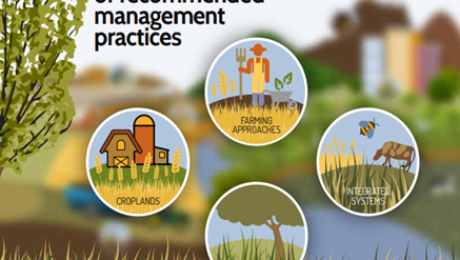
During the last decades, soil organic carbon (SOC) attracted the attention of a much wider array of specialists beyond agriculture and soil science, as it was proven to be one of the most crucial components of the earth’s climate system, which has a great potential to be managed by humans. Soils as a carbon pool are one of the key factors in several Sustainable Development Goals, in particular Goal 15, “Protect, restore and promote sustainable use of terrestrial ecosystems, sustainably manage forests, combat desertification and halt and reverse land degradation and halt biodiversity loss” with the SOC stock being explicitly cited in Indicator 15.3.1.
This technical manual is the first attempt to gather, in a standardized format, the existing data on the impacts of the main soil management practices on SOC content in a wide array of environments, including the advantages, drawbacks and constraints. This manual presents different sustainable soil management (SSM) practices at different scales and in different contexts, supported by case studies that have been shown with quantitative data to have a positive effect on SOC stocks and successful experiences of SOC sequestration in practical field applications.
- Published in NATURAL RESOURCE MANAGEMENT
Global assessment of soil pollution: Report
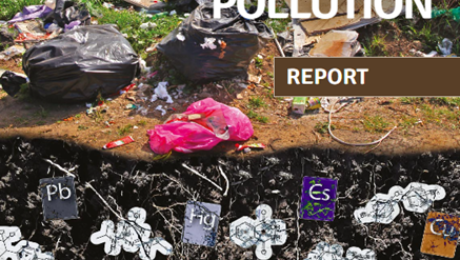
Soil pollution is invisible to the human eye, but it compromises the quality of the food we eat, the water we drink, and the air we breathe and puts human and environmental health at risk. Most contaminants originate from human activities such as industrial processes and mining, poor waste management, unsustainable farming practices, accidents ranging from small chemical spills to accidents at nuclear power plants, and the many effects of armed conflicts. Pollution knows no borders: contaminants are spread throughout terrestrial and aquatic ecosystems and many are distributed globally by atmospheric transport. In addition, they are redistributed through the global economy by way of food and production chains.
Soil pollution has been internationally recognized as a major threat to soil health, and it affects the soil’s ability to provide ecosystem services, including the production of safe and sufficient food, compromising global food security. Soil pollution hinders the achievement of many of the United Nations Sustainable Development Goals (SDGs), including those related to poverty elimination (SDG 1), zero hunger (SDG 2), and good health and well-being (SDG 3). Soil pollution hits the most vulnerable hardest, especially children and women (SDG 5). The supply of safe drinking water is threatened by the leaching of contaminants into groundwater and runoff (SDG 6). CO2 and N2O emissions from unsustainably managed soils accelerate climate change (SDG 13). Soil pollution contributes to land degradation and loss of terrestrial (SDG 15) and aquatic (SDG 14) biodiversity, and decreased the security and resilience of cities (SDG 11), among others.
- Published in NATURAL RESOURCE MANAGEMENT
Groundwater of Afghanistan (potential capacity, scarcity, security issues, and solutions)
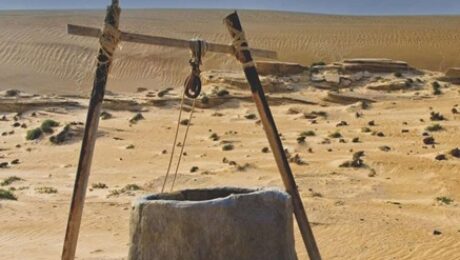
Afghanistan is a landlocked mountainous country with plains in the north and southwest, which is described as being located within South and Central Asia. Water is the lifeblood of the people of Afghanistan, not just for living but also for the economy, which has traditionally been dominated by agriculture. Over 80% of the country’s water resources originate within the Hindu Kush mountain ranges at altitudes over 2000 m. The mountains perform as natural water storage, with snow throughout the winter and snowmelt within the summer that supports perennial flow of all the major rivers.
- Published in NATURAL RESOURCE MANAGEMENT
Improving Access to Irrigation and Strengthening Water Resources Management in Afghanistan
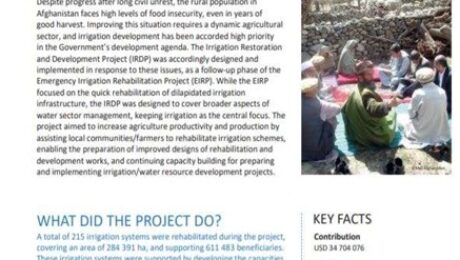
Despite progress after long civil unrest, the rural population in Afghanistan faces high levels of food insecurity, even in years of good harvest. Improving this situation requires a dynamic agricultural sector, and irrigation development has been accorded high priority in the Government’s development agenda. The Irrigation Restoration and Development Project (IRDP) was accordingly designed and implemented in response to these issues, as a follow-up phase of the Emergency Irrigation Rehabilitation Project (EIRP). While the EIRP focused on the quick rehabilitation of dilapidated irrigation infrastructure, the IRDP was designed to cover broader aspects of water sector management, keeping irrigation as the central focus. The project aimed to increase agriculture productivity and production by assisting local communities/farmers to rehabilitate irrigation schemes, enabling the preparation of improved designs of rehabilitation and development works, and continuing capacity building for preparing and implementing irrigation/water resource development projects.
- Published in AFGHANISTAN, NATURAL RESOURCE MANAGEMENT
Do soil health tests match farmer experience? Assessing biological, physical, and chemical indicators in the Upper Midwest United States

Soil health testing provides an integrated assessment of biological, physical, and chemical attributes to inform the sustainable management of farm fields. However, it is unclear how tests reflect farmers’ own assessments of soil quality and agronomic performance, which may disproportionately influence farm management practices. We asked farmers in three regions of Michigan to identify three fields to compare their own assessments against soil health tests: a “best,” a “worst,” and a “non‐row crop” reference field. Each field was tested for soil aggregate stability, available water capacity, soil organic matter (SOM), mineralizable carbon (MinC), permanganate oxidizable carbon (POXC), pH, P, and K. We evaluated soil health scores using paired t tests to compare results from contrasting fields with farmers’ assessments of each field. Across all farms, the overall soil health test score for cropped fields was significantly higher on fields farmers rated as “Best.” This result was driven solely by physical and biological (including C) parameters; inorganic chemical tests did not distinguish among field types. On reference fields in all regions, biological parameters were consistently higher, but inorganic chemical and physical measures were not. The performance of soil C measures was inconsistent: SOM and MinC consistently detected significant differences between “Best” and “Worst” cropped fields, but POXC did not. Our results suggest that common soil health assays for physical and biological attributes generally align well with farmers’ assessments of their fields. That soil health tests match farmer experience reinforces the value of these tests as a meaningful guide for soil management decisions.
- Published in NATURAL RESOURCE MANAGEMENT
Water availability, use and challenges in Pakistan – Water sector challenges in the Indus Basin and impact of climate change 2021
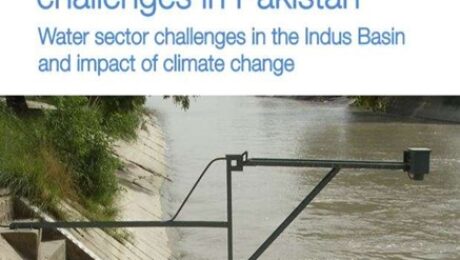
This working paper takes stock of Pakistan’s water resource availability, delineating water supply system and its sources including precipitation and river flows, and the impact of increasing climatic variability on the water supply system. In particular, the paper focuses on the current water usage and requirements in the agricultural sector, and how changing climatic conditions will affect the consumption patterns. With inflows expected to become more variable in the coming years, the severity of climatic extremities will become more pronounced, driving up water demands in addition to the demand increase from a rising population and urbanization. Over extraction of groundwater resources is also disturbing the water calculus and pushing the country towards a critical demand-supply gap.
- Published in NATURAL RESOURCE MANAGEMENT, PAKISTAN
Accounting of Water for Improved Management of Water Resources
Pakistan’s population is expected to reach 221 million by 2025 and, coupled with growing impacts of climate change, the country is expected to respond to pressures on limited water resources due to population growth and a growing need for climate resilient livelihoods. As such, federal and provincial Pakistani authorities have recognized the importance of ensuring water availability and access in order to adequately respond to national agricultural, sanitation and industrial needs. Agricultural production is especially important given that the agricultural sector consumes close to 90 percent of all currently available fresh water supplies in the country. While agriculture accounts for the overwhelming majority of water resources used, it is also the sector responsible for producing more than 90 percent of the country’s food supply and generating 75 percent of the country’s export revenues. Unsurprisingly, agriculture and food production account for 20 percent of Pakistan’s gross domestic product (GDP). Therefore, rural livelihoods are particularly vulnerable to climate-driven water scarcity, given the country’s largely arid to semi-arid climate and its high dependency on a single river system: the Indus River Basin System. Despite being the world’s largest contiguous irrigation system and the main water lifeline for Pakistan’s household consumption, sanitation and economic activities, there is insufficient data on water availability, use and governance specific to the Indus River Basin. Moreover, a marked increase in the number of private tube wells over the last 30 years has changed underground water pumping modalities. In light of the limited awareness on the importance of joint efforts for water management, the project helped establish these links between different uses of water along multiple sectors and locations around the country. It convened actors to assess water governance through a systems approach, where the concerns and priorities of all stakeholders concerned were reflected and understood by others.
- Published in NATURAL RESOURCE MANAGEMENT, PAKISTAN
Enhancing Rural Livelihoods in Underutilized/Abandoned Agricultural Land through Agroforestry
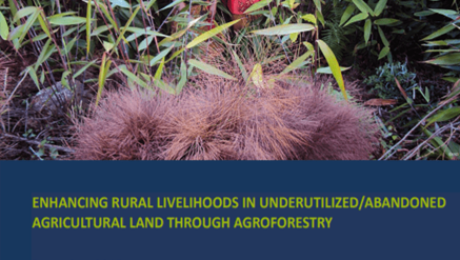
Nepal is facing an increasing problem of underutilization/abandonment of agricultural land In the context of food insecurity and poverty across rural communities, the growing current scale of abandonment of agricultural land has become one of the key development challenges in recent decades As a result of this trend, rural hill districts are currently experiencing food insecurity due to a lower rate of production and productivity per hectare This has created a challenge in terms of feeding a growing population In this context, the only way to address the problem of food insecurity is to increase agricultural production and the productivity of available land In order to address this emerging issue, as per the request and cooperation of the Government of Nepal, FAO and the International Union for Conservation of Nature ( implemented the pilot project, “Enhancing rural livelihoods in underutilized/abandoned agricultural land through agroforestry” with the objective of identifying and assessing approaches for implementation of so called “best bet” agroforestry options that have the potential to generate production and income from abandoned agricultural land.
- Published in NATURAL RESOURCE MANAGEMENT, NEPAL
Multi-criteria decision analysis for selection of vulnerable districts
Modelling of climate change scenarios for Pakistan indicates that if agriculture and water management in the Indus River Basin continue in a ‘business as usual’ mode, the increase in temperatures and changes in precipitation will pose serious threats to the future livelihoods of farmers and to the Pakistani agricultural sector. In this context, FAO Pakistan has proposed a project to the Green Climate Fund (GCF) on “Transforming the Indus Basin with Climate Resilient Agriculture and Water Management”. This project is designed to change that by moving away from ‘business as usual’ in the Basin and shifting agriculture and water management to a new paradigm in which producers are successfully adapting to climate change and are able to sustain their livelihoods. The project objective is to transform agriculture in the Basin by increasing resilience among the most vulnerable farmers and strengthening the Government’s capacity to support their communities to adapt. To ensure the success of the project, an appropriate selection of districts for project interventions is a crucial factor. The Technical team at FAO has employed a detailed Multiple Criteria Decision Analysis (MCDA) technique using GIS for the selection of the district areas. As an outcome of the detailed MCDA analysis, a GIS based vulnerability index has been developed for the districts. Based on the vulnerability index, eight districts in Punjab and Sindh are selected for the implementation of the project.
- Published in CLIMATE CHANGE, NATURAL RESOURCE MANAGEMENT, PAKISTAN