Development of balanced nutrient management innovations in South Asia: Perspectives from Bangladesh, India, Nepal, and Sri Lanka
Imbalanced application of fertilizers is a major fiscal and environmental problem in South Asia. We review fertilizer policies and extension efforts to promote the balanced application of nutrients in Bangladesh, India, Nepal, and Sri Lanka and draw 4 important lessons. (1) Fertilizer sector reforms need to be fiscally sustainable and politically feasible. Governments in South Asia have abolished fertilizer subsidies on multiple occasions, only to restore them a few years later. (2) The use of phosphate and potash did not decline much even after a sharp increase in their prices in India in 2011–12. Therefore, rationalizing subsidies, while necessary, may not be sufficient to ensure balanced use of fertilizers. Changing farmers’ practice requires combining the right incentives with the right information. (3) Soil test based soil health cards (SHC) hold promise, but there is limited evidence on their utility. India’s SHC program had very little impact on fertilizer use. (4) Direct cash transfer (DCT) of fertilizer subsidies can reduce distortions, but Sri Lanka’s experience shows that implementing it is more challenging than universal subsidies. DCT requires the removal of price controls, integration of land records, farmer identity cards, a cash transfer system with universal coverage, and a competitive fertilizer retail sector.
- Published in BANGLADESH, INDIA, NATURAL RESOURCE MANAGEMENT, NEPAL, RESOURCES, SRI LANKA
Agricultural Water Management (AWM) Typologies

NITI Aayog estimated that India’s GDP by 2050 could be lost by 6% due to water scarcity. Given the growing climate-induced uncertainties and the centrality of water in India’s largely agrarian and rural livelihoods, building the resilience of agriculture to climate change is critical. Towards this goal, GIZ India has been implementing the Indo-German project on ‘Water Security and Climate Adaptation in Rural India’ (WASCA) with the Ministry of Rural Development (MoRD) and the Ministry of Jal Shakti (MoJS) since 2019. Commissioned by the German Federal Ministry for Economic Cooperation and Development (BMZ), the project aims to improve water security and rural climate adaptation through better management of rural water resources. The project is operational at national level and in select 10 districts of five states namely Madhya Pradesh, Rajasthan, Tamil Nadu, Uttar Pradesh, and Karnataka.
- Published in NATURAL RESOURCE MANAGEMENT
Evidence-based strategies to accelerate innovation scaling in agricultural value chains
Making innovative water management and irrigation technologies available to small farmers on a large scale is crucial to meet growing food demands while strengthening the resilience of food systems to climate change. Africa is particularly vulnerable to the impacts of climate change. There are several reasons for this, such as weak adaptive capacity, high dependence on ecosystem goods and services for livelihoods, and less developed agricultural production systems (WMO 2021). Strengthening the resilience of African agriculture critically depends on the ability of governments and their partners to bring science and innovation to the forefront of the development agenda. This requires co-creating evidence-based innovation bundles that best fit the local context while building capacity to scale these bundles in ways that are economically and environmentally sustainable.
- Published in NATURAL RESOURCE MANAGEMENT, VALUE CHAIN / MARKETS
Identification And Quantification Of Actual Evapotranspiration
Evapotranspiration (ET) is a significant consumer of irrigation water and precipitation on cropland. Global and regional interest in the sustainable management of limited freshwater supplies to meet the rapidly increasing population and food demands has resulted in advanced scientific research on ET measurement, rapid water accounting, and irrigation schedules in the NENA region.
The primary goal of this paper is to compare actual daily evapotranspiration (ET) collected by a remote sensing model and validated by Energy Balance (EB) flux tower field measurements. The flux tower was installed in a wheat field in Sids Agricultural Research Station in Beni Suef Governorate. Through the integration of Moderate Resolution Imaging Spectroradiometer (MODIS) Terra and Sentinel-2 data, a new remote sensing-based ET model is built on two parties: Thermal condition factor (TCF) and vegetation condition fraction (VCF). The remote sensing-based ET estimation model was evaluated using ET field measurements from the Energy Balance flux tower. The land use and land cover maps were created to assist the interpretation of remotely sensed ET data. Field data for five categories were collected to test the accuracy of the land use and cover maps: Water bodies (93 points), urban areas (252 points), trees (104 points), other field crops (227 points), and wheat (249 points), for a total of 925 ground points. The Google Earth Engine (GEE) imported sentinel-2 datasets and filtered the necessary dates and regions. From 1 October 2020 to 30 May 2021, sentinel-2 data were processed and transformed into the Normalized Difference Vegetation Index (NDVI), Normalized Difference Water Index (NDWI), and Normalized Difference Built-up Index (NDBI), which were then combined. The composite layer data were classified using the Random Forest (RF) method on the GEE platform, and the results showed an overall accuracy of 91 percent. The validation factors revealed good indices when RS-based ET results were compared to ground-measured ET. The Root Mean Square Error (RMSE) was 0.84 mm/day. The ‘r’ and ‘d’ values indicated satisfactory results, where ‘r’ yielded a value of 0.785, which indicates that the correlation between predicted and reference results is robust. The analysis of d values revealed a high degree of correlation between predicted (RS-based ET) and reference results (measured ET). The d value was found to be 0.872. Between 21 November 2020 and 30 April 2021, RS-based accumulated ET was 418 mm/season, while ground-measured ET was 376 mm/season. The new RS-based ET model produced acceptable daily and seasonal results.
- Published in NATURAL RESOURCE MANAGEMENT
Building resilience to climate change-related and other disasters in Ethiopia
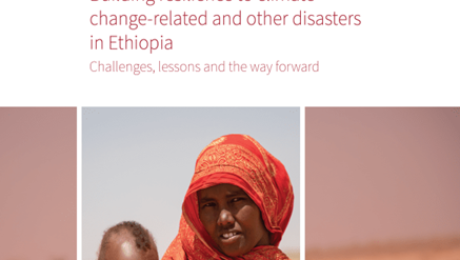
Ethiopia is exposed to a wide range of disasters associated with the country’s extensive dependence on rainfed subsistence agriculture, climate change, resource degradation, diverse geoclimatic and socio-economic conditions and conflicts. Drought and floods are the major challenges, but a number of other threats affect communities and livelihoods. These include conflict, desert locust, fall armyworm, frost and hail, crop pests and diseases, livestock diseases, human diseases, landslides, earthquakes, and urban and forest fires.
Every source of evidence suggests that Ethiopia would feel the human and economic impacts of climate change intensely, and the impacts will only continue to grow if the country continues a business-as-usual approach to crisis response, and will not be able to manage the increasing scale of the challenges. Thus, there is call by all stakeholders for a paradigm shift in the way the country deals with communities at risk, in order to take preventive actions to reduce exposure, vulnerability and impact at local level. This requires moving away from a reactive system that solely focuses on drought and supply of life-saving humanitarian relief and emergency responses during disasters to a comprehensive proactive disaster and climate risk management approach, including climate change adaptation, among which are interventions to enhance livelihood diversification, social protection programmes and risk transfer mechanisms.
Furthermore, resilient agrifood systems support should include a range of proven interventions that are context-relevant and cover the whole agrifood system, such as increase in fertilizer use where appropriate and high-yielding and drought-tolerant seeds, strengthened extension and advisory systems at the kebele (local) level through the use of farmer field schools and pastoral field schools, expansion of access to credit, livelihood diversification, risk transfer mechanism and institutional development that link short-term emergency relief to long-term development pathways. This approach is essential for building resilience to natural hazard and human-induced disasters resulting in food insecurity challenges.
- Published in NATURAL RESOURCE MANAGEMENT
Enhancing Farmers Information System for Disaster Risk Reduction and Management (DRRM) in Agriculture and Fisheries
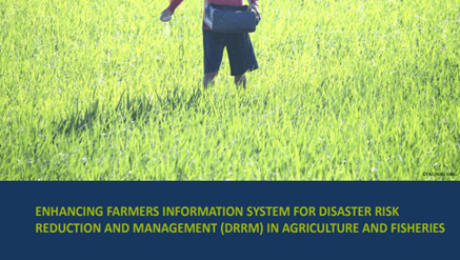
Agriculture plays a significant role in the economy of the Philippines The resiliency of the agriculture sector not only ensures the country’s food security but also the incomes of households depending on this sector, and the sectors along its value chain However, the country has the second highest exposure to natural hazards of any country in the world, owing to its location in the typhoon belt, through which storms generated in the western Pacific Ocean pass Agriculture is highly vulnerable to these natural hazards, because of the sector’s spatially fixed, environment sensitive, and high investment nature Philippine farmers bear the brunt of the damage caused by these calamities.
- Published in LIVESTOCK / FISHERIES, NATURAL RESOURCE MANAGEMENT
Rural 21: Current Issue: Vol. 56 No. 2/2022
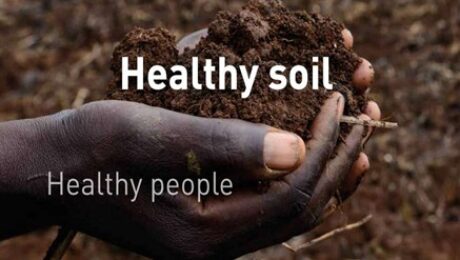
We cannot live without healthy soil and land. It is on these resources that we produce most of our food and build our homes. We need them to provide clean water and precious plant nutrients, to conserve biological diversity and to cope with climate change. And they form the basis for the livelihoods of millions of people. But despite such known facts, these valuable resources are in a dire state. A third of all soils world-wide are already degraded, and each year, further huge expanses of fertile land go lost.
We know that the only way to reverse this trend is with a paradigm shift – away from a resource-intensive mode of production and towards a resource-friendly mode considering the planetary boundaries while placing our global agricultural and food systems on sustainable foundations. Our authors and interview partners share examples of global and national initiatives and policies as well as research insights and practical examples addressing this topic with you.
- Published in NATURAL RESOURCE MANAGEMENT
FAO (2022) The State of World’s Forests
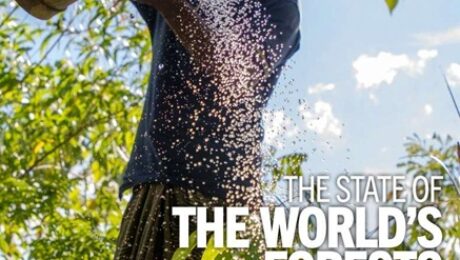
Extension, farmer-field-school approaches and peer-to-peer exchanges can strengthen local capacities and innovation Contemporary approaches to forest education include extension, farmer-field-school approaches, peer-to-peer exchanges and business incubation505,531 to provide smallholders, local forest-based businesses, local communities, Indigenous Peoples and forest workers with learning opportunities and access to technical support.506,507,508 In many countries, however, forestry extension services have been weakened due to financial, political and structural constraints. Existing extension and development programmes are often rooted in technocentric approaches focused on pre-selected “best practices” that treat forest communities as passive learners. They also rarely involve farmers and local knowledge-holders in training development and thus inadequately address knowledge needs and gaps.
- Published in NATURAL RESOURCE MANAGEMENT
The State of the World’s Land and Water Resources for Food and Agriculture 2021 – Systems at breaking point
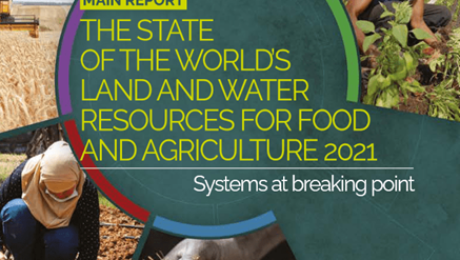
Satisfying the changing food habits and increased demand for food intensifies pressure on the world’s water, land and soil resources. However, agriculture bears great promise to alleviate these pressures and provide multiple opportunities to contribute to global goals. Sustainable agricultural practices lead to water saving, soil conservation, sustainable land management, conservation of natural resources, ecosystem and climate change benefits. Accomplishing this requires accurate information and a major change in how we manage these resources. It also requires complementing efforts from outside the natural resources management domain to maximize synergies and manage trade-offs.
The objective of SOLAW 2021 is to build awareness of the status of land and water resources, highlighting the risks, and informing on related opportunities and challenges, also underlining the essential contribution of appropriate policies, institutions and investments. Recent assessments, projections and scenarios from the international community show the continued and increasing depletion of land and water resources, loss of biodiversity, associated degradation and pollution, and scarcity in the primary natural resources. SOLAW 2021 highlights the major risks and trends related to land and water and presents means of resolving competition among users and generating multiple benefits for people and the environment. The DPSIR framework was followed in order to identify the Drivers, Pressures, Status, Impact and Responses. SOLAW 2021 provides an update of the knowledge base and presents a suite of responses and actions to inform decision-makers in the public, private, and civil sectors for a transformation from degradation and vulnerability toward sustainability and resilience.
- Published in NATURAL RESOURCE MANAGEMENT
24-hour Global Marathon for Sustainability – Food for Earth (2021)

The FAO elearning Academy together with Future Food Institute, organized the second edition of the 24-hour Global Digital Marathon for Sustainability entitled: “Food for Earth”, in 2021. The event was a knowledge sharing collaborative initiative, fully aligned with the United Nations Sustainable Development Goals Agenda 2030 and FAO’s Strategic Framework. The Marathon has proven to be an extremely powerful initiative to raise awareness among entrepreneurs, startups, scientists, journalists, young leaders, policymakers, general public, farmers and indigenous peoples on the importance of environmental, economic and social sustainability.
The publication aims at gathering the multilingual work sessions spread out across the globe, all focusing on the regenerative power of food systems. Overall, the 2021 Marathon had a fantastic global impact, bringing together more than 160 expert voices, in 30 main work sessions, in English, French, Italian and Spanish, reaching more than 150 000 views worldwide, and a global coverage from over 100 online journals, TV channels and networks. In addition, ministers and government representatives from more than 30 countries contributed and endorsed the event. As a result, participating countries have proposed and committed to implement more than 100 climate actions.
- Published in NATURAL RESOURCE MANAGEMENT