
Enhancing Farmers Information System for Disaster Risk Reduction and Management (DRRM) in Agriculture and Fisheries
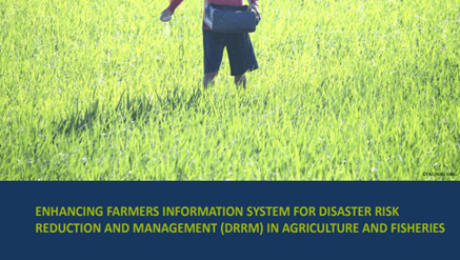
Agriculture plays a significant role in the economy of the Philippines The resiliency of the agriculture sector not only ensures the country’s food security but also the incomes of households depending on this sector, and the sectors along its value chain However, the country has the second highest exposure to natural hazards of any country in the world, owing to its location in the typhoon belt, through which storms generated in the western Pacific Ocean pass Agriculture is highly vulnerable to these natural hazards, because of the sector’s spatially fixed, environment sensitive, and high investment nature Philippine farmers bear the brunt of the damage caused by these calamities.
- Published in LIVESTOCK / FISHERIES, NATURAL RESOURCE MANAGEMENT
Code of Practice for Fish and Fishery Products
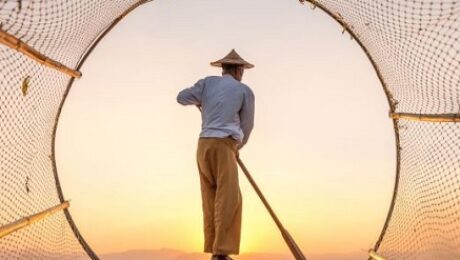
The Codex Alimentarius, “the food code”, has a fundamental role in protecting consumers all around the world and ensuring fair practices in food trade. The Code of Practice for Fish and Fishery Products is the essential reference point for technical guidance on the harvesting, processing, transport and sale of fish and fishery products.
- Published in GUIDE/TOOLS/MANUALS, LIVESTOCK / FISHERIES
Increasing the benefits and sustainability of irrigation through the integration of fisheries

This guide is a contribution to two CGIAR Research Programs: Fish Agri-Food Systems (FISH) (led by WorldFish) and Water, Land and Ecosystems (WLE) (led by IWMI), both of which are supported by funders contributing to the CGIAR Trust Fund.
This guide focuses on how to sustainably optimize and broaden the range of benefits from irrigation development – not only economic but also social and environmental benefits. It emphasizes the opportunities that fisheries could provide to increase food production and economic returns, enhance livelihoods and public health outcomes, and maintain key ecosystem services. The guide considers possible trade-offs between irrigation and fisheries, and provides recommendations on how these can be minimized.
- Published in GUIDE/TOOLS/MANUALS, LIVESTOCK / FISHERIES
Multilevel innovation platforms for development of smallholder livestock systems: How effective are they?
There is growing recognition that sustainable development of smallholder agriculture in Sub-Saharan Africa requires a systems approach. One response to this has been applying the agricultural innovation systems concept and the use of Innovation Platforms (IP) as tools for agricultural development. By providing social space and facilitating interactions among farmers, researchers and other stakeholders, IPs can promote collective action and foster innovation.
- Published in EXTENSION AND INNOVATION, LIVESTOCK / FISHERIES
How to feed the world in times of pandemics and climate change?
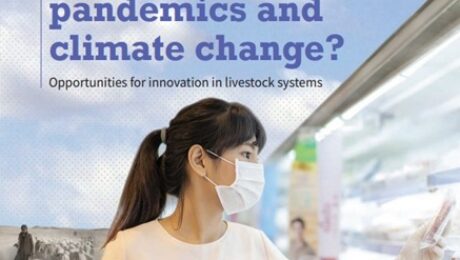
In this brief, the four questions posed by the GFFA are addressed from the perspective of livestock systems. The crucible of COVID-19 is an opportunity to acknowledge vulnerabilities in order to “build back better” by applying the lessons learned from emergency and rehabilitation activities of past zoonotic disease outbreaks and natural disasters. This means investing in sustainable, inclusive, and resilient food systems for better production, better nutrition, a better environment, and better lives.
- Published in CLIMATE CHANGE, LIVESTOCK / FISHERIES
Strengthening Capacity for Enhanced Animal Nutrition Services
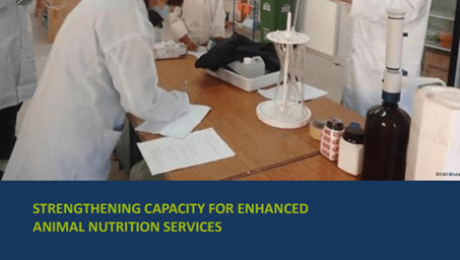
Bhutanese farmers practise mixed farming, with crops and livestock rearing forming an integral part of their livelihoods, particularly in rural communities At farmers’ level, agriculture, livestock and forest interventions are integrated farmers depend on livestock for manure for soil fertility, and dairy products for nutrition and income, while forests provide feed and fodder for animals, timber for construction, wood for heating and cooking, and non wood forest products for consumption and sale Communities in higher altitudes depend more on livestock as the farming of crops has limited scope In semi urban areas, commercial dairy and other livestock products have also emerged with improved breeds Animal nutrition has thus become more important than ever before The only animal nutrition laboratory ( equipped to analyse feed and fodder samples in the country is in Jakar in north central Bhutan However, the laboratory lacks capacity in terms of both institutional and human resources Owing to insufficient government funding, the ANL is not fully functional and, despite the important national mandate of the laboratory, the government has not been able to equip it adequately, nor train personnel to carry out important feed analysis functions Some of the existing equipment is obsolete and not serviceable, while laboratory staff members have not received adequate training in the use of the laboratory facilities The ANL needs equipment for the analysis of feed and fodder samples Training and refresher courses are also required to ensure that laboratory staff members are kept abreast of the latest developments in livestock nutrition.
- Published in CAPACITY DEVELOPMENT, LIVESTOCK / FISHERIES
- 1
- 2