
The Top 100 questions for the sustainable intensification of agriculture in India’s rainfed drylands

India has the largest area of rainfed dryland agriculture globally, with a variety of distinct types of farming systems producing most of its coarse cereals, food legumes, minor millets, and large amounts of livestock. All these are vital for national and regional food and nutritional security. Yet, the rainfed drylands have been relatively neglected in mainstream agricultural and rural development policy. As a result, significant social-ecological challenges overlap in these landscapes: endemic poverty, malnutrition and land degradation. Sustainable intensification of dryland agriculture is essential for helping to address these challenges, particularly in the context of accelerating climate change. In this paper, we present 100 questions that point to the most important knowledge gaps and research priorities. If addressed, these would facilitate and inform sustainable intensification in Indian rainfed drylands, leading to improved agricultural production and enhanced ecosystem services. The horizon scanning method used to produce these questions brought together experts and practitioners involved in a broad range of disciplines and sectors. This exercise resulted in a consolidated set of questions covering the agricultural drylands, organized into 13 themes. Together, these represent a collective programme for new cross- and multi-disciplinary research on sustainable intensification in the Indian rainfed drylands.
- Published in CLIMATE CHANGE, INDIA
Building climate resilience in degraded agricultural landscapes through water management

Rainfall variability and water scarcity continue to hamper the food and income security of smallholder farming systems in poverty-affected regions. Innovations in soil and water management, especially in the drylands, are critical for meeting food security and water productivity targets of Agenda 2030. This study analyzes how rainfed agriculture can be intensified with marginal impact on the landscape water balance. The impact of rainwater harvesting structures on landscape hydrology and associated agricultural services was analyzed in the semi-arid Jhansi district of Bundelkhand region in central India. The Parasai-Sindh pilot watershed was subjected to a 5-year (2012–2016) monitoring of rainfed system improvements in water availability and crop intensification due to surface water storage (haveli system), check dams, and field infiltration structures. Hydrological processes were monitored intensively to analyze the landscape’s water balance components. Rainwater harvesting (RWH) structures altered the landscape’s hydrology, limiting average surface runoff from 250 mm/year to 150 mm/year over the study period. Groundwater levels increased by 2–5 m (m), alleviating water scarcity issues of the communities in recurring dry years. Nearly 20% of fallow lands were brought under cultivation. Crop yields increased by 10–70% and average household income increased from US$ 960/year to US$ 2700/year compared to that in the non-intervention landscape. The combined soil–water–vegetation efforts strengthened water resilience and environmental systems in agricultural landscape.
- Published in CLIMATE CHANGE, INDIA
Agrometeorological Advisory Services India
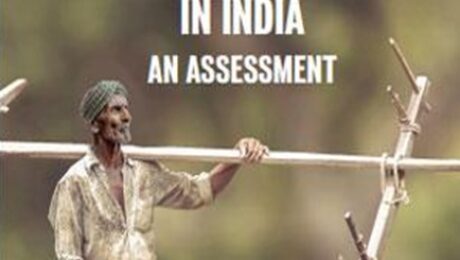
CSE releases new report on agromet advisory systems – focusing on weather data collection and forecasting, agricultural expertise and analysis of crop data, leading to generation of practical advice for farmers.
The agricultural sector is the foundation of the Indian economy. It employs more than 50 per cent of India’s workforce and contributes almost 17–18 per cent of its GDP.1 At present, agricultural livelihoods are being severely impacted world over as a result of anthropogenic global warming and climate change. India’s labour-intensive and subsistence-based agriculture sector is particularly vulnerable to this development.
Climate change has both direct and indirect effects on agricultural productivity, including changing rainfall patterns, severe drought, flooding and changes in the geographical redistribution of pests and diseases.2 These impacts are highly unevenly distributed across the globe, with regions like South Asia (including India) and sub-Saharan Africa experiencing significantly more adverse effects than North America, Europe (particularly Eastern Europe) and South America.
- Published in CLIMATE CHANGE, INDIA
Co-creating Sustainable Livelihoods in India

The livelihoods sector has undergone a significant transformation over the past decade and is expected to see even greater shifts over the coming years, given the unprecedented times that stand ahead of us. Livelihoods are a critical pathway to eliminating poverty and driving sustainable economic growth for communities. It is thus crucial to bring forth opportunities that have potential to transform systems that create sustainable livelihoods across the value chain, despite the dynamically evolving challenges. It is important to anticipate that collaboration and co-creation are the most critical enablers of sustainable livelihood in rural and urban India. Not only does it preserve the resources involved in re-invention, it also allows us to leveraging cross sectoral expertise & enables collective action to achieve impact at a large scale.
Keeping this very idea at its heart, the India Livelihoods Collective has undertaken numerous initiatives since its inception, providing a collaborative platform for diverse organisations to come together in catalysing the process of achieving livelihoods goals in India. Extending its efforts in this direction, this document provides specially curated 45 livelihoods practices initiated by Corporates, NGOs, Impact Investors, Start-ups, Academia and other enablers in the livelihoods ecosystem. The compendium maps the avenues for collaboration to scale-up and replicate these practices, highlighting the challenges, key learnings, livelihoods outcomes and impact on livelihoods sustainability.
- Published in INDIA
State of Organic and Natural Farming in India: Challenges and Possibilities
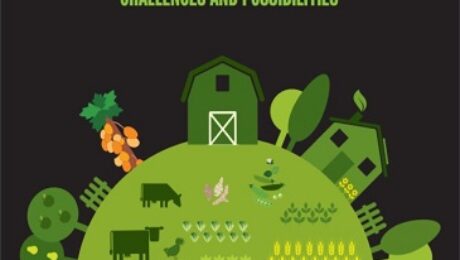
Organic and natural farming in India is still at a nascent stage. To scale it up and make it a mass movement, governments at the Centre and in states must take big steps.
Mainstreaming organic and natural farming will address the ecological, economic and existential crisis in Indian agriculture. Only by using farming methods that are sustainable in the long run will Indian agriculture-and India-become truly self-reliant.
- Published in AGROECOLOGY, INDIA
- 1
- 2