
Transforming Food Systems for a Rising India
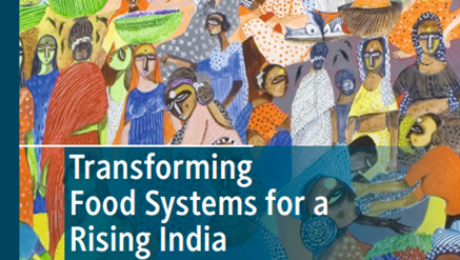
This book explores various challenges and opportunities to achieve a nutrition-secure future through diversified production systems, improved health and hygiene environment and greater individual capability to access a balanced diet contributing to an increase in overall productivity.
The authors bring together the latest data and scientific evidence from the country to map out the current state of food systems and nutrition outcomes. They place India within the context of other developing country experiences and highlight India’s status as an outlier in terms of the persistence of high levels of stunting while following global trends in obesity. This book discusses the policy and institutional interventions needed for promoting a nutrition-sensitive food system and the multi-sectoral strategies needed for simultaneously addressing the triple burden of malnutrition in India.
Minutes of consultation workshop on the project consortium for Scaling-up Climate Smart Agriculture in South Asia (C-SUCSeS): Brainstorming the challenges and opportunities of tackling climate change in the region
Consortium for Scaling-up Climate Smart Agriculture in South Asia (C-SUCSeS) is a four-year joint initiative between South Asian Association for Regional Cooperation (SAARC) Agriculture Center (SAC), International Food Policy Research Institute (IFPRI), International Fund for Agricultural Development (IFAD), and the SAARC Development Fund (SDF). The program aims to foster partnership and cooperation between SAARC, National Agricultural Research and Extension Systems (NARES), IFPRI, and SAARC governments on the Climate-Smart Agriculture (CSA) agenda. The project also intends to support agricultural researchers’ to generate and facilitate delivery of technological solutions to smallholder and women farmers, with a specific priority on the intensification and resilience of smallholder agriculture, contributing, inter alia, to increasing water management efficiency, promote innovative, pro-poor approaches and technologies with demonstrated scaling-up potential, strengthen partners’ institutional and policy capacities, enhance policy engagement, and generate and share knowledge.
- Published in INDIA
Investing in rural people in India
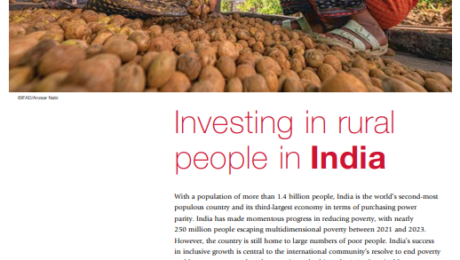
IFAD has been working in India for more than 40 years. The current country strategic opportunities programme is fully aligned with the government’s policy framework.
During the period 2018-2024, IFAD will accompany government efforts to make smallholder farm systems remunerative, sustainable and resilient to climate change and price shocks.
- Published in INDIA
Strengthening Agricultural Extension Training in South Asia (India, Sri Lanka and Nepal)

The study undertaken in India, Sri Lanka, and Nepal assessed eight process skills and core competencies-program planning, program implementation, communication and public relations, information and communication technologies (ICTs), program evaluation, personal and professional development, diversity and gender, and technical subject matter expertise. These were assessed on “How important are these competencies?” and “How well does the UG extension curriculum address these process skills and competencies?” on a 1 to 5 scale. The perceptions of agricultural extension professionals on appropriate ways to acquire core competencies and major barriers to effective implementation of extension curriculum were also obtained. A total of 628 respondents completed the online survey. In addition, 12 focus group discussions (FGDs) were conducted in India and Sri Lanka, and the participants included 153 research scholars and 95 extension faculty members / field functionaries. The key FGD questions were related to perceptions of local agricultural extension contexts, critical job skills and core competencies required of extension workers, their coverage in the current UG curriculum, and the barriers to effectively training extension workers.
Development of balanced nutrient management innovations in South Asia: Perspectives from Bangladesh, India, Nepal, and Sri Lanka

Imbalanced application of fertilizers is a major fiscal and environmental problem in South Asia. We review fertilizer policies and extension efforts to promote the balanced application of nutrients in Bangladesh, India, Nepal, and Sri Lanka and draw 4 important lessons. (1) Fertilizer sector reforms need to be fiscally sustainable and politically feasible. Governments in South Asia have abolished fertilizer subsidies on multiple occasions, only to restore them a few years later. (2) The use of phosphate and potash did not decline much even after a sharp increase in their prices in India in 2011–12. Therefore, rationalizing subsidies, while necessary, may not be sufficient to ensure balanced use of fertilizers. Changing farmers’ practice requires combining the right incentives with the right information. (3) Soil test based soil health cards (SHC) hold promise, but there is limited evidence on their utility. India’s SHC program had very little impact on fertilizer use. (4) Direct cash transfer (DCT) of fertilizer subsidies can reduce distortions, but Sri Lanka’s experience shows that implementing it is more challenging than universal subsidies. DCT requires the removal of price controls, integration of land records, farmer identity cards, a cash transfer system with universal coverage, and a competitive fertilizer retail sector.
- Published in BANGLADESH, INDIA, NATURAL RESOURCE MANAGEMENT, NEPAL, RESOURCES, SRI LANKA
Family Farmers’ Cooperatives: Ending Poverty and Hunger in South Asia
Family farming is an integrated farming system, which produces diverse agricultural commodities that significantly contribute to improve food and nutrition security and income of the poor and marginalized group of people in the rural areas. As the reduced level of the economies of scale is a major challenge encountered by family farmers in the South Asia that could be addressed by farmers’ cooperatives approach. Strengthening the farmers’ cooperatives would increase the economies of scale that reduce the cost per unit in production and marketing of the products, and eventually support to improve food security, increase income and reduce poverty. This paper is based on the secondary data and literature review. Ending poverty and hunger targets of the Sustainable Development Goals (SDGs) by 2030 is possible through strengthening the family farmers’ cooperatives in South Asia by adopting some major policy interventions. Such interventions include: i) Effective implementation of the South Asia regional plan of action of UN Decade of Family Farming (UNDFF); ii) Increase the public and private investment in family farming and farmers’ cooperatives; iii) Emphasize the multidimensional approach of program implementation to the poor and marginalized people; iv) Promotion of Future Smart Food System such as nutrition sensitive agriculture and the utilization of neglected and underutilized nutrition rich crops; and v) Effective coordination and cooperation among different agencies at the country level (local, sub-national, and national levels), development partners, South-South counties, and North-South countries to contribute in attaining the targets of Sustainable Development Goals, particularly the No Poverty and Zero Hunger through farmers’ cooperatives in South Asia.
- Published in BANGLADESH, BHUTAN, INDIA, MALDIVES, NEPAL, PAKISTAN, PRODUCER ORGANISATION, SRI LANKA
Challenges and Societal Perceptions on Sustainable Bioenergy Development in China, India, and the Philippines: Policy Implications

Intergovernmental Panel on Climate Change (IPCC) Third Assessment report (2001) stated that anthropogenic activities are the main cause of spikes in greenhouse gas (GHG) emissions in the last century. Burning of fossil fuels is the dominant source of CO2 emissions that contributed to global warming and climate change. Use of alternative clean and renewable energy is a widely acknowledged mitigation and adaptation strategy to addressing climate change. Renewable and clean energy sources include solar, wind, hydro, and bioenergy. Bioenergy is energy produced from plant biomass including trees, perennial grasses, and energy-rich and oil-rich food crops.
Agricultural Transformation in Nepal
This book addresses some key strategic questions related to agriculture in the context of major contemporary developments and emerging challenges in Nepal such as the changing role of agriculture with economic growth, structural transformation in reducing poverty, improving nutritional outcomes, and addressing the challenges of climate change. The book also suggests policy measures to improve the delivery of critical inputs and services and ensure the participation of marginal and smallholders in high-value chains. Further, it discusses how the new federal system and governance structure will affect the delivery of agricultural technology and services.
How Far Gender Inequality Suppresses Human Development: Evidence from India

In Indian society, the root cause of gender inequality lies in its patriarchal structure. In this paper, an attempt has been made ment, to a certain extent, to link gender relations with the development of the nation. Furthermore, it examines the spatial variations of gender development and analyzes spatial inequality at the level of human development in the different states of India. Finally, this paper has suggested some important policy implications for reducing gender inequality in India. The Gender Parity Index (GPI) of literacy has been calculated to understand the inequality between the two genders. The Human Development Index (HDI) method has been used to analyze spatial variation in the development of human resources. The study reveals that there are considerable disparities in the level of human resource development among the different states of India, and higher-income states do not show the highest HDI values. The measure to reduce gender inequality in rural India must be developed and implemented according to the needs of specific target groups, that is, women and children.
A compendium of Technologies, Practices, Services and Policies for Scaling Climate Smart Agriculture in Odisha (India)
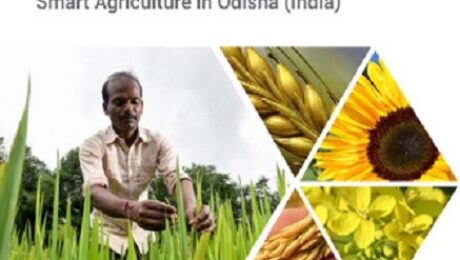
Stakeholders engaged in agricultural research for development (AR4D) are increasingly tackling risks associated with climate change in smallholder systems. Accordingly, development and scaling of climate-smart agriculture (CSA) are one of the priorities for all the organizations, departments and ministries associated with the farm sector. Having a ‘one-stop-shop’ compiled in the format of a compendium for CSA technologies, practices and services would therefore serve a guide for all the stakeholders for scaling CSA in smallholder systems.
- Published in GUIDE/TOOLS/MANUALS, INDIA
- 1
- 2