A Guide to Genetic Resources
This guide lays out the importance of genetic resources to protect human needs, by explaining how they underpin our food and nutritional security while sustaining our environments. It also explains how the public and private sectors can work together to conserve and share the benefits of these critical resources for future generations.
- Published in GUIDE/TOOLS/MANUALS, ICTs
Guidelines on data disaggregation for SDG Indicators using survey data
the working group on data disaggregation, the Food and Agriculture Organization of the United Nations (FAO) has taken numerous steps towards supporting Member Countries in the production of disaggregated estimates. Within this framework, these Guidelines offer methodological and practical guidance for the production of direct and indirect disaggregated estimates of SDG indicators having surveys as their main or preferred data source. Furthermore, the publication provides tools to assess the accuracy of these estimates and presents strategies for the improvement of output quality, including Small Area Estimation methods.
- Published in GUIDE/TOOLS/MANUALS, ICTs
A practical tool to enhance the chances of success of digital agriculture interventions for sustainable development in Africa and India
Effective and sustainable tools, mechanisms and strategies are needed to significantly improve the prevailing agricultural productivity, farmer remuneration, and food availability globally to be able to meet the food, livelihood, and nutritional needs of the projected population in coming decades. Digital agriculture has the potential to efficiently bring together the benefits of the advances in agricultural research and the developments in information and communication technology space to help positively transform the entire spectrum of pre-farm to post-fork activities in the agriculture sector. Through interactions with over 338 stakeholders across India and Africa, supplemented with study of various digital agricultural interventions across the globe, the author observed that most digital agricultural interventions did not succeed, causing great loss of time and resources, which the world can ill afford. The world is falling behind on achieving the Sustainable Development Goals (SDGs). Drawing lessons from the failures and successes of the past digital agricultural interventions, the author has developed an innovative MS Excel tool called HeDAPSEE, to help estimate the success of a digital agricultural intervention before implementing it. This can help strengthen it in planning stages and enhance its chances of success.
- Published in GUIDE/TOOLS/MANUALS, ICTs
Conducting Tablet-Based Field Data Collection with Survey Solutions
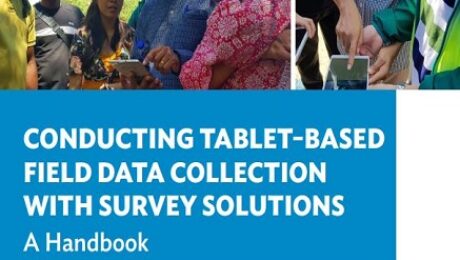
This handbook has been developed to complement the MOOC on Survey Solutions. It is suitable for anyone who has experience in conducting traditional face-to-face interviews and wishes to learn the workflows and skills needed to conduct a CAPI project. The handbook’s instructions are tailored toward people with beginner or intermediate experience in Survey Solutions, particularly if they are looking to reinforce existing knowledge or learn additional functionalities. handbook is designed to help national statistical officers and other interested readers embrace the efficiencies of CAPI-based data collection to supersede the traditional pen and paper interviewing method. We hope that it contributes to the adoption of other innovative tools and technologies that further strengthen national statistical systems.
- Published in GUIDE/TOOLS/MANUALS, ICTs
The GSMA AgriTech Toolkit for the Digitisation of Agricultural Value Chains
The Toolkit for the Digitisation of Agricultural Value Chains is a collection of resources that illustrate how digital technologies can address pain points for farmers and value chain actors, such as agribusinesses and cooperatives, in the agricultural last mile. These resources support the use of digital technologies for digital procurement, by enabling the transition from paper to digital for a range of systems and processes in the last mile. The toolkit explains how digitising the last mile offers a pathway to financial inclusion for farmers.
The toolkit has been designed to be read either as a complete document from start to finish, or as individual chapters if one is working through a particular challenge. Although each chapter may be more relevant to specific audiences, readers would benefit from reading the report in its entirety.
- Published in GUIDE/TOOLS/MANUALS, ICTs, VALUE CHAIN / MARKETS
Digital agriculture in action-Selected case studies from India
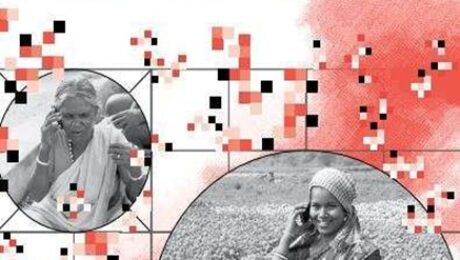
Agriculture is becoming more knowledge-intensive. Access to timely, accurate information tailored to specific locations and conditions is critical to helping farmers make the most of their resources in changing circumstances. Digital technologies help overcome these challenges by bridging the information gap, improving access to market information, enhancing access to micro-finance, providing actionable advisories on managing pest and disease as well as improving agriculture human capital. However, sustaining digital interventions needs a holistic approach that includes the right policies, frameworks, ecosystem and capacities. This publication highlights some successful initiatives in leveraging digital technologies, improving value-chain processes and building capacity to bring about positive change among agriculture stakeholders and improve livelihoods. This publication is part of the Country Investment Highlights series under the FAO Investment Centre’s Knowledge for Investment (K4I) programme.
- Published in ICTs