From Digital Divide to Opportunity
As the digital revolution proceeds, it becomes critical to understand the impacts on productivity and income, but also impacts on smallholders across a spectrum of sociodemographic groups, and unintended environmental externalities. The digital transformation of agriculture is multi-faceted. Concentrating on just one or a few aspects is insufficient. Challenges include infrastructure access (electricity, mobile, or internet connectivity), affordability (ability to pay for digital tools and services), awareness, skills and literacy (Roberts and Hernandez 2019). Certain groups—such as women, rural youth, the poor, and people with disabilities or limited formal education—face greater barriers to digitalization (Staab et al. 2024).
Without the understanding to transform inequalities, digitalization could deepen gender inequalities and even create new forms of discrimination (Staab et al. 2024; Sterling 2021). Some fear that digitalization might even make for a new form of gender inequality (Judy Wajcman et al., 2020). As the CGIAR institutionalizes digital innovations to drive transformative changes in FLWs, it is crucial to understand and address gender inequality and social exclusion, so that digital innovations can catalyze greater social inclusion.
- Published in ICTs
Gender Responsive Digital Extension and Advisory Services in Bangladesh and India
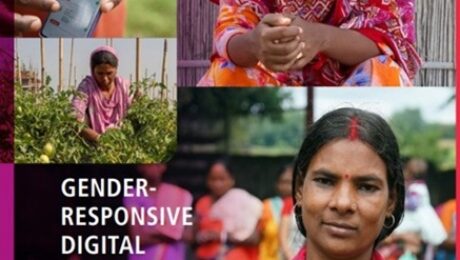
This paper jointly written by the Centre for Research on Innovation and Science Policy (CRISP), Hyderabad, India, and the Food and Agriculture Organization of the United Nations (FAO) explores the gender responsiveness of digital EAS in two Southern Asian countries – Bangladesh and India – where women play a critical role in agrifood systems.
Both countries have piloted and scaled various digital EAS models over the past decade. The study investigated the barriers that limit women’s uptake and effective use of these services. While numerous digital EAS solutions are emerging in both Bangladesh and India, there is limited evidence that women farmers are meaningfully engaging with or benefiting from these services. One key barrier remains women’s limited access to mobile phones, the primary delivery channel for most digital EAS platforms. However, the challenge goes well beyond device ownership.
Summary of the SMART patrolling – A toolkit for better forest management in Bangladesh
The Government of Bangladesh deployed SMART patrolling in the Sundarbans – the world’s largest mangrove forest – in September 2017. Although guidelines were developed, they did not cover plain land forest or hill forest monitoring in the country. FAO in partnership with the Bangladesh Forest Department and the International Union for Conservation of Nature (IUCN), developed a SMART patrolling toolkit for these types of forest. The toolkit has been piloted in four protected areas of Cox’s Bazar and will be used for management of hill and plain land forest across Bangladesh.It will guide the use on CyberTracker/Android phone for real-time monitoring of hill and plain land forests across the country. The toolkit will be useful for law enforcement, monitoring threats, forest and wildlife monitoring, and public awareness generation.
CGIAR’s role in digital extension services
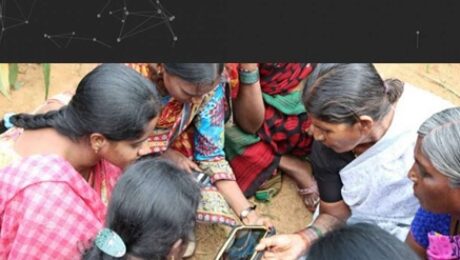
CGIAR’s digital extension services bridge the gap between the development and the adoption of new climate change adaptation strategies. These services include new ways to disperse information on rainfed systems of agriculture, nutrition, pest control, new crop varieties, crop management practices, and more.
Measuring digital development Facts and figures 2021

Approximately 4.9 billion people – or 63 per cent of the world’s population – are using the Internet in 2021[1]. This represents an increase of 17 per cent since 2019, with 782 million people estimated to have come online during that period. Of the 2.9 billion people offline, 96 per cent live in developing countries.
These are just some of the insights that can be found in the 2021 edition of Facts and Figures, ITU’s annual global assessment of digital connectivity. It features estimates for key connectivity indicators for the world, global regions, and several country groupings, including the UN-designated Least Developed Countries.
Digital and virtual spaces as sites of extension and advisory services research: social media, gaming, and digitally integrated and augmented advice
The field of research on agricultural and rural extension and education, also referred to as advisory services and intermediaries, has always engaged with different aspects of the spaces in which agricultural producers (farmers, growers, ranchers) are situated and operate. In this editorial, I will reflect on the elements and environments which jointly constitute and shape the farm (Darnhofer 2020) and their connection with extension and advisory services in the digital age, opening up new digital and virtual spaces. Extension and advisory services receive ample consideration in current debates on digitalization and digital transformation of the agrifood sector, and are an important focus of attention for agriculture and food systems research, practice and policy (Ehlers, Huber, and Finger 2021; Ingram and Maye 2020; Klerkx 2020). In what follows, I will elaborate on some digital and virtual spaces as sites of extension and advisory services research, to progress the field of study for which The Journal of Agricultural Education and Extension serves as a publication outlet.
Exploring the ICT Preferences of Personnel from Agricultural Extension Organizations in the Northeastern Region of India
Although the public extension system in India is known to be one of the largest in the world, it still lacks coordinated effort in managing the links between research, extension, and farmers, resulting in non-uniform distribution of agricultural knowledge and technology. A vast majority of the population earning their livelihood through agriculture remain small and marginal farmers. Lack of computerized networks in agricultural extension departments, inadequate skilled manpower for disseminating agricultural information, and increasingly diverse needs of farmers across the Indian sub-continent pose hurdles in effective information transfer to the farming community. The use of information and communication technology (ICT) tools exerts a positive impact on agriculture worldwide by aiding speedy and effective dissemination of agricultural information. Increased awareness of modern ICT tools and their usage will contribute substantially to strengthening the extension network and expand its scope. This study explored the ICT preferences of personnel from agricultural extension organizations employed in public extension organizations in the north-eastern region of India. It found that electronic media is ranked below the conventional extension contact modes of print media and personalized contact regarding its use for disseminating agricultural information by the extension personnel. Demographic characteristics of the personnel from agricultural extension organizations such as sex, age, education, specialization, designation, and work experience were significantly associated with the pattern of ICT use specifically experience with ICT, frequency of use, training, and voluntary use.
Remote sensing for space-time mapping of smog in Punjab and identification of the underlying causes using geographic information system (R-SMOG)
Food and Agriculture Organization of the United Nations, Pakistan initiated the Technical Cooperation Programme on Remote Sensing for Spatio-Temporal mapping of Smog (R-SMOG) upon the request of the Government of Punjab. The R-SMOG evaluates the relationship between Smog and the rice residue burning practices by farmers in the Rice belt of Punjab. It is a comprehensive geospatial research which integrates Spatio-temporal mapping of smog viz-a-viz climatological modelling, study of seasonal trends and dynamics and estimates an inventory of sectoral emissions. The findings of the R-SMOG will assist to generate scientific evidences to study the causes of Smog in Punjab and to adopt adequate mitigation and adaptation strategies.
Tracing Hybridity in the Provision of ICT-Enabled Agricultural Weather Information Services in Ghana
This study investigates the hybrid informational governance arrangements involved in the provision of ICT-enabled Weather Information Services (WIS) for farming in Ghana. Farmers and organizations providing WIS were interviewed. Findings show that multiple technologies are used by combinations of government, business, and civil society organizations to provide various WIS for farming. The ICT has facilitated the creation of different hybrid informational governance arrangements, categorized as multiplicity, intertwinement, and coalescence, which permits flows of WIS across scales, from international non-state organizations to farming communities, often by-passing national and district-level government organizations. Government organizations remain key players in the provision of WIS.
What’s Cooking : Digital Transformation of the Agrifood System
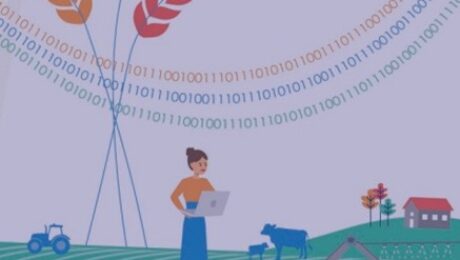
The digital agriculture revolution holds a promise to build an agriculture and food system that is efficient, environmentally sustainable, and equitable, one that can help deliver the Sustainable Development Goals. Unlike past technological revolutions in agriculture, which began on farms, the current revolution is being sparked at multiple points along the agrifood value chain. The change is driven by the ability to collect, use, and analyze massive amounts of machine-readable data about practically every aspect of the value chain, and by the emergence of digital platforms disrupting existing business models. All this allows for drastically reduced transaction costs and pervasive information asymmetries that plague the agrifood system. The success of the digital transformation, however, is not guaranteed as the risks it brings are numerous, including those related to data governance and inadequate competition within and between digital platforms. What’s Cooking: Digital Transformation of the Agrifood System investigates how digital technologies can accelerate the transformation of the agrifood system by increasing efficiency on the farm; improving farmers’ access to output, input, and financial markets; strengthening quality control and traceability; and improving the design and delivery of agriculture policies. It also identifies a key role for the public sector in maximizing the benefits of this process while minimizing its risks, through enabling an innovation ecosystem featuring open datasets, digital platforms, digital entrepreneurship, digital payment systems, and digital skills and encouraging equitable technology adoption.