
Training Module on Value Chain Extension

Agriculture is critical tothe overall development and transformation of Odisha. With crops covering 35 per cent of the state’s geographical area and more than 60 per cent of its workforce depending on farming for livelihood, the welfare of Odisha’s people cannot be separated from its agriculture. The State Government is keen to increase agricultural production and raise incomes and productivity by leveraging science and technology, improving resource use efficiency, diversifying to high value agriculture and supporting efficient functioning of agricultural markets.
- Published in GUIDE/TOOLS/MANUALS, VALUE CHAIN / MARKETS
Training Module on Facilitation for Development
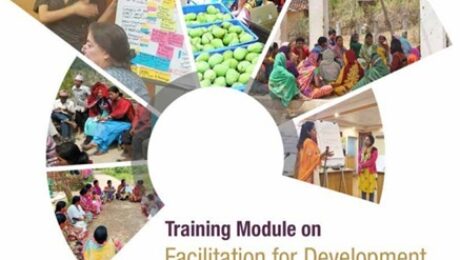
Agriculture is critical to the overall development and transformation of Odisha. With crops covering 35 per cent of the state’s geographical area and more than 60 per cent of its workforce depending on farming for livelihood, the welfare of Odisha’s people cannot be separated from its agriculture. The State Government is keen to increase agricultural production and raise incomes and productivity by leveraging science and technology, improving resource use efficiency, diversifying to high value agriculture and supporting efficient functioning of agricultural markets.
- Published in GUIDE/TOOLS/MANUALS
Training Module on Designing and Delivering Gender-Responsive Extension and Advisory Services (EAS)

The overall aim of this Manual is to develop capacities to identify, integrate, and address gender issues in Extension and Advisory Services (EAS). This Module is intended to assist trainers involved in training of agricultural extension and advisory services (EAS) staff and other knowledge mediators on designing and delivering a Gender-Responsive EAS.
- Published in GENDER, GUIDE/TOOLS/MANUALS
Training Module on Climate Smart Agriculture
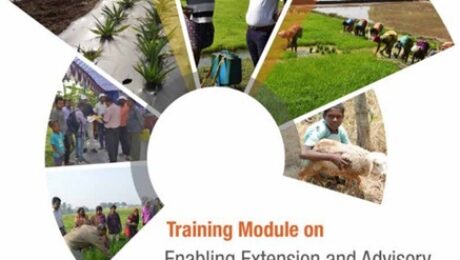
Extension and Advisory Services (EAS) play a major role in strengthening technical, managerial and organisational capacities of farmers, who need frequent renewal of capacities to deal effectively with the evolving challenges faced by rural communities. Based on a systematic Capacity Needs Assessment of EAS in Odisha, undertaken by the Centre for Research on Innovation and Science Policy (CRISP) and the International Rice Research Institute (IRRI) in 2018-19, a strategy was developed to address the identified capacity gaps.
- Published in CLIMATE CHANGE, GUIDE/TOOLS/MANUALS
Manual on Good Practices in Extension Research & Evaluation
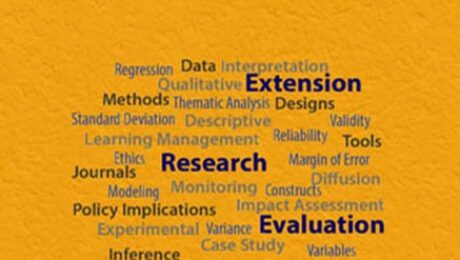
This document on Good Practices in Extension Research and Evaluation is developed as a hands on reference manual to help young researchers, research students, and field extension functionaries in choosing the right research methods for conducting quality research and evaluation in extension.
- Published in GUIDE/TOOLS/MANUALS, MONITORING & EVALUATION
Developing Capacity for Evaluation of Rural Extension and Advisory Services

In this NELK module you will first learn about rural advisory services (RAS) in agricultural innovation systems (AIS) and the basics of monitoring and evaluating RAS in order to understand the role of monitoring and evaluation (M&E) in RAS and its basic principles and uses. You will also learn how M&E can be used to improve the policies and practices of RAS, what the current main global challenges are, and finally what this means for the M&E of RAS interventions such as reform processes, developing RAS organisations, or delivering a particular RAS service
- Published in GUIDE/TOOLS/MANUALS, MONITORING & EVALUATION
Tool for Agroecology Performance Evaluation: Process of Development and Guidelines for Application

This document provides guidance on how to assess agroecology by carrying out a diagnostic of production systems with regard to various dimensions (environmental, social, economic) and in a variety of contexts (production systems, communities, territories, agro-ecological zones, etc.).
- Published in GUIDE/TOOLS/MANUALS, MONITORING & EVALUATION
A decision guide for rural advisory methods

This decision guide is intended to help extension professionals and their organizations make informed decisions about which extension method and approach to use for providing information, technologies and services to rural producers and to facilitate interactions and knowledge flow. Expected users include field-based rural advisors, extension managers and programme planners.
- Published in CONCEPTS AND PRACTICES, GUIDE/TOOLS/MANUALS
Value Chain Toolkit- Harnessing the Power of Markets to Drive Change

The Value chain tool kit provides methods to support male and female farmers in the “Build to Grow to Prosper” phases of the CRS Pathway to Prosperity (Figure 1). Through this work CRS is striving to achieve industry leadership in value chain service delivery and influence that is gender-sensitive. Value chain programming is now synonymous with agricultural development and CRS aims to adopt this approach across our project portfolio.
- Published in GUIDE/TOOLS/MANUALS, VALUE CHAIN / MARKETS
Toolkit for value chain analysis and market development integrating climate resilience and gender responsiveness

This toolkit intends to provide policy makers, planners, project developers, technical advisors and implementers at local, regional or national level, with good practices of climate-resilient and gender-responsive value chain development.1 It aims to act as a repository of relevant tools and methodologies for identifying relevant stakeholders and engaging with them to collect data and analyse it to design interventions. Climate change threatens agricultural value chains and having a genderresponsive value chain approach is useful in analysing the climate risks, as it looks at stages during and beyond production, while using a more systemic approach to risk management.
- Published in GUIDE/TOOLS/MANUALS, VALUE CHAIN / MARKETS