Financial Inclusion in Food, Land and Water Systems: What Works for Women?
This brief draws on distilled evidence from research and practice from CGIAR and beyond to highlight how to design financial products, approaches and processes to reach, benefit and empower women through financial inclusion.
Women across Low- and Middle-Income Countries (LMICs) contribute to food, land and water systems (FLWS) as agricultural producers, entrepreneurs, consumers, and conservationists. They produce 60 to 80 percent of the food in most developing countries, are responsible for half of the world’s food production but remain disproportionately excluded from financial services. 742 million rural women who are also least educated, among the poorest and have low or no access to mobile phones are left out of formal financial services, globally. This exclusion discounts their essential roles in the sector, stymies their potential, and hinders their well-being and that of their households and communities. Barriers to women’s financial inclusion include lack of collateral, cumbersome documentation and procedural requirements, legal discrimination, financial illiteracy, discriminatory social norms, financial risk aversion and lack of gender disaggregated data. Financial service providers generally view rural women as risky or unprofitable, moreover, financial services are poorly adapted for low-literacy, low-income women.
- Published in GENDER, NEW PUBLICATIONS
Investigating the roles and challenges of female extension workers: a systematic review

As the demographics of farming communities change and innovations evolve, the role of female extension workers becomes more critical, especially in reaching out to women farmers who are often primary agricultural laborers in rural households and supporting them to adopt new practices and technologies. This study investigates how the roles and challenges of female extension workers are represented in the literature and what assumptions and implications underpin these representations.
- Published in GENDER, NEW PUBLICATIONS
Training Module on Designing and Delivering Gender-Responsive Extension and Advisory Services (EAS)

The overall aim of this Manual is to develop capacities to identify, integrate, and address gender issues in Extension and Advisory Services (EAS). This Module is intended to assist trainers involved in training of agricultural extension and advisory services (EAS) staff and other knowledge mediators on designing and delivering a Gender-Responsive EAS.
- Published in GENDER, GUIDE/TOOLS/MANUALS
Gender Responsive Digital Extension and Advisory Services in Bangladesh and India
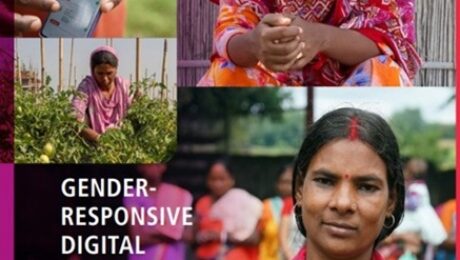
This paper jointly written by the Centre for Research on Innovation and Science Policy (CRISP), Hyderabad, India, and the Food and Agriculture Organization of the United Nations (FAO) explores the gender responsiveness of digital EAS in two Southern Asian countries – Bangladesh and India – where women play a critical role in agrifood systems.
Both countries have piloted and scaled various digital EAS models over the past decade. The study investigated the barriers that limit women’s uptake and effective use of these services. While numerous digital EAS solutions are emerging in both Bangladesh and India, there is limited evidence that women farmers are meaningfully engaging with or benefiting from these services. One key barrier remains women’s limited access to mobile phones, the primary delivery channel for most digital EAS platforms. However, the challenge goes well beyond device ownership.
Women’s empowerment and farmland allocations in Bangladesh: evidence of a possible pathway to crop diversification
Climate change will likely affect several of the dimensions that determine people’s food security status in Bangladesh, from crop production to the availability and accessibility of food products. Crop diversification is a form of adaptation to climate change that reduces exposure to climate-related risks and has also been shown to increase diet diversity, reduce micronutrient deficiencies, and positively affect agro-ecological systems. Despite these benefits, the level of crop diversification in Bangladesh remains extremely low, requiring an examination of the factors that support uptake of this practice. This paper explores whether women’s empowerment, measured using the Women’s Empowerment in Agriculture Index (WEAI), leads to increased diversification in the use of farmland. Our results reveal that some aspects of women’s empowerment in agriculture, but not all, lead to more diversification and to a transition from cereal production to other crops like vegetables and fruits. These findings suggest a possible pathway for gender-sensitive interventions that promote crop diversity as a risk management tool and as a way to improve the availability of nutritious crops.
- Published in BANGLADESH, GENDER, RESOURCES
Women and Men in Small-scale Fisheriers and Aquaclture in Asia
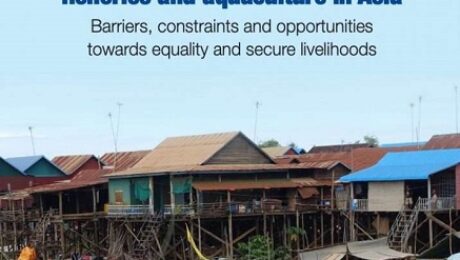
This study aims to consolidate the efforts to date to provide recommendations for action and future studies. Its objective is to answer the following questions for small-scale fisheries and aquaculture in Asia: (i) What is the division of labour between women and men in specific fisheries and aquaculture practices and what are the differences with respect to their access to assets, resources and entitlements? (ii) What are the drivers of such differences? (iii) What could be critical entry points and opportunities for addressing inequalities and discriminatory practices? To answer these questions, the study conducted an online literature search on gender and fisheries and aquaculture in Asia, selecting articles published between 2011 and 2021.
- Published in GENDER, ICTs, LIVESTOCK / FISHERIES, RESOURCES
Gender, tenure security, and landscape governance
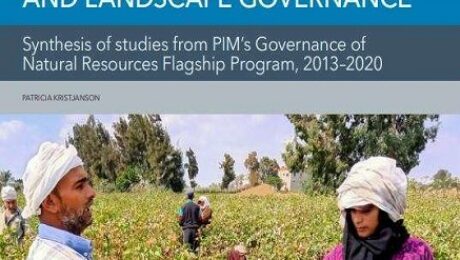
Gender relations shape women’s and men’s identities, norms, rules, and responsibilities. They influence people’s access to, use, and management of land and other natural resources, including ownership, tenure, and user rights to land and forests. A substantial body of research on these issues comes from the CGIAR Research Program on Policies, Institutions, and Markets (PIM), through its Flagship 5 research theme. Flagship 5 focused on gender and social inclusion in relation to land and natural resource tenure and to landscape governance, and analyzed how tenure security affects sustainable management of land, water, fish stocks, and forests. This Food Policy Report reviews the scientific contributions from Flagship 5 to the broader wealth of related literature, including key lessons about gender from these studies with respect to outcomes and impacts on natural resource management, food security, and poverty alleviation.
- Published in GENDER
Gender, water and agriculture

The economic contribution of women to agricultural and irrigation activities and to the livelihoods, well-being and food security of families and communities is often unrecognized, invisible and mostly undervalued. Moreover, the role of women in fetching, preserving and managing productive and non-productive water often goes unrecognized and understudied. Hence, this assessment aims to shed light on the different contributions and benefits of women and men in relation to agricultural roles, responsibilities and resources, focusing mainly on productive agricultural resources, including water, to inform more efficient, equitable and gender-responsive programmes in the future.
- Published in GENDER
Climate resilience and disaster risk analysis for gender-sensitive value chains
The purpose of this publication is to facilitate gender analysis in value chain operations, considering climate change effects, in order to enhance adaptive capacities of value chain actors. It aims to facilitate the analysis of the factors that determine gender-differentiated vulnerability to climate change and risks. It is intended for use by practitioners and service providers, including governments, civil society and academia, to guide interventions within the agrifood sector.
- Published in GENDER, VALUE CHAIN / MARKETS
Engendering Agricultural Development Dimensions & Strategies
The book comprises of three divisions viz., Gender in agriculture development (Part I), Gender in allied sectors of agriculture (Part II) and Data, tools and approaches in gender analysis (Part III) that explicates the prevalent gendered relegations. It provides insights on the gender dimensions in Indian agriculture, including initiatives, policy reforms and mends the literature gap in gender roles in the sector. The gender roles and impacts from different cultural and geographical horizons of Indian agricultural and allied sectors in the emerging contexts of globalization, urbanization, climate change and the Covid19 pandemic are gathered in this book.
- Published in GENDER