
Rethinking Resilience: Adapting to a Changing Climate

Climate change is accelerating, and harmful weather events—such as extreme storms, droughts, heat waves, or wildfires—are becoming more frequent and severe. Lower-income countries suffer more deaths and lasting losses from disasters than richer countries. Climate shocks push vulnerable households into poverty and cause small businesses to fail, reversing development gains.
“Rethinking Resilience” urges developing countries to adopt policies that empower individuals, households, farms, and firms to take proactive measures. Current approaches rely too heavily on government programs and investments, such as subsidies and cash transfers, which are reactive rather than preventive. Developing economies lack the resources of high-income countries, making them more vulnerable.
- Published in CLIMATE CHANGE, NEW PUBLICATIONS
Training Module on Climate Smart Agriculture
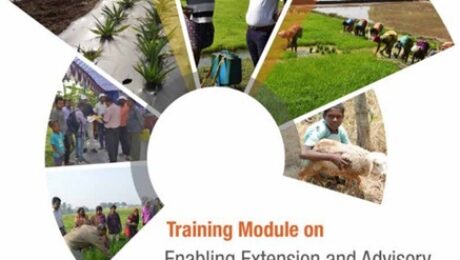
Extension and Advisory Services (EAS) play a major role in strengthening technical, managerial and organisational capacities of farmers, who need frequent renewal of capacities to deal effectively with the evolving challenges faced by rural communities. Based on a systematic Capacity Needs Assessment of EAS in Odisha, undertaken by the Centre for Research on Innovation and Science Policy (CRISP) and the International Rice Research Institute (IRRI) in 2018-19, a strategy was developed to address the identified capacity gaps.
- Published in CLIMATE CHANGE, GUIDE/TOOLS/MANUALS
Agricultural Extension and Advisory Services in Support of Climate Change Adaptation and Mitigation: An Evidence Review
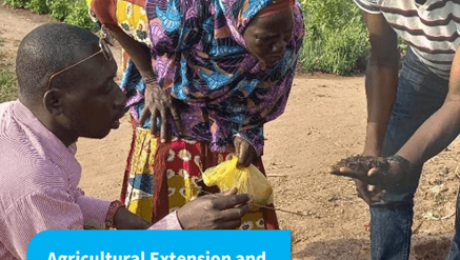
Agricultural extension and advisory services (EAS) is an umbrella term that refers to organizations, individuals and activities that supply information and services required by farmers and other agricultural actors to develop their own technical, organizational, and managerial capacities for livelihoods and well-being improvement. Public and private sector EAS are on the frontline in supporting smallholder farmers to adapt to the changing climate as they engage in field level activities and work closely with farmers to provide new technologies, technical information, knowledge, and skills, as well as linking them to other rural actors. EAS also work with policy makers and development program implementers to disseminate information about and put into practice new agricultural interventions, programs, and policies.
- Published in CLIMATE CHANGE
Climate Change and Agricultural Extension and Advisory Services
Rising temperatures, longer droughts, more severe storms, warming oceans, and recurring floods are already threatening global agriculture and food security. Most smallholder farmers in middle- and lowincome countries have limited abilities to respond and adapt to these climate risks. While highly vulnerable to climate change, agriculture is also a major source of greenhouse gas (GHG) emissions. To strengthen the resilience of agriculture to changing climate, a two-pronged approach that supports adaptation – adjusting to actual or expected future climate change – and promotes mitigation – reducing greenhouse gases or enhancing accumulation and storage of GHG – is needed. Promoting these strategies at scale involves changing the behavior, strategies, and agricultural practices of millions of agricultural producers.
This brief discusses policy-level changes to enhance and strengthen the role and functioning of extension and advisory services (EAS) in addressing climate change adaptation and mitigation.
- Published in CLIMATE CHANGE
Upscaling Climate Smart Agriculture: Lessons for Extension and Advisory Services
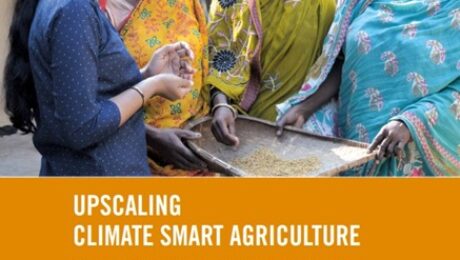
Upscaling Climate Smart Agriculture (CSA) entails changing the behavior, strategies and agricultural practices of millions of agricultural producers. Extension and Advisory Services (EAS) can play a very important role in upscaling CSA, but they need to be better organised to do so. This paper explores how EAS should be organized to support the upscaling of CSA by drawing lessons for EAS from four successful cases namely: natural resource management, crop management, varietal improvement and weather insurance. It used the Innovation Management Framework which identifies three elements that are critical for innovation: functions, actions and tools. To contribute fully to upscaling CSA, the paper argues that EAS providers need to broaden their mandate, partner with other relevant actors in the Agricultural Innovation Systems (AIS), deepen their level of engagement with the research, prepare for a long-term effort and seek to influence the enabling environment through policy advocacy
- Published in CLIMATE CHANGE
Water quality in agriculture: Risks and risk mitigation

This publication, Water Quality in Agriculture: Risks and Risk Mitigation, emphasizes technical solutions and good agricultural practices, including risk mitigation measures suitable for the contexts of differently resourced institutions working in rural as well as urban and peri-urban settings in low- and middle-income countries. With a focus on sustainability of the overall land use system, the guidelines also cover possible downstream impacts of farm-level decisions. As each country has a range of site-specific conditions related to climate, soil and water quality, crop type and variety, as well as management options, subnational adjustments to the presented guidelines are recommended.
Water Quality in Agriculture: Risks and Risk Mitigation, is intended for use by national and subnational governmental authorities, farm and project managers, extension officers, consultants and engineers to evaluate water quality data, and identify potential problems and solutions related to water quality. The presented guidelines will also be of value to the scientific research community and university students.
- Published in CLIMATE CHANGE
Dry zone of Sri Lanka – Climate-smart intensification of upland and lowland crop production systems
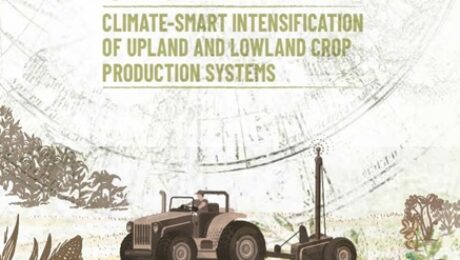
This guide explores the climate-smart intensification of upland and lowland crop production systems in the dry-zone of Sri Lanka and provides technical guidance to achieve the productive objectives of selected strategic crops (as deemed relevant by the Government of Sri Lanka). The first edition focuses on maize and groundnut upland production systems and on rice lowland production. It provides a quick reference for information on crop production and soil management, including crop varieties, nutritional requirements and field equipment. As climate change will result in wider and more severe occurrences of plant pests, the guide relies on integrated pest management practices adapted to climate change. Optimizing the production of these crops calls for the diversification of crop systems using intercrops and cover crops. Additionally, sustainable mechanization is regarded as an essential agricultural production input to optimize labour and land productivity for the sustainable and profitable development of the agriculture sector. Therefore, the guide describes the innovative equipment needed for the sustainable optimization of crop production. To ensure coherent guidance and advice on sustainable farming practices, inputs and technologies, the guide has been developed in cooperation with all stakeholders working in the agriculture sector of Sri Lanka.
- Published in CLIMATE CHANGE, SRI LANKA
Climate change impacts and adaptation options in the agrifood system
This paper summarises the findings of the International Panel on Climate Change’s Sixth Assessment Report which runs into over 3 000 pages, focusing on the assessment’s conclusions and their effect on agrifood systems. The Assessment Reports of the International Panel on Climate Change (IPCC) are important as they provide policymakers with state of knowledge assessments on climate change, its implications, and potential future risks. These assessments also put forward adaptation and mitigation options.
- Published in CLIMATE CHANGE
Managing risks to build climate-smart and resilient agrifood value chains
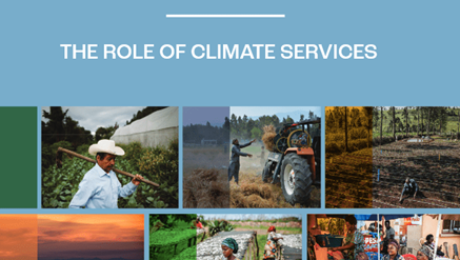
This work provides a preliminary analysis of the key climate risks affecting agrifood value chains and opportunities for climate services that reach stakeholders involved in all stages of the value chain, from agrifood production to harvest, storage and refrigeration, processing and packaging, transportation, markets, trade and consumption. Climate services provide opportunities to effectively and comprehensively mainstream climate risk management across the entire agrifood value chain, in addition to increasing sustainability and efficiency in the face of changing climate conditions.
This report provides significant primary information and recommendations on the development of climate services across the agrifood value chain with a view to systematically enhance sustainable and resilient opportunities. It also provides a basis for further research and investment funding in this area. Its findings could spark follow-up research and public and private investment.
- Published in CLIMATE CHANGE, VALUE CHAIN / MARKETS
Self-evaluation and Holistic Assessment of Climate Resilience of Farmers and Pastoralists (SHARP)
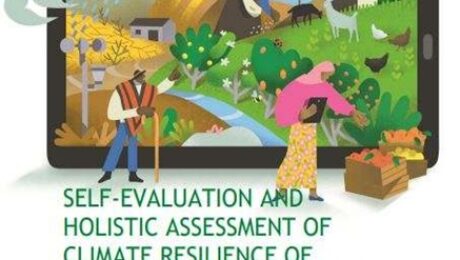
This new guidance document provides updated guidelines and tools for development practitioners and researchers on the features and use of SHARP+, describing the tool as it is today. This document does not replace the previous “Self-evaluation and Holistic Assessment of climate Resilience of farmers and Pastoralists” methodological document published in 2015 which encompasses all the theoretical grounds of the tool.
This guidance document also presents the latest version of the questionnaire, SHARP+ 2020, scoring system and tablet application based on the two technical reviews mentioned above. This document walks the reader through a step-by-step process to set up the SHARP+ assessment, adapt it to the local context, and use it to collect and analyse information about household resilience in the context of climate change.
- Published in CLIMATE CHANGE