
Global capacity needs assessment (GCNA) methodology
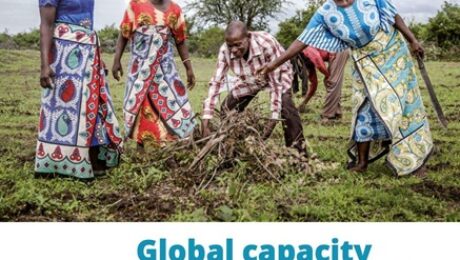
This methodology aims to support countries to:
explore opportunities and challenges to integrate nutrition-related objectives into agricultural programmes and policies; identify capacity needs of the EAS providers and at the organizational and policy/enabling environment levels for strengthening capacities to integrate nutrition outcomes in their regular tasks and responsibilities; and identify knowledge gaps in training materials on nutrition-sensitive agriculture.
- Published in CAPACITY DEVELOPMENT, NUTRITION
Developing Capacities For Agricultural Innovation Systems
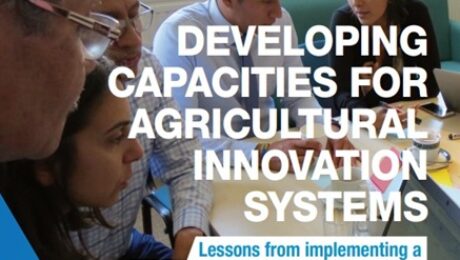
The CDAIS project was designed to strengthen TAP through the development of a common framework for Capacity Development for Agricultural Innovation Systems (CD for AIS) which sets concepts and guidance for the promotion of agricultural innovation system (AIS) thinking and collaborative learning, and for the strengthening of capacities for AIS in tropical countries. The project tested this common framework (or so-called ‘TAP CF’) in eight pilot countries,1 offering a variety of situations across three continents. A transversal analysis of the project outcomes therefore intended to ‘validate’ the common framework, meaning to verify hypotheses underpinning the TAP CF and to verify how changes happened in the eight countries in relation with the mode of operationalization of the TAP CF by the CDAIS project. In other words, the transversal analysis sought to understand how the project produced outcomes, what these outcomes were in each country, so as to propose recommendations for upgrading the TAP Common Framework across its theoretical and practical dimensions.
- Published in CAPACITY DEVELOPMENT
- 1
- 2