
Legal report on the ecosystem approach to fisheries in Maldives
Legislating for an ecosystem approach to fisheries (EAF) is complex, due to the holistic nature of EAF involving multiple factors that underpin the social, economic, environmental, and institutional aspects of fisheries sustainability. These factors include ecosystems integration, risks, inter-sectoral collaboration, research, participatory processes, monitoring, control, surveillance, and enforcement, among others. To assess how the EAF is being implemented through national policy and legal frameworks, FAO developed A diagnostic tool for implementing an ecosystem approach to fisheries through national policy and legal frameworks. The present legal report on the EAF used the diagnostic tool to assess the alignment of selected policy and legal instruments of Maldives with the EAF. This assessment analysed the extent to which 82 EAF legal requirements, which are considered the minimum standards in legislating for the EAF, are reflected in Maldives’ policies and legislation relevant to the fisheries sector of the country and other relevant sectors (such as environment, wildlife, ecosystems, and maritime affairs). Based on this preliminary diagnosis, gaps were identified in the assessed instruments, and recommendations were made for improving the implementation of the EAF.
This report was elaborated following a participatory approach with the involvement of the national competent authorities of Seychelles. The report was drafted and submitted to the national authorities of Maldives in October 2021. The Fisheries Management Section, under the Ministry of Fisheries, Marine Resources and Agriculture, endorsed this EAF Legal Report in January 2023
Country Programming Framework for the Republic of Maldives 2022–2026

This Country Programming Framework (CPF) is the planning and programming tool that translates the FAO Strategic Framework into actions for Maldives for the period 2022–2026. It is conceived in partnership with the government of the Maldives and is intended to support government priorities, planning, implementation and reporting vis-à-vis the 2030 Agenda.
Agroecology dialogue series: Outcome brief no. 3

This paper presents four main findings and key recommendations of a dialogue that explored the role of agroecology in increasing resilience to agri-input scarcity in the context of the current global food crisis. It aims to support and feed into the Coalition for food systems transformation through Agroecology (Agroecology Coalition) and contribute to the emergence of a broader framework on multiple pathways for food systems transformation. Its findings reflect the diverse backgrounds, opinions, and areas of expertise of dialogue participants, and are not intended to convey the opinions of the organizing institutions.
Supporting Intensive Vegetable Production in Selected Urban and Peri Urban Areas to Mitigate the Impact of COVID-19 Crisis
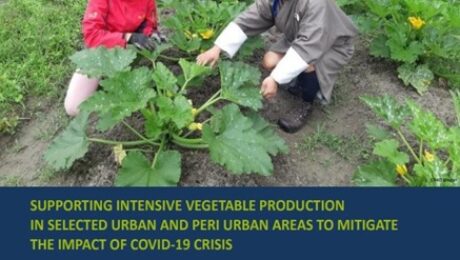
The COVID 19 pandemic had important consequences on international trade and food supply chains, which were all the more damaging for countries with import driven economies, such as Bhutan Reliable food provision and economic prospects in Bhutan were hindered by the sudden isolated situation in which the country found itself In particular, the quality and quantity of fresh vegetables, fruits and meat imports were in peril, given the long queues of trucks at the border with India In addition, Bhutan’s tourism and hospitality sector, an important part of its economy, was hit hard by the COVID 19 pandemic, which caused rising unemployment rates, especially in cities, where 77 percent of residents work in the services sector To face the agricultural and economic challenges related to the pandemic, the Government requested the support of FAO to enhance intensive urban and peri urban farming practices and provide greater economic and food security for the population The project was set up to develop urban and peri urban agriculture in 65 converted acres of land, developing the agriculture capacity of young people and laid off employees from the tourism and hospitality sector to produce and supply vegetables to urban markets and ensure alternative streams of income.
Strengthening Soil Laboratory Facilities and Performance to Support Evidence-Based Decision-Making
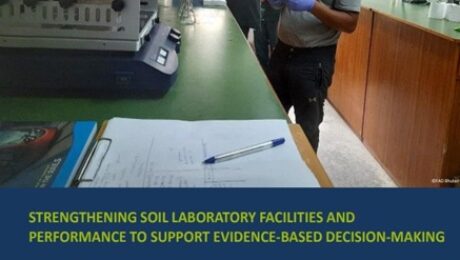
Bhutan is facing serious issues with land degradation, driven by unsustainable agricultural practices, such as overgrazing, as well as infrastructure construction lacking adequate environmental measures, including mining This is further problematic because Bhutan is a mountainous country, with existing land degradation problems, such as soil erosion, landslides and severe losses in soil fertility These issues further compound issues with agricultural productivity, the environment and food security and the overall quality of life Furthermore, the country lacks a national soil map and there is very limited data available on soil quality Existing soil data are outdated and scattered among institutions, often having been collected through ad hoc surveys, and fundamental data, such as geographic location description ( of sampling sites, is missing, with limited soil profiles mapped Analytical soil data is crucial for decision making regarding soil fertility, which impacts various key areas, including food security, agriculture, the environment, climate change and sustainable development.
Supporting the Development of National Food and Nutrition Security Index
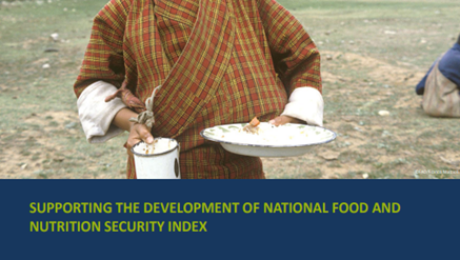
While Bhutan has seen a substantial reduction in poverty from 23 2 percent in 2007 to 8 21 percent in 2017 and increased public investment in agriculture in recent years, it remains a largely agriculture dependent society that continues to face poverty, food insecurity and malnutrition challenges This is particularly pronounced in rural areas where prevalence of poverty stood at 11 94 percent as of 2017 The government has therefore taken action to develop its agriculture sector, while ensuring a longer term Renewable Natural Resources ( Strategy In 2020 the agriculture sector continued to be the main driver of growth in the country and increased by 5 07 percent, while all other sectors experienced a decline, mainly due to the impact of the COVID 19 pandemic In 2019 the Ministry of Agriculture and Forests ( requested the support of FAO for the development of a robust food security and nutrition dashboard to inform policy and strategy development in the country The enhancement of food and nutrition policies has been constrained by a lack of baseline data on the food consumption and nutrition practices of the population, which have not been reviewed since 2014.
Family Farmers’ Cooperatives: Ending Poverty and Hunger in South Asia
Family farming is an integrated farming system, which produces diverse agricultural commodities that significantly contribute to improve food and nutrition security and income of the poor and marginalized group of people in the rural areas. As the reduced level of the economies of scale is a major challenge encountered by family farmers in the South Asia that could be addressed by farmers’ cooperatives approach. Strengthening the farmers’ cooperatives would increase the economies of scale that reduce the cost per unit in production and marketing of the products, and eventually support to improve food security, increase income and reduce poverty. This paper is based on the secondary data and literature review. Ending poverty and hunger targets of the Sustainable Development Goals (SDGs) by 2030 is possible through strengthening the family farmers’ cooperatives in South Asia by adopting some major policy interventions. Such interventions include: i) Effective implementation of the South Asia regional plan of action of UN Decade of Family Farming (UNDFF); ii) Increase the public and private investment in family farming and farmers’ cooperatives; iii) Emphasize the multidimensional approach of program implementation to the poor and marginalized people; iv) Promotion of Future Smart Food System such as nutrition sensitive agriculture and the utilization of neglected and underutilized nutrition rich crops; and v) Effective coordination and cooperation among different agencies at the country level (local, sub-national, and national levels), development partners, South-South counties, and North-South countries to contribute in attaining the targets of Sustainable Development Goals, particularly the No Poverty and Zero Hunger through farmers’ cooperatives in South Asia.
- Published in BANGLADESH, BHUTAN, INDIA, MALDIVES, NEPAL, PAKISTAN, PRODUCER ORGANISATION, SRI LANKA