
Country Programming Framework for the Republic of Maldives 2022–2026

This Country Programming Framework (CPF) is the planning and programming tool that translates the FAO Strategic Framework into actions for Maldives for the period 2022–2026. It is conceived in partnership with the government of the Maldives and is intended to support government priorities, planning, implementation and reporting vis-à-vis the 2030 Agenda.
Agroecology dialogue series: Outcome brief no. 3

This paper presents four main findings and key recommendations of a dialogue that explored the role of agroecology in increasing resilience to agri-input scarcity in the context of the current global food crisis. It aims to support and feed into the Coalition for food systems transformation through Agroecology (Agroecology Coalition) and contribute to the emergence of a broader framework on multiple pathways for food systems transformation. Its findings reflect the diverse backgrounds, opinions, and areas of expertise of dialogue participants, and are not intended to convey the opinions of the organizing institutions.
Supporting Intensive Vegetable Production in Selected Urban and Peri Urban Areas to Mitigate the Impact of COVID-19 Crisis
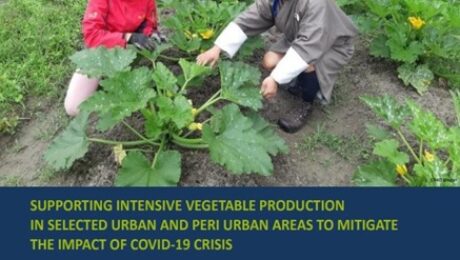
The COVID 19 pandemic had important consequences on international trade and food supply chains, which were all the more damaging for countries with import driven economies, such as Bhutan Reliable food provision and economic prospects in Bhutan were hindered by the sudden isolated situation in which the country found itself In particular, the quality and quantity of fresh vegetables, fruits and meat imports were in peril, given the long queues of trucks at the border with India In addition, Bhutan’s tourism and hospitality sector, an important part of its economy, was hit hard by the COVID 19 pandemic, which caused rising unemployment rates, especially in cities, where 77 percent of residents work in the services sector To face the agricultural and economic challenges related to the pandemic, the Government requested the support of FAO to enhance intensive urban and peri urban farming practices and provide greater economic and food security for the population The project was set up to develop urban and peri urban agriculture in 65 converted acres of land, developing the agriculture capacity of young people and laid off employees from the tourism and hospitality sector to produce and supply vegetables to urban markets and ensure alternative streams of income.
Strengthening Soil Laboratory Facilities and Performance to Support Evidence-Based Decision-Making
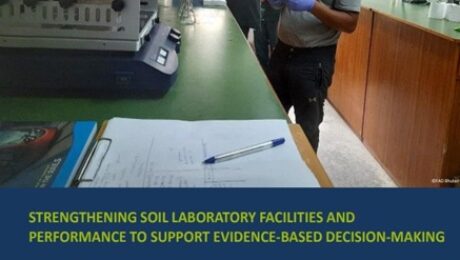
Bhutan is facing serious issues with land degradation, driven by unsustainable agricultural practices, such as overgrazing, as well as infrastructure construction lacking adequate environmental measures, including mining This is further problematic because Bhutan is a mountainous country, with existing land degradation problems, such as soil erosion, landslides and severe losses in soil fertility These issues further compound issues with agricultural productivity, the environment and food security and the overall quality of life Furthermore, the country lacks a national soil map and there is very limited data available on soil quality Existing soil data are outdated and scattered among institutions, often having been collected through ad hoc surveys, and fundamental data, such as geographic location description ( of sampling sites, is missing, with limited soil profiles mapped Analytical soil data is crucial for decision making regarding soil fertility, which impacts various key areas, including food security, agriculture, the environment, climate change and sustainable development.
Supporting the Development of National Food and Nutrition Security Index
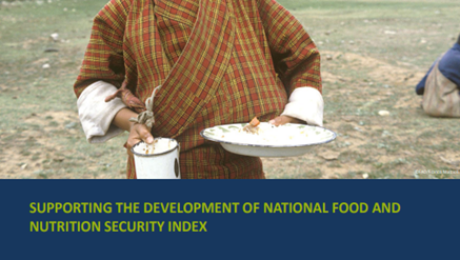
While Bhutan has seen a substantial reduction in poverty from 23 2 percent in 2007 to 8 21 percent in 2017 and increased public investment in agriculture in recent years, it remains a largely agriculture dependent society that continues to face poverty, food insecurity and malnutrition challenges This is particularly pronounced in rural areas where prevalence of poverty stood at 11 94 percent as of 2017 The government has therefore taken action to develop its agriculture sector, while ensuring a longer term Renewable Natural Resources ( Strategy In 2020 the agriculture sector continued to be the main driver of growth in the country and increased by 5 07 percent, while all other sectors experienced a decline, mainly due to the impact of the COVID 19 pandemic In 2019 the Ministry of Agriculture and Forests ( requested the support of FAO for the development of a robust food security and nutrition dashboard to inform policy and strategy development in the country The enhancement of food and nutrition policies has been constrained by a lack of baseline data on the food consumption and nutrition practices of the population, which have not been reviewed since 2014.
Promoting the Development of Livestock Value Chains in Bangladesh to Reduce Poverty
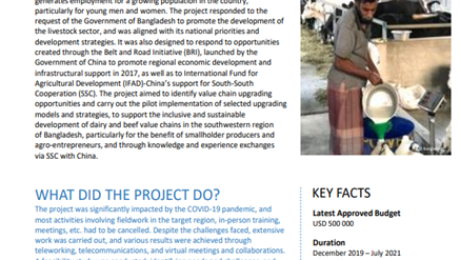
Bangladesh is a low income economy. The livestock sector is not only a source of income and nutritious food for rural households, it also generates employment for a growing population in the country, particularly for young men and women. The project responded to the request of the Government of Bangladesh to promote the development of the livestock sector, and was aligned with its national priorities and development strategies. It was also designed to respond to opportunities created through the Belt and Road Initiative (BRI), launched by the Government of China to promote regional economic development and infrastructural support in 2017, as well as to International Fund for Agricultural Development (IFAD) China’s support for South South Cooperation (SSC). The project aimed to identify value chain upgrading opportunities and carry out the pilot implementation of selected upgrading models and strategies, to support the inclusive and sustainable development of dairy and beef value chains in the southwestern region of Bangladesh, particularly for the benefit of smallholder producers and agro entrepreneurs, and through knowledge and experience exchanges via SSC with China.
- Published in BANGLADESH, NUTRITION, RESOURCES
Securing food for all in Bangladesh
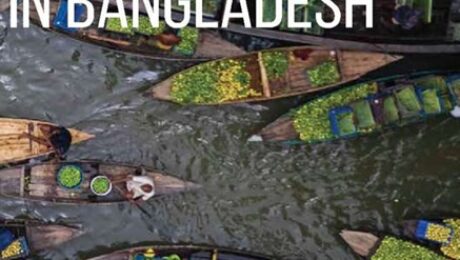
Access to sufficient food by all people at all times to meet their dietary needs is a matter of critical importance. Despite declining arable agricultural land, Bangladesh has made commendable progress in boosting domestic food production. The growth in overall food production has been keeping ahead of population growth, resulting in higher per capita availability of food over time. In the early 1970s, Bangladesh was a food-deficit country with a population of about 75 million. Today, the population is 165 million, and the country is now self-sufficient in rice production, which has tripled over the past three decades. Along with enhanced food production, increased income has improved people’s access to food. Furthermore, nutritional outcomes have improved significantly.
Nevertheless, the challenges to food and nutrition security remain formidable. Future agricultural growth and food and nutrition security are threatened by population growth, worsening soil fertility, diminishing access to land and other scarce natural resources, increasing vulnerability of crop varieties to pests and diseases, and persistent poverty leading to poor access to food. In addition, the impacts of climate change—an increase in the incidence of natural disasters, sea intrusion, and salinity—will exacerbate food and nutrition insecurity in the coming decades if corrective measures are not taken. Aligned with this context, the authors of the book explore policy options and strategies for developing agriculture and improving food security in Bangladesh. Securing Food for All in Bangladesh, with its breadth and scope, will be an invaluable resource for policymakers, researchers, and students dedicated to improving people’s livelihoods in Bangladesh.
- Published in BANGLADESH, NUTRITION, RESOURCES
New land, new life: a success story of new land resettlement in Bangladesh.
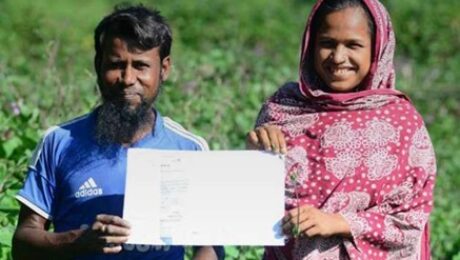
The Ganges-Brahmaputra-Meghna deltas has newly emerged ‘char’ islands, which are very vulnerable, socially, institutionally and environmentally. This book explains how the governments of Bangladesh and the Netherlands cooperated on a land-based rural development project to give settlers security and purpose. The 13 chapters in this book are based on experience gathered from implementing the Char Development and Settlement Project undertaken since 1994.
- Published in BANGLADESH
ACIAR–Bangladesh Collaboration Strategy 2021–2030
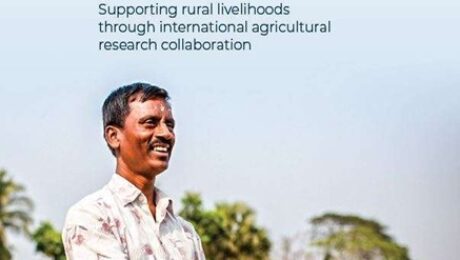
A 10-year strategy enables the possibility of longer-term and flexible programs that respond to the complex challenges of issues (such as climate change) and enables a recalibration of the relationship that can affirm the changing nature of the partnerships and the role ACIAR plays in catalysing regional collaboration. This strategy acknowledges how the relationship between ACIAR and Bangladesh has evolved to become a strong co-invested partnership, and affirms the importance of the contribution of ACIAR to regional collaboration.
- Published in BANGLADESH, PRIVATE SECTOR EXTENSION /PPP, RESOURCES
Women’s empowerment and farmland allocations in Bangladesh: evidence of a possible pathway to crop diversification
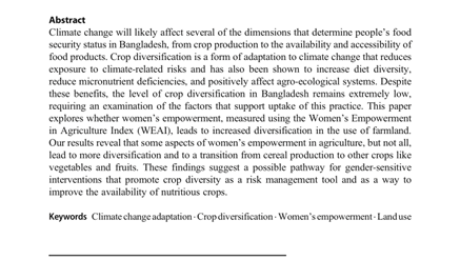
Climate change will likely affect several of the dimensions that determine people’s food security status in Bangladesh, from crop production to the availability and accessibility of food products. Crop diversification is a form of adaptation to climate change that reduces exposure to climate-related risks and has also been shown to increase diet diversity, reduce micronutrient deficiencies, and positively affect agro-ecological systems. Despite these benefits, the level of crop diversification in Bangladesh remains extremely low, requiring an examination of the factors that support uptake of this practice. This paper explores whether women’s empowerment, measured using the Women’s Empowerment in Agriculture Index (WEAI), leads to increased diversification in the use of farmland. Our results reveal that some aspects of women’s empowerment in agriculture, but not all, lead to more diversification and to a transition from cereal production to other crops like vegetables and fruits. These findings suggest a possible pathway for gender-sensitive interventions that promote crop diversity as a risk management tool and as a way to improve the availability of nutritious crops.
- Published in BANGLADESH, GENDER, RESOURCES