
Agroecology: a holistic path towards sustainable food systems
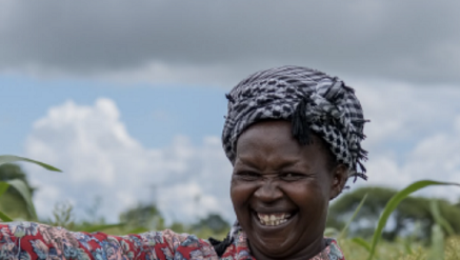
Agroecology applies ecological principles to agriculture and ensures a regenerative use of natural resources and ecosystem services, while addressing the need for socially equitable food systems in which people can choose what they eat and how it is produced.
project focuses on climate-smart landscape restoration and the promotion of livelihood strategies that foster resilience. The landscape graduation model combines a biophysical, socio-economic, and institutional assessment of landscape and community status with an intervention strategy to help communities and landscapes graduate from highly degraded and impoverished to more sustainable levels.
informed IFAD’s ROLL project in Lesotho. It provided a baseline for analysing and comparing the performance of different types of agricultural systems across multiple dimensions of sustainability.
- Published in AGROECOLOGY
How can the farmer field school approach be used to support agroecological transitions in family farming in the Global South?
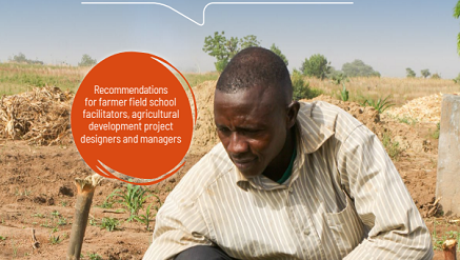
The key to implementing farmer field schools (FFS) is to trigger an experimentation process based on collaboration between a group of farmers and a facilitator. The purpose of this document is to provide project managers, technicians and designers with practical information on how to use the FFS approach and adapt it to their context of intervention to support the agroecological transition (AET). It also will be useful for research staff, leaders of farmers’ organizations (FOs), teachers and students interested in using the FFS approach or better understand its benefits.
The findings and recommendations proposed in this document are the result of a partnership between three institutions working to support AET in the Global South: CIRAD, FAO and the NGO AVSF (Agronomists and Veterinarians Without Borders).
- Published in AGROECOLOGY
Policy Brief -Enabling extension and advisory services to promote agroecology
Why should extension and advisory services promote agroecology?
The global impacts of the climate crisis are becoming ever clearer, and natural resources and ecosystems are being depleted. Despite some progress, hunger and poverty persist, and inequalities are deepening. The world is realizing that unsustainable high external inputs and resource-intensive industrialized systems pose a real danger of biodiversity loss, increased greenhouse gas emissions, shortages of healthy food, and the impoverishment of dispossessed peasants around the world. There is global consensus on the urgent need for a transition to agri-food systems that ensure food and nutrition security, social and economic equity, and sustain the ecosystem on which all these elements depend. Agroecology provides a crucial pathway towards this objective. Making extension and advisory services (EAS) demand-driven is not an end in itself but a means to improving their relevance and impact.
- Published in AGROECOLOGY
The Politics of Knowledge

The Global Alliance for the Future of Food commissioned this compendium to gather and uplift the knowledge and evidence on agroecological and regenerative approaches and Indigenous foodways, recognizing that different forms of evidence, knowledge, and expertise are fundamental to shifting mindsets and the basis for action. It brings together the commonly held perspectives, narratives, questions, and gaps in these approaches, and explores ways to mobilize and elevate them to donors, researchers, and policymakers. Through this initiative, the Global Alliance, its members, and the contributing authors seek to better understand, synthesize, and mobilize the evidence base to create enabling environments for agroecology, regenerative approaches, and Indigenous foodways where supportive research, policy, and investments can flourish and benefit all.
- Published in AGROECOLOGY
The Biodiversity Advantage
IFAD’s second Biodiversity Advantage report showcases five IFAD projects which highlight the integral importance of biodiversity in agriculture. These projects show how promoting biodiversity improves human and ecosystem health, and the roles of small-scale agricultural producers in preserving and restoring biodiversity and schemes that reward them for their stewardship of healthy natural environments.
- Published in AGROECOLOGY
Agroecology and Sustainable Food Systems
In this study, we analyze the production orientation (agroecological or conventional) of extension workers from nine countries in three continents, based on a questionnaire. We acknowledge the potential of extension workers as multipliers of an agroecological approach and as a way of scaling up agroecology. Results show that almost half of the participants support an agroecological approach, and with a higher frequency than the institutions they work for. Variables such as country (with their different historical contexts), objectives of extension practice, gender, age and years of experience influence the production approach of extension workers.
- Published in AGROECOLOGY
Rethinking conventionalization: A view from organic agriculture in the Global South
The so-called conventionalisation of organic farming debate revolves around tensions between organic agriculture as an alternative to the dominant agri-food system and the rise of organic agribusiness. A contested issue is the conceptualisation and assessment of the impact of capitalist expansion in the organic sector on the transformative power of alternative agriculture. This article engages with critiques on Guthman’s analysis of conventionalisation and the concept of bifurcation. It brings a new perspective to the debate by introducing a case from the Global South, which reveals four different trajectories of organic agriculture development and certification in the Philippines. The expansion of organic farming differs considerably from the general representation in the conventionalisation debate. What becomes central in the debate is not agribusiness dominance but what kind of small farmers are considered the subject and object of organic agriculture development. Rather than rejecting Guthman’s political economy approach for creating binary oppositions, the article expands on its analytical potential to understand the empirical heterogeneity of organic forms of production and the conditions for politics that aim to create alternative economic spaces.
- Published in AGROECOLOGY
Delivering Climate Change Outcomes with Agroecology in Low-and-Middle-Income Country: Evidence and Actions Needed
Key Findings
Substantial evidence exists for the impacts of agroecology in low- and middle-income countries (LMICs) on climate change adaptation.
- Farm diversification had the strongest evidence for impacts on climate change adaptation.
- The evidence for agroecology’s impact on mitigation in LMICs is modest and emphasises carbon sequestration in soil and biomass.
- Agroforestry had the strongest body of evidence for impacts on mitigation.
- Locally relevant solutions produced through participatory processes and co-creation of knowledge with farmers improved climate change adaptation and mitigation.
- Knowledge gaps were found for agricultural climate change mitigation, resilience to extreme weather, and agroecology approaches involving livestock, landscape redesign and multi-scalar analysis.
- Published in AGROECOLOGY
“The Innovation Imperative”: The Struggle Over Agroecology in the International Food Policy Arena
As the gravity of the global social and ecological crises become more apparent, there is a growing recognition of the need for social transformation. In this article, we use a combination of narrative case study and discourse analysis to better understand how transformative concepts, such as agroecology, are shaped as they as they enter mainstream discursive arenas. We probe the different characteristics of the “innovation frame” and how they qualify and give meaning to agroecology. Our case study narrates the recent emergence of agroecology in the UN space and its relationship to the discursive frame of innovation. We then undertake a systematic discourse analysis of comments provided in an online consultation process on the “Agroecology and Other Innovations” report by the 2019 High-Level Panel of Experts (HLPE) in the World Committee on Food Security. We examine how different actors positioned themselves vis-a-vis the innovation frame and we analyse the discursive strategies used to advance particular political agendas. Our analysis reveals three primary sub-frames within the innovation frame (Evidence; Technology; Rights) which were deployed by both proponents and detractors of agroecology. We focus on the notion of social agency, and its different presentations, within the three sub-frames which raises a number of problematics of the innovation frame, not only for agroecology, but for sustainability transformations more widely.
- Published in AGROECOLOGY
Transforming Extension and Advisory Services to Promote Agroecology
Rasheed Sulaiman V, CoSAI Commissioner and Co-Chair of Working Group 3: Pathways for Innovation in Sustainable Agriculture Intensification; Director, Centre for Research on Innovation and Science Policy (CRISP), India
As the need for new approaches to sustainable agriculture increases, agroecological approaches have gained prominence in scientific, agricultural and political discourse. Agroecology is fundamentally different from other approaches to sustainable development in that it focuses on localized and bottom-up solutions, ensuring that farmers, their communities and their local knowledge are fully integrated in improving agricultural sustainability. This adaptable and flexible approach suggests ways to not only promote efficient and resilient agricultural systems, but to ensure food security and healthy diets, and support the conservation and restoration of biodiversity – thereby fulfilling the three pillars for integrated land use and food systems.
- Published in AGROECOLOGY