
Capacity building towards agricultural sustainability in the Maldives

A recent study undertaken in the Maldives investigated agricultural stakeholders’ views on capacity building towards sustainable agriculture. In this study, the views of 373 stakeholders were analysed and coded. Ten codes emerged from the data analysis, two of which are the subject for discussion in this paper. The first of the two codes examined stakeholders’ understanding of the term ‘sustainable agriculture’ and, the second code examined understanding of the term ‘building capacity in agriculture’. The two codes revealed a converging view amongst farmers that agricultural sustainability was inextricably linked to profitability. This was underpinned by increased production capacity fuelled by enhanced access to inputs and markets. Farmers further noted that the best vehicle through which capacity building towards profitability could be achieved was that of individualistic farming activity, either as sole farmers or family farming units. Conversely, the study noted that institutional agricultural capacity building interventions had a softer focus on profitability. Such interventions generally concentrated on improving islanders’ livelihoods and building food security through the establishment of collective producer and marketing cooperatives. This paper examines why intervention slippages occurred and suggests their recalibration in favour of assisting individualistic farming units in building capacity towards profitability and agricultural sustainability.
- Published in CAPACITY DEVELOPMENT
Global capacity needs assessment (GCNA) methodology
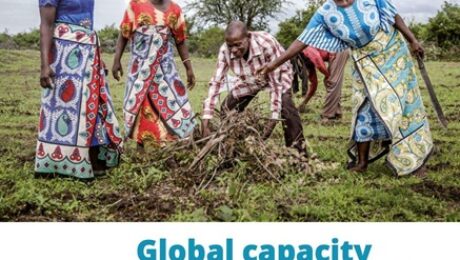
This methodology aims to support countries to:
explore opportunities and challenges to integrate nutrition-related objectives into agricultural programmes and policies; identify capacity needs of the EAS providers and at the organizational and policy/enabling environment levels for strengthening capacities to integrate nutrition outcomes in their regular tasks and responsibilities; and identify knowledge gaps in training materials on nutrition-sensitive agriculture.
- Published in CAPACITY DEVELOPMENT, NUTRITION
Training Module on Facilitation for Development
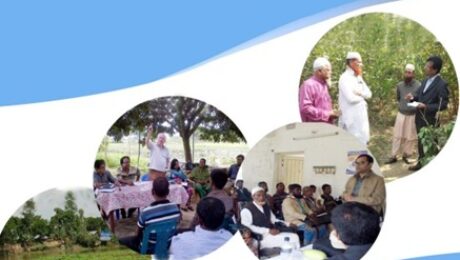
Development is the process of change and facilitation helps in accelerating this process through the change agents‘ or the extension service provider. While working with farmers, agri-traders and processors, facilitation refers to promote group learning, building consensus and enhancing participation in collective actions. A facilitator has multidimensional roles to play.
The module has been prepared to assist facilitators/ trainers engaged in training of agricultural extension and advisory services (EAS) staff and other mediators on facilitation for development by enhancing their knowledge on how to facilitate change in individuals, groups and organizations and also to facilitate multi-stakeholder engagements through brokering strategic partnerships and networking. While working through this module the trainers will find the relevance of facilitation for development in the context of agricultural innovation services (AIS).
- Published in GUIDE/TOOLS/MANUALS
Developing Capacities For Agricultural Innovation Systems
The CDAIS project was designed to strengthen TAP through the development of a common framework for Capacity Development for Agricultural Innovation Systems (CD for AIS) which sets concepts and guidance for the promotion of agricultural innovation system (AIS) thinking and collaborative learning, and for the strengthening of capacities for AIS in tropical countries. The project tested this common framework (or so-called ‘TAP CF’) in eight pilot countries,1 offering a variety of situations across three continents. A transversal analysis of the project outcomes therefore intended to ‘validate’ the common framework, meaning to verify hypotheses underpinning the TAP CF and to verify how changes happened in the eight countries in relation with the mode of operationalization of the TAP CF by the CDAIS project. In other words, the transversal analysis sought to understand how the project produced outcomes, what these outcomes were in each country, so as to propose recommendations for upgrading the TAP Common Framework across its theoretical and practical dimensions.
- Published in CAPACITY DEVELOPMENT
Creating Opportunities for Rural Youth: 2019 Rural Development Report- IFAD

Enabling young rural women and men to become productive, connected and in charge of their own future requires thinking differently about the diverse settings in which they seek to thrive, the multiple constraints they face and the dynamics of change in the world that create challenges and opportunities for them.
- Published in YOUTH
The evolution of agricultural mechanization in Sri Lanka
Sri Lanka’s unique geography and its distinct experiences with machine use in rice and field crop production offer valuable insights into different patterns of mechanization. Rice in Sri Lanka has a substantial irrigation infrastructure, a strong plant breeding system, and historical examples of success in location-specific breeding strategies (Pain 1986). Furthermore, tractor use in rice cultivation grew very quickly, especially given the relatively small amount of arable land in the country and the lack of direct subsidies, but with certain incentives. Though mechanization initially spread for paddy cultivation, machinery has also become popular in varying degrees in the production of other field crops. This chapter explores the spread of mechanization in Sri Lanka, with a focus on the use of four- and two-wheel tractors, and combine harvesters. It first looks at the process of mechanization from a historical perspective. It then conducts demand- and supply-side analysis to identify the opportunities and challenges facing adoption of machinery in agriculture. It concludes with a brief discussion of the implications of the Sri Lankan experience for African countries starting the process of mechanization.
- Published in SRI LANKA
The People Behind Your Plate

The book is organized around the “5 Ps” of people, planet, prosperity, peace and partnerships. The work that rural people do, including growing food and taking care of precious natural resources, is at the heart of the 2030 Agenda.
The Sustainable Development Goals outline 17 areas for eliminating poverty and hunger, protecting the planet, and promoting peace and prosperity. These priorities are fundamental to the transformation of rural areas. The stories in this book show how IFAD invests in rural people to support their efforts, knowledge and skills as they help solve some of the world’s most urgent challenges.
- Published in PRIVATE SECTOR EXTENSION /PPP
Co-creating Sustainable Livelihoods in India

The livelihoods sector has undergone a significant transformation over the past decade and is expected to see even greater shifts over the coming years, given the unprecedented times that stand ahead of us. Livelihoods are a critical pathway to eliminating poverty and driving sustainable economic growth for communities. It is thus crucial to bring forth opportunities that have potential to transform systems that create sustainable livelihoods across the value chain, despite the dynamically evolving challenges. It is important to anticipate that collaboration and co-creation are the most critical enablers of sustainable livelihood in rural and urban India. Not only does it preserve the resources involved in re-invention, it also allows us to leveraging cross sectoral expertise & enables collective action to achieve impact at a large scale.
Keeping this very idea at its heart, the India Livelihoods Collective has undertaken numerous initiatives since its inception, providing a collaborative platform for diverse organisations to come together in catalysing the process of achieving livelihoods goals in India. Extending its efforts in this direction, this document provides specially curated 45 livelihoods practices initiated by Corporates, NGOs, Impact Investors, Start-ups, Academia and other enablers in the livelihoods ecosystem. The compendium maps the avenues for collaboration to scale-up and replicate these practices, highlighting the challenges, key learnings, livelihoods outcomes and impact on livelihoods sustainability.
- Published in INDIA
Syngenta Foundation for Sustainable Agriculture Farmers’ Hub Impact Insights Bangladesh

The Syngenta Foundation for Sustainable Agriculture was established in 2001 to improve the livelihoods of smallholder farmers in poorer regions of the world. Since its beginnings, the Foundation has been instrumental in delivering sustainable agriculture initiatives for pre-commercial smallholders.
In recent years Syngenta Group has been strengthening its own strategic efforts to support commercial smallholders with innovative and transformative solutions. This includes improved access to products, agronomic training, and markets, and a large network of agricultural centers across China, Africa, Asia, and Central America.
- Published in BANGLADESH
Scaling Readiness- Concepts, Practices, and Implementation
Scaling Readiness supports organizations, projects, and programs in achieving their ambitions to scale innovations. Scaling Readiness encourages critical reflection on how ready innovations are for scaling and what appropriate actions could accelerate or enhance scaling. Scaling Readiness treats innovation as a flexible package of technological, organizational, and institutional components that may include crop varieties, machines or equipment, crop production practices, legislation, and marketing campaigns.
An innovation may be ready in a technical sense – for example, a new crop variety may thrive in the local environment – but, if farmers lack funds to buy seed or if the policy environment discourages the uptake of new varieties, it may not be adopted at scale. Scaling Readiness assesses the potential of innovations to be used at scale and guides research and development intervention managers in implementing these innovations in practical contexts. Through its standardized data collection and analysis approach, Scaling Readiness can also be used to monitor an intervention portfolio at organizational level, allowing for evidence based management.
- Published in CONCEPTS AND PRACTICES