
Agrometeorological Advisory Services India
CSE releases new report on agromet advisory systems – focusing on weather data collection and forecasting, agricultural expertise and analysis of crop data, leading to generation of practical advice for farmers.
The agricultural sector is the foundation of the Indian economy. It employs more than 50 per cent of India’s workforce and contributes almost 17–18 per cent of its GDP.1 At present, agricultural livelihoods are being severely impacted world over as a result of anthropogenic global warming and climate change. India’s labour-intensive and subsistence-based agriculture sector is particularly vulnerable to this development.
Climate change has both direct and indirect effects on agricultural productivity, including changing rainfall patterns, severe drought, flooding and changes in the geographical redistribution of pests and diseases.2 These impacts are highly unevenly distributed across the globe, with regions like South Asia (including India) and sub-Saharan Africa experiencing significantly more adverse effects than North America, Europe (particularly Eastern Europe) and South America.
- Published in CLIMATE CHANGE, INDIA
Research on Impacts of Climate Change on Bangladesh Agriculture: A KGF Initiative
This effort by KGF to publish a booklet on Climate Change Impact Assessment on Bangladesh Agriculture : A KGF Initiative narrating the outcomes of collaborative research by BARI, BRRI and BSMRAU scientists, sponsored and facilitated by KGF, is a welcome development towards dissemination of scientific information on a pressing national and global issue.
- Published in BANGLADESH, CLIMATE CHANGE
Adapt Now: A Global Call for Leadership on Climate Resilience
This report focuses on making the case for climate adaptation, providing specific insights and recommendations in key sectors: food security, the natural environment, water, cities and urban areas, infrastructure, disaster risk management, and finance. It is designed to inspire action among decision-makers, including heads of state and government officials, mayors, business executives, investors, and community leaders.
- Published in CLIMATE CHANGE
A compendium of Technologies, Practices, Services and Policies for Scaling Climate Smart Agriculture in Odisha (India)
Stakeholders engaged in agricultural research for development (AR4D) are increasingly tackling risks associated with climate change in smallholder systems. Accordingly, development and scaling of climate-smart agriculture (CSA) are one of the priorities for all the organizations, departments and ministries associated with the farm sector. Having a ‘one-stop-shop’ compiled in the format of a compendium for CSA technologies, practices and services would therefore serve a guide for all the stakeholders for scaling CSA in smallholder systems.
- Published in CLIMATE CHANGE
IN BRIEF Making agricultural and climate risk insurance gender inclusive: How to improve access to insurance for rural women
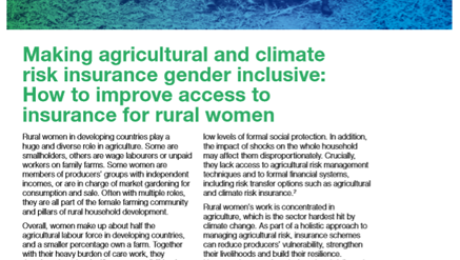
IFAD’s technical assistance programme INSURED (Insurance for rural resilience and economic development) has been building knowledge about how to strengthen women producers’ access to climate risk insurance. Working with partners, INSURED supported research, and fieldwork in Ethiopia including group discussions with smallholders about insurance options. A checklist was drawn up for insurance designers and implementers to help them reach out to women every step of the way.
- Published in CLIMATE CHANGE
Compendium of Climate-Resilient Agriculture Technologies and Approaches in the Philippines
This Compendium of Climate-Resilient Agriculture Technologies and Approaches in the Philippines has been produced in response to the need to provide science-based and actionable knowledge on climate-resilient agricultural technologies and practices in different agroecological systems in the Philippines. The compendium aims to better guide policymakers, farmer organizations, researchers, extension workers, and the agribusiness sector, as well as climate-smart agriculture practitioners. It does not only present a menu of solutions but more importantly, it proposes that a business-as-usual attitude is no longer an option if we want to protect the future of our food supply and the well-being of the farmers and communities that produce it.
- Published in CLIMATE CHANGE
YOUTH IN MOTION FOR CLIMATE ACTION: A compilation of youth initiatives in agriculture to address the impacts of climate change
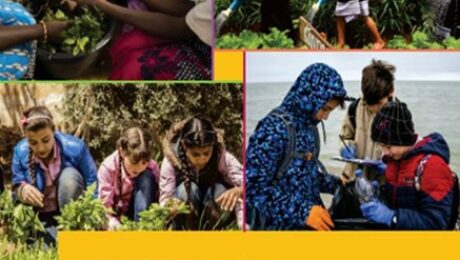
A compilation of youth initiatives in agriculture to address the impacts of climate change
This publication is a compilation of ten successful youth-focused or youth-led initiatives in agriculture that address the impacts of climate change. The highlighted initiatives can serve as a promotional tool for youth networks, practitioners and programme managers who are interested in supporting youth in the agriculture sectors under a changing climate. The case studies are organized under five themes: E-agriculture, innovation and technology; youth employment; capacity development; entrepreneurship; and Alliances and Networks.
- Published in CLIMATE CHANGE
Strengthening Capacity for Enhanced Animal Nutrition Services
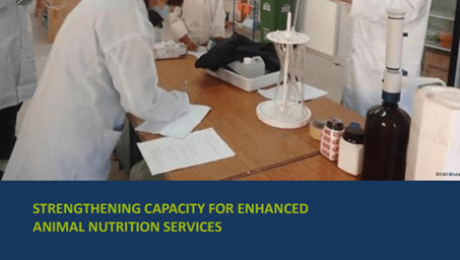
Bhutanese farmers practise mixed farming, with crops and livestock rearing forming an integral part of their livelihoods, particularly in rural communities At farmers’ level, agriculture, livestock and forest interventions are integrated farmers depend on livestock for manure for soil fertility, and dairy products for nutrition and income, while forests provide feed and fodder for animals, timber for construction, wood for heating and cooking, and non wood forest products for consumption and sale Communities in higher altitudes depend more on livestock as the farming of crops has limited scope In semi urban areas, commercial dairy and other livestock products have also emerged with improved breeds Animal nutrition has thus become more important than ever before The only animal nutrition laboratory ( equipped to analyse feed and fodder samples in the country is in Jakar in north central Bhutan However, the laboratory lacks capacity in terms of both institutional and human resources Owing to insufficient government funding, the ANL is not fully functional and, despite the important national mandate of the laboratory, the government has not been able to equip it adequately, nor train personnel to carry out important feed analysis functions Some of the existing equipment is obsolete and not serviceable, while laboratory staff members have not received adequate training in the use of the laboratory facilities The ANL needs equipment for the analysis of feed and fodder samples Training and refresher courses are also required to ensure that laboratory staff members are kept abreast of the latest developments in livestock nutrition.
- Published in CAPACITY DEVELOPMENT, LIVESTOCK / FISHERIES
Digital agriculture in action-Selected case studies from India
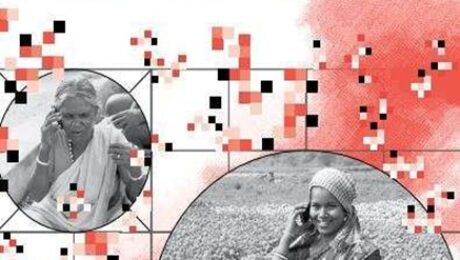
Agriculture is becoming more knowledge-intensive. Access to timely, accurate information tailored to specific locations and conditions is critical to helping farmers make the most of their resources in changing circumstances. Digital technologies help overcome these challenges by bridging the information gap, improving access to market information, enhancing access to micro-finance, providing actionable advisories on managing pest and disease as well as improving agriculture human capital. However, sustaining digital interventions needs a holistic approach that includes the right policies, frameworks, ecosystem and capacities. This publication highlights some successful initiatives in leveraging digital technologies, improving value-chain processes and building capacity to bring about positive change among agriculture stakeholders and improve livelihoods. This publication is part of the Country Investment Highlights series under the FAO Investment Centre’s Knowledge for Investment (K4I) programme.
- Published in ICTs
Half of Afghanistan’s population faces acute hunger as humanitarian needs grow to record levels
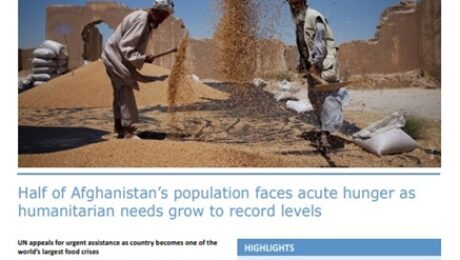
This newsletter compiles the human-interest stories and news releases published in the 4th quarter of 2021 by the FAO Representation in Afghanistan. They include both development and humanitarian work and depict the impact and relevance of FAO’s work in the lives of those farmers, livestock owners, herders and other vulnerable rural people assisted by FAO in Afghanistan.
- Published in AFGHANISTAN