
Missing in Action: Experiences of women with climate journalism

This booklet narrates the stories of five female journalists from Pakistan who are working on environment- and climate-change-related issues. Women are being disproportionately and adversely impacted by climate change and female journalists are uniquely placed to understand and share their stories. However, these journalists are ‘missing in action’ from the media in sharing their experiences of environmental activism and climate action. The publication covers a range of challenges journalists face, from limitations on mobility and harassment, to gender-based discrimination in media houses. It highlights why environmental issues sometimes make headlines while remaining dormant at others.
- Published in CLIMATE CHANGE
How the adoption of drought-tolerant rice varieties impacts households in a non-drought year: Evidence from Nepal
Stress-tolerant rice varieties (STRVs) are bred to be high yielding and tolerant to climate shocks such as drought. In Nepal, several drought-tolerant STRVs have been released and widely adopted. This paper estimates the impacts of the adoption of STRVs on first- and higher-order household outcomes in a non-drought year. It controls for selection bias using correlated random effects models to eliminate unobserved plot and household-level heterogeneity. STRVs have a higher yield, a lower yield variance and a shorter growing duration than traditional landrace varieties. In addition, households apply more early-season chemical fertilizer and land preparation labour to plots planted to STRVs compared to landraces. This indicates that the first-order impacts of the adoption of STRVs induce behavioural changes that help to modernize agricultural practices. Finally, this study conducts a randomized experiment in which half of the sampled households provided additional detail on their agricultural inputs.
- Published in CLIMATE CHANGE
Sustainable development of rubber plantations in a context of climate change
Land use is a central issue for the achievement of the Sustainable Development Goals (SDGs) and of the Paris Agreement on Climate Change. Plantations of all major tropical commodities are expanding quickly. This creates opportunities for development. It also raises concerns about the impacts of these plantations on the environment, landscapes and livelihoods. Natural rubber is a particularly interesting example to consider in the perspective of sustainable development of a commodity’s producing countries and value chains. This paper is a collaboration between the Forests, Trees and Agroforestry (FTA) research program of the CGIAR (FTA n.d.) and the International Rubber Study Group (IRSG) (IRSG n.d.). FTA works across a range of plantations, value chains and tree crop commodities, from timber, palm oil, cacao, coffee and tea to bamboo, rattan and rubber, among others. It has identified plantations, their development and sustainability as a research priority. IRSG is an intergovernmental organization and the primary source of statistical information related to rubber value chains, policy issues, innovation and technology. IRSG has a leading role in developing a comprehensive agenda for the sustainability of natural and synthetic rubber.
- Published in CLIMATE CHANGE
Valuation of the health and climate-change benefits of healthy diets
The health and environmental consequences of our dietary choices impose costs on society that are currently not reflected in the price of those foods or diets that contribute to these detrimental impacts. This paper provides updated estimates of two major cost items: the healthcare-related costs associated with unhealthy diets, and the climate-change costs associated with the emissions attributable to diets and food production. Results suggest that the health and climate-change costs of current diets are substantial and projected to increase up to 1.3-1.7 trillion USD annually by 2030.
- Published in CLIMATE CHANGE
The Top 100 questions for the sustainable intensification of agriculture in India’s rainfed drylands

India has the largest area of rainfed dryland agriculture globally, with a variety of distinct types of farming systems producing most of its coarse cereals, food legumes, minor millets, and large amounts of livestock. All these are vital for national and regional food and nutritional security. Yet, the rainfed drylands have been relatively neglected in mainstream agricultural and rural development policy. As a result, significant social-ecological challenges overlap in these landscapes: endemic poverty, malnutrition and land degradation. Sustainable intensification of dryland agriculture is essential for helping to address these challenges, particularly in the context of accelerating climate change. In this paper, we present 100 questions that point to the most important knowledge gaps and research priorities. If addressed, these would facilitate and inform sustainable intensification in Indian rainfed drylands, leading to improved agricultural production and enhanced ecosystem services. The horizon scanning method used to produce these questions brought together experts and practitioners involved in a broad range of disciplines and sectors. This exercise resulted in a consolidated set of questions covering the agricultural drylands, organized into 13 themes. Together, these represent a collective programme for new cross- and multi-disciplinary research on sustainable intensification in the Indian rainfed drylands.
- Published in CLIMATE CHANGE, INDIA
The Usefulness of Gridded Climate Data Products in Characterizing Climate Variability and Assessing Crop Production
A sparse rain gauge network in dryland regions has been a major challenge for accessing high-quality observed data needed to understand variability and trends in climate. Gridded estimates of weather parameters produced through data assimilation algorithms that integrate satellite and irregularly distributed on-ground observations from multiple observing networks are a potential alternative. Questions remain about the application of such climate data sources for assessing climate variability and crop productivity. This study assessed the usefulness and limitations of gridded data from four different sources i.e. AgMERRA, CHIRPS, NASA Power, and TAMSAT in estimating climate impacts on crop productivity using Agricultural Production Systems Simulator (APSIM). The study used data for 11 locations from Africa and India. The agreement between these data sets and observed data both in the amount and distribution of rainfall was evaluated before and after bias correction statistically. A deviation of more than 100 mm per season was observed in 13%, 20%, 25%, and 40% of the seasons in CHIRPS, AgMERRA, NASA Power, and TAMSAT data sets respectively. The differences were reduced significantly when data sets were bias-corrected. The number of rainy days is better estimated by TAMSAT and CHIRPS with a deviation of 4% and 6% respectively while AgMERRA and NASA Power overestimated by 28% and 67% respectively. The influence of these differences on crop growth and productivity was estimated by simulating maize yields with APSIM. Simulated crop yields with all gridded data sets were poorly correlated with observed data. The normalized root-mean-square error (NRMSE) of maize yield simulated with observed and gridded data was <30% for two locations in the case of AgMERRA and CHIRPS and three locations in the case of NASA Power. The NRMSE was > 30% for all locations with TAMSAT data. When yields were simulated with data after bias correction using the linear scaling technique, results were slightly improved. The results of our study thus indicate that the gridded data sets are usefully applied for characterizing climate variability, i.e. trends and seasonality in rainfall, however their use in driving crop model simulations of smallholder farm level production should be carefully interpreted.
- Published in CLIMATE CHANGE
Building climate resilience in degraded agricultural landscapes through water management
Rainfall variability and water scarcity continue to hamper the food and income security of smallholder farming systems in poverty-affected regions. Innovations in soil and water management, especially in the drylands, are critical for meeting food security and water productivity targets of Agenda 2030. This study analyzes how rainfed agriculture can be intensified with marginal impact on the landscape water balance. The impact of rainwater harvesting structures on landscape hydrology and associated agricultural services was analyzed in the semi-arid Jhansi district of Bundelkhand region in central India. The Parasai-Sindh pilot watershed was subjected to a 5-year (2012–2016) monitoring of rainfed system improvements in water availability and crop intensification due to surface water storage (haveli system), check dams, and field infiltration structures. Hydrological processes were monitored intensively to analyze the landscape’s water balance components. Rainwater harvesting (RWH) structures altered the landscape’s hydrology, limiting average surface runoff from 250 mm/year to 150 mm/year over the study period. Groundwater levels increased by 2–5 m (m), alleviating water scarcity issues of the communities in recurring dry years. Nearly 20% of fallow lands were brought under cultivation. Crop yields increased by 10–70% and average household income increased from US$ 960/year to US$ 2700/year compared to that in the non-intervention landscape. The combined soil–water–vegetation efforts strengthened water resilience and environmental systems in agricultural landscape.
- Published in CLIMATE CHANGE, INDIA
Extension and Advisory Services for Climate-Smart Agriculture
Climate is turning out to be a prominent issue of concern nowadays. Climate change is the changing statistical distribution of the patterns that continues over years typically decades or longer. This climate change amplifies the threats like hunger, malnutrition, diseases, and poverty, thus affecting the progress of the world. Agriculture is the most vulnerable sector affected by climate change as it is highly dependent on local climatic parameters, such as rainfall, temperature, and soil health. It is the major driver of climate change. There is a high need to prevent the agriculture sector from being a prey to this climate change. It is time for agriculture to be “climate smart” for sustainably achieving the productivity and incomes and reducing the greenhouse emissions, wherever possible and to be resilient to climate change. Climate-smart agriculture (CSA) is an integrated approach that can address several challenges interlinked with climate change. This concept now has a wide ownership among the national and international agencies, government, and civil societies with a strong focus. Though CSA has been gaining importance, its dissemination and uptake of climate-smart technologies, tools, and practices are still largely an ongoing and challenging process. The adaptation of climate-related knowledge, technologies, and practices based on regional requirements, promoting a coordinated learning by farmers, researchers, extension workers, and the wide dissemination of CSA practices, is possible through the extension to an extent. Extension and advisory services can bridge the knowledge gap by providing clarity on CSA components and its relevant issues. They also play a vital role in helping farmers to cope with the diverse impacts of climate change by creating awareness by using appropriate tools to make them aware about different adaptation and mitigation strategies. This chapter provides a detailed description of how this rural advisory services and extension systems aid in climate-smart agriculture. The novel extension approaches like the information and communication technology (ICT)-enabled extension services and climate information services help the farmers at grass root level. The promising innovative extension approaches that are required to be adopted for the changing climate are enlisted to achieve CSA.
- Published in CLIMATE CHANGE
Actions to Transform Food Systems Under Climate Change
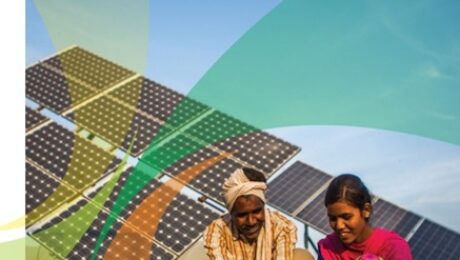
This is the overarching message from the wealth of literature on food systems.1 Analysis by Bene and colleagues finds that this growing body of literature focuses on four main types of failures: food systems’ inability
(i) to produce greater quantities of food to feed a growing world population, (ii) to meet nutritional needs, and (iii) to benefit everyone equally and equitably, with both over- and underconsumption rife in current food systems, plus (iv) the negative impacts of food systems on the environment and natural resources.1
Last but far from least, climate change is increasingly having severe negative impacts on food systems, while food systems themselves are part of the problem through direct and indirect emissions.2 Our score for the global food system: cause for grave concern.
- Published in CLIMATE CHANGE
Bangladesh: Disaster Management Reference Handbook, May (2020)
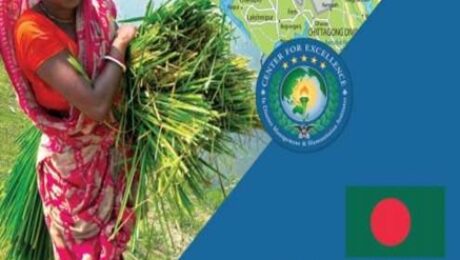
Bangladesh has been affected by more than 200 natural disasters over the last three decades. The country’s geographical location next to the Bay of Bengal, low-lying terrain, monsoons, and significant rivers render the country very vulnerable to natural hazards. From 1970-2019, storms have been the most frequent disaster to affect Bangladesh at 52%, followed by floods at 31%, with the remaining disasters being epidemics, earthquakes, droughts, and landslides.7 In addition, Bangladesh is one of the countries in the world most at risk from the negative impacts of climate change including increases in incidence and intensity of extreme weather events and hazards such as soil salinization, rising sea levels and riverbank erosion.8 Bangladesh has many sources of vulnerability including earthquakes and flooding. Traffic in Dhaka is among the most congested in the world.
An earthquake heavily affecting the capital is among the more challenging disaster scenarios.9 In addition, the flood damage potential is increasing due to climate change, urbanization, growth of settlements in flood-prone areas and over reliance on flood control works such as levees and reservoirs.10 Growing urbanization is driven partly by migration and has contributed to straining the use of limited land, environment, and fragile infrastructure. Migration toward urban areas is in turn driven partially by climate change exacerbating flooding of formerly inhabited land around river delta areas. These emerging risks present major challenges to the continued human development, poverty reduction and economic growth of the country, and to the lives, livelihoods, and health of its people.
- Published in BANGLADESH, CLIMATE CHANGE