
The impact of disasters and crises on agriculture and food security: 2021
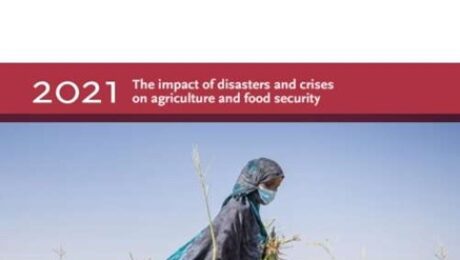
On top of a decade of exacerbated disaster loss, exceptional global heat, retreating ice and rising sea levels, humanity and our food security face a range of new and unprecedented hazards, such as megafires, extreme weather events, desert locust swarms of magnitudes previously unseen, and the COVID-19 pandemic. Agriculture underpins the livelihoods of over 2.5 billion people – most of them in low-income developing countries – and remains a key driver of development. At no other point in history has agriculture been faced with such an array of familiar and unfamiliar risks, interacting in a hyperconnected world and a precipitously changing landscape. And agriculture continues to absorb a disproportionate share of the damage and loss wrought by disasters. Their growing frequency and intensity, along with the systemic nature of risk, are upending people’s lives, devastating livelihoods, and jeopardizing our entire food system. This report makes a powerful case for investing in resilience and disaster risk reduction – especially data gathering and analysis for evidence informed action – to ensure agriculture’s crucial role in achieving the future we want.
- Published in CLIMATE CHANGE
Transforming Recovery into a Green Future

This statement, prepared by the Task Force on Green Recovery of the Lancet COVID-19 Commission provides some initial reflections on key priorities to support a green, fair and resilient recovery from COVID-19.
The COVID-19 pandemic is a serious setback for sustainable development, but United Nations (UN) Member States should not scale back their ambition. The COVID-19 pandemic has caused the worst economic contraction since the Great Depression.1 The Agenda 2030, the Sustainable Development Goals (SDGs) and the Paris Climate Agreement (Paris Agreement) provide the longterm vision and remain “The Future we Want.”2,3 They provide a roadmap for sustainable, inclusive, and resilient recovery. Beyond fiscal expansion that boost aggregate demand, this crisis calls for transformative public investments that shape a sustainable, fair, and digital transition, and leverage private sector investment.
- Published in CLIMATE CHANGE
The challenge of making climate adaptation profitable for farmers – Evidence from Sri Lanka’s rice sector
Increased incidences of drought and water scarcity due to climate change is an important challenge facing Sri Lanka’s agricultural sector. Identifying farm practices that can reduce its adverse impacts on agricultural production and farmers’ livelihoods is a key policy objective in Sri Lanka. This paper makes use of household survey data collected in Anurādhapura District to evaluate the impacts of 11 drought adaptation practices adopted by farmers in the district. The impacts of the practices are estimated simultaneously along two dimensions: 1) impact on sensitivity to water stress (measured in terms of the probability of experiencing crop loss due to wilting) and 2) impact on household livelihood (measured in terms of total value of crops harvested and total gross household income). After accounting for a wide range of confounding factors, five practices are found to be associated with a reduced sensitivity to water stress. However, only two of these are simultaneously associated with a higher gross value of crops harvested, while none is associated with significant differences in household income relative to non-adopters. The reasons for this vary by practice, but are linked to opportunity costs of household labour and market weaknesses for crops other than rice. Making climate adaptation practices profitable is a key challenge faced by policy-makers and will require a holistic research and extension approach that is bundled with complementary support to market institutions, such as appropriate mechanization services, value chain support for other field crops and input supply systems.
- Published in CLIMATE CHANGE, SRI LANKA
Conservation tillage (CT) for climate-smart sustainable intensification

Soil organic carbon (SOC), greenhouse gas (GHG) emissions and water footprint (WF) are the key indicators of environmental sustainability in agricultural systems. Increasing soil organic carbon (SOC) while reducing water footprint (WF) and GHG emissions are effective measures to achieve high crop productivity with minimum environmental impact (i.e. a multi-pronged approach of sustainable intensification (SI) and climate smart agriculture (CSA) to achieve food security). In conventional agricultural systems, intensive soil tillage and removal of crop residues can lead to increased negative environmental impact due to reduced SOC, GHG emission and high water consumption. Conservation agriculture (CA) based conservation tillage systems (CTS) with crop residue retention is often suggested as a sustainable alternative to increase crop productivity without compromising soil health and environmental sustainability. The environmental impact of CTS in terms of SOC, WF and GHG emissions nonetheless remains understudied In Bangladesh. A two-year field experiment was carried out to evaluate the impacts of CTS with retention of crop residue on SOC accumulation, GHG emission and water footprint (WF) in wheat farming of Bangladesh. In the experiment, CTS such as zero tillage (ZT) and minimum tillage (MT) were compared with the conventional tillage (CT) practice. Since the results are in favor of CTS, this study recommends MT and ZT to reduce negative environmental externalities in wheat cultivation in Bangladesh. In comparison between the methods, the MT, which retains crop residue (20 cm), and involves principles of CA, is suitable for both CSA and SI of wheat in Bangladesh due to its ability to increase SOC accumulation, prevent both water loss, and GHG emission without compromising yield.
- Published in AGROECOLOGY, BANGLADESH, CLIMATE CHANGE
Assessing Risk in Times of Climate Change and Covid-19
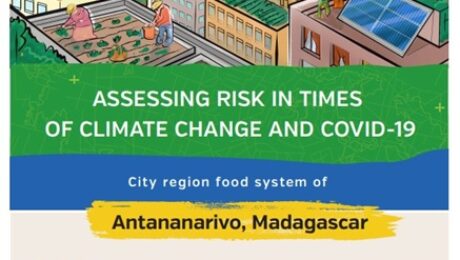
This factsheet is largely based on Thiel, F., Phillips, I. and N. Drechsel. 2019. Rapid Scan: Colombo City Region Food Systems and their vulnerability towards climate change related shocks. International Water Management Institute, Colombo, Sri Lanka, 48 pp. It can be accessed here. It provides information on the general knowledge collected by the city region food system (CRFS) project in its phase 2 regarding the assessment of risks for the CRFS of Colombo and results are based on a literature review as well as data collected by the International Water Management Institute, as the main implementation partner in the country.
- Published in CLIMATE CHANGE
Agriculture and climate change
Climate change presents multiple challenges and it cannot be addressed effectively in silos. Attention must be paid not only to specific agriculture sectors, but also to governance areas that are interconnected with agriculture, such as public spending and investment, social protection and rural development. Efforts should be coordinated with the engagement of civil society, including the legal profession, vulnerable groups and the private sector.
This Study addresses the principal expressions of the food and agriculture sector (crops and livestock agriculture, forestry and fisheries), looking at the critical cross-cutting issues and their integration into agriculture law. It provides a comprehensive overview of the legal and institutional issues to consider when working towards preparing the agriculture sector for the challenges of climate change.
- Published in CLIMATE CHANGE
How to feed the world in times of pandemics and climate change?
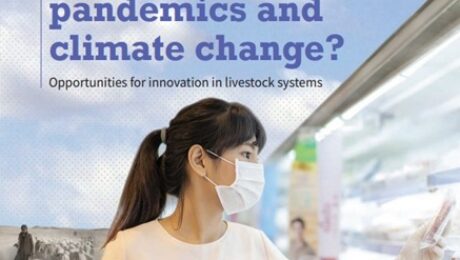
In this brief, the four questions posed by the GFFA are addressed from the perspective of livestock systems. The crucible of COVID-19 is an opportunity to acknowledge vulnerabilities in order to “build back better” by applying the lessons learned from emergency and rehabilitation activities of past zoonotic disease outbreaks and natural disasters. This means investing in sustainable, inclusive, and resilient food systems for better production, better nutrition, a better environment, and better lives.
- Published in CLIMATE CHANGE, LIVESTOCK / FISHERIES
Adaptation Gap Report 2020

The fifth edition of the UNEP Adaptation Gap Report looks at progress in planning for, financing and implementing adaptation – with a focus on nature-based solutions.
The UNEP Adaptation Gap Report 2020 finds that while nations have advanced in planning, huge gaps remain in finance for developing countries and bringing adaptation projects to the stage where they bring real protection against climate impacts such as droughts, floods and sea-level rise.
Public and private finance for adaptation must be stepped up urgently, along with faster implementation. Nature-based solutions – locally appropriate actions that address societal challenges, such as climate change, and provide human well-being and biodiversity benefits by protecting, sustainably managing and restoring natural or modified ecosystems – must also become a priority.
- Published in CLIMATE CHANGE
Rural adaptation to climate change
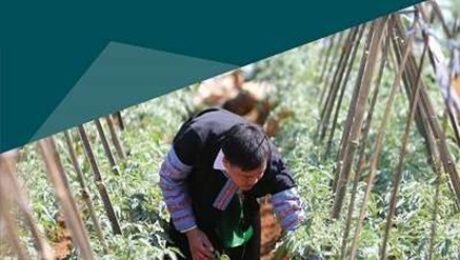
The research found that some farmers were responding to climate change mostly by adopting changes in farm management practices, and that the incentive for farmers to act was influenced by the policy environment, the institutional environment and investment by governments. Because planned and institutional measures are in the hands of various levels of government, the research reinforced the importance of coordination to develop a cohesive package of measures for farmers to address climate change at the farm level.
Understanding farmers’ adaptation strategies and decision-making processes is important for designing future policy interventions to ameliorate and prevent the adverse effects of extreme weather events on farming systems. This technical report presents the findings of an ACIAR project that examined the effects and potential benefits of responses to climate change in rice markets in China and Vietnam. The project provided a social sciences dimension to the study of climate change and its primary objectives were to identify those farmers most at risk from climate change and then to identify policy responses to assist their adaptation and adjustment.
- Published in CLIMATE CHANGE
Pathways to Sustainable Land-Use and Food Systems
The Food, Agriculture, Biodiversity, Land-Use, and Energy (FABLE) Consortium is convened as part of the Food and Land Use Coalition (FOLU). It is led by the International Institute for Applied Systems Analysis (IIASA) and the UN Sustainable Development Solutions Network (SDSN), working closely with EAT, Bioversity International, the Potsdam Institute for Climate Impact Research (PIK), and many other institutions. This report was jointly prepared by the members of the FABLE Consortium
- Published in CLIMATE CHANGE, NATURAL RESOURCE MANAGEMENT