
Agricultural Extension in Transition Worldwide: Policies and Strategies for Reform
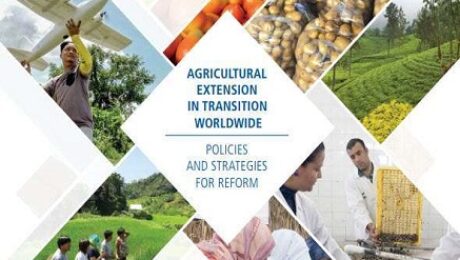
Agricultural Extension in Transition Worldwide: Policies and Strategies for Reform
Food and Agriculture Organization of the United Nations Rome, (2020)
Prepared by Magdalena Blum, Francesca Cofini and Rasheed Sulaiman V
The purposes of the modules are to review the major reforms being considered internationally – reforms that aim to change the policy and institutional structure and operations of public sector agricultural extension systems, and thus enhance a transition to better coordinated pluralistic, demand-led advisory systems. The advantages and disadvantages of each aspect of these reforms are examined and illustrated by the selected case studies. The modules provide a foundation for extension reform affecting the entire set-up and mode of operation of agricultural extension. This review of reforms is intended to provide insights for senior-level officials and others interested in the development of agricultural advisory systems. The modules review trends, concepts and experiences, and, as such, are not intended to be prescriptive, or to adhere necessarily to any one point of view, but instead to provide a basis for informed decision-making by government policy-makers and senior management of extension and advisory services, as well as agricultural advisors.
- Published in CONCEPTS AND PRACTICES, EXTENSION AND INNOVATION, POLICY
Role of Social Scientists in National Agricultural Research System (NARS)
Social sciences when reinforced with biological sciences will provide human face of science, because science is for society and hence science without human face is body without soul. Social sciences study the nature, measurement and analysis of needs and aspirations of people so that science can continuously remain relevant and contribute to the welfare of mankind. Specifically, social sciences help organize research and education around societal problems in scientific disciplines by improving focus, design, implementation, evaluation and demonstration of evidences of impact. It is to be noted that despite having so many scientists, scientific establishments and universities in India, our science index is low, human development index is low and our hunger index is alarmingly high. It is time that social sciences of agricultural economics, agricultural extension, agricultural statistics, food and nutrition and home sciences get due attention to play their role as ears and eyes of the National Agricultural Research and Education System (NARES). It has been largely felt that while social sciences could play a larger role currently within NARES, their role is not adequately recognized and more needs to be done to duly recognize them and strengthen the capacities of social scientists.
- Published in EXTENSION AND INNOVATION
Building resilience to climate change-related and other disasters in Ethiopia
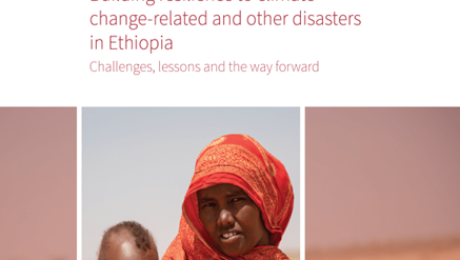
Ethiopia is exposed to a wide range of disasters associated with the country’s extensive dependence on rainfed subsistence agriculture, climate change, resource degradation, diverse geoclimatic and socio-economic conditions and conflicts. Drought and floods are the major challenges, but a number of other threats affect communities and livelihoods. These include conflict, desert locust, fall armyworm, frost and hail, crop pests and diseases, livestock diseases, human diseases, landslides, earthquakes, and urban and forest fires.
Every source of evidence suggests that Ethiopia would feel the human and economic impacts of climate change intensely, and the impacts will only continue to grow if the country continues a business-as-usual approach to crisis response, and will not be able to manage the increasing scale of the challenges. Thus, there is call by all stakeholders for a paradigm shift in the way the country deals with communities at risk, in order to take preventive actions to reduce exposure, vulnerability and impact at local level. This requires moving away from a reactive system that solely focuses on drought and supply of life-saving humanitarian relief and emergency responses during disasters to a comprehensive proactive disaster and climate risk management approach, including climate change adaptation, among which are interventions to enhance livelihood diversification, social protection programmes and risk transfer mechanisms.
Furthermore, resilient agrifood systems support should include a range of proven interventions that are context-relevant and cover the whole agrifood system, such as increase in fertilizer use where appropriate and high-yielding and drought-tolerant seeds, strengthened extension and advisory systems at the kebele (local) level through the use of farmer field schools and pastoral field schools, expansion of access to credit, livelihood diversification, risk transfer mechanism and institutional development that link short-term emergency relief to long-term development pathways. This approach is essential for building resilience to natural hazard and human-induced disasters resulting in food insecurity challenges.
- Published in Uncategorized
Water quality in agriculture: Risks and risk mitigation

This publication, Water Quality in Agriculture: Risks and Risk Mitigation, emphasizes technical solutions and good agricultural practices, including risk mitigation measures suitable for the contexts of differently resourced institutions working in rural as well as urban and peri-urban settings in low- and middle-income countries. With a focus on sustainability of the overall land use system, the guidelines also cover possible downstream impacts of farm-level decisions. As each country has a range of site-specific conditions related to climate, soil and water quality, crop type and variety, as well as management options, subnational adjustments to the presented guidelines are recommended.
Water Quality in Agriculture: Risks and Risk Mitigation, is intended for use by national and subnational governmental authorities, farm and project managers, extension officers, consultants and engineers to evaluate water quality data, and identify potential problems and solutions related to water quality. The presented guidelines will also be of value to the scientific research community and university students.
- Published in CLIMATE CHANGE
Dry zone of Sri Lanka – Climate-smart intensification of upland and lowland crop production systems
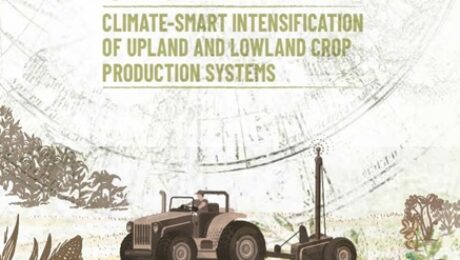
This guide explores the climate-smart intensification of upland and lowland crop production systems in the dry-zone of Sri Lanka and provides technical guidance to achieve the productive objectives of selected strategic crops (as deemed relevant by the Government of Sri Lanka). The first edition focuses on maize and groundnut upland production systems and on rice lowland production. It provides a quick reference for information on crop production and soil management, including crop varieties, nutritional requirements and field equipment. As climate change will result in wider and more severe occurrences of plant pests, the guide relies on integrated pest management practices adapted to climate change. Optimizing the production of these crops calls for the diversification of crop systems using intercrops and cover crops. Additionally, sustainable mechanization is regarded as an essential agricultural production input to optimize labour and land productivity for the sustainable and profitable development of the agriculture sector. Therefore, the guide describes the innovative equipment needed for the sustainable optimization of crop production. To ensure coherent guidance and advice on sustainable farming practices, inputs and technologies, the guide has been developed in cooperation with all stakeholders working in the agriculture sector of Sri Lanka.
- Published in CLIMATE CHANGE, SRI LANKA
Climate change impacts and adaptation options in the agrifood system
This paper summarises the findings of the International Panel on Climate Change’s Sixth Assessment Report which runs into over 3 000 pages, focusing on the assessment’s conclusions and their effect on agrifood systems. The Assessment Reports of the International Panel on Climate Change (IPCC) are important as they provide policymakers with state of knowledge assessments on climate change, its implications, and potential future risks. These assessments also put forward adaptation and mitigation options.
- Published in CLIMATE CHANGE
Managing risks to build climate-smart and resilient agrifood value chains
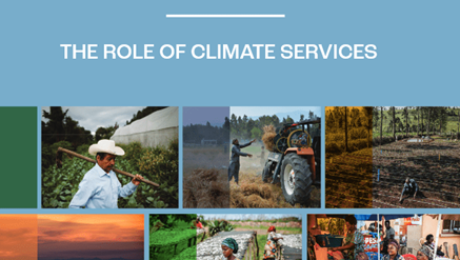
This work provides a preliminary analysis of the key climate risks affecting agrifood value chains and opportunities for climate services that reach stakeholders involved in all stages of the value chain, from agrifood production to harvest, storage and refrigeration, processing and packaging, transportation, markets, trade and consumption. Climate services provide opportunities to effectively and comprehensively mainstream climate risk management across the entire agrifood value chain, in addition to increasing sustainability and efficiency in the face of changing climate conditions.
This report provides significant primary information and recommendations on the development of climate services across the agrifood value chain with a view to systematically enhance sustainable and resilient opportunities. It also provides a basis for further research and investment funding in this area. Its findings could spark follow-up research and public and private investment.
- Published in CLIMATE CHANGE, VALUE CHAIN / MARKETS
Just-in-Time Policy Note on Agriculture and Food in Pakistan | Resilient Systems: Moving Beyond the COVID-19 Crisis

The Partnership for Agricultural Transformation in Pakistan (PAT-P) is a coalition of multilateral international agencies that aim to transform agriculture into a dynamic, competitive, efficient and climate smart sector, and to reposition it as an engine of growth in rural areas. The coalition assists the Government in implementing a policy framework and take reform actions that are potentially of high impact and politically critical.
This Just-in-Time Policy Note examines the impact of the COVID-19 pandemic on Pakistan’s food system and provides recommendations on key policy actions and adjustments to make the food systems more resilient to future shocks.
- Published in PAKISTAN
Self-evaluation and Holistic Assessment of Climate Resilience of Farmers and Pastoralists (SHARP)
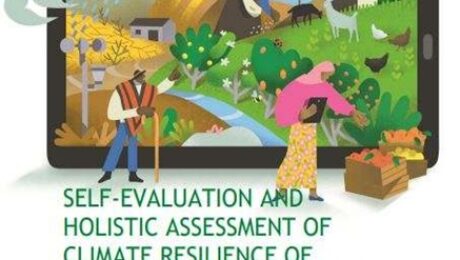
This new guidance document provides updated guidelines and tools for development practitioners and researchers on the features and use of SHARP+, describing the tool as it is today. This document does not replace the previous “Self-evaluation and Holistic Assessment of climate Resilience of farmers and Pastoralists” methodological document published in 2015 which encompasses all the theoretical grounds of the tool.
This guidance document also presents the latest version of the questionnaire, SHARP+ 2020, scoring system and tablet application based on the two technical reviews mentioned above. This document walks the reader through a step-by-step process to set up the SHARP+ assessment, adapt it to the local context, and use it to collect and analyse information about household resilience in the context of climate change.
- Published in CLIMATE CHANGE
Research Series 72: Climate change and food system activities – a review of emission trends, climate impacts and the effects of dietary change
This article reviews how food system activities contribute to climate change and how dietary changes affect food systems. It shows that while emissions from food production are increasing in most regions, emissions from land use change are decreasing. Despite these trends, land use emissions remain huge and are greater than emissions from food production in some regions.
While there is strong scientific consensus that climate change negatively affects food production, current scientific evidence is unclear about the impacts of climate change on post-production activities. This article also shows that dietary change has large potential to reduce greenhouse gas emissions. Despite its potential, the costs and feasibility of dietary change are not well understood and require further research.
Strategies to reduce emissions should focus on further reducing land use change as the current rate of reduction is inadequate to achieve a targeted reduction in greenhouse gas emissions. Strategies must also address meat consumption in regions where it consumption is excessive.
- Published in CLIMATE CHANGE