WHAT IS A ‘GOOD PRACTICE’? A framework to analyse the Quality of Stakeholder Engagement in implementation and follow-up of the 2030 Agenda
Developed by UN DESA and UNDP, this analytical framework is a tool to enable governments, stakeholders and development partners to examine and strengthen the quality of their stakeholder engagement practices at different stages of the 2030 Agenda cycle, including considering the impact of COVID-19. It is hoped that this tool will help improve stakeholder engagement practices, foster dialogue, and support the sharing of lessons learned and good practices. Readers and users are strongly encouraged to share their feedback on and experiences with the framework with us so we can document them on an ongoing basis in a dedicated space on the SDG16 Hub.
- Published in GUIDE/TOOLS/MANUALS
Operational guidelines on IFAD’s engagement in pro-poor value chain development
These guidelines address recommendations on ensuring that IFAD’s pro-poor value chain development projects reach out to women and the very poor, apply a programmatic approach when needed, promote an inclusive value chain governance, work with the appropriate expertise and partners, and build capacity for implementation.
- Published in GUIDE/TOOLS/MANUALS
Code of Practice for Fish and Fishery Products
The Codex Alimentarius, “the food code”, has a fundamental role in protecting consumers all around the world and ensuring fair practices in food trade. The Code of Practice for Fish and Fishery Products is the essential reference point for technical guidance on the harvesting, processing, transport and sale of fish and fishery products.
- Published in GUIDE/TOOLS/MANUALS, LIVESTOCK / FISHERIES
Empowering Farmers and Their Organizations through the Creation of Social Capital
Social capital is a key factor that concerns the ability of people to cooperate for common goals. What we have learned over the past decades, from organizational experiences in developing countries and countries in transition, is that physical and human capital accumulation by itself is not sufficient to induce development. Investments in physical capital (infrastructure and equipment) and human capital (skills development) are necessary conditions, but they are far from sufficient; they need to be complemented with the development of social capital (Stiglitz, 1998). This Learning Guide for Trainers focuses on “Empowering farmers through the creation of social capital,” recognizing the fundamental role that social capital plays for healthy and sustainable organizations. Encouraging farmers and their groups to form associations or federations enhances their capacities to learn from each other, exchange reliable information about what works and what does not work, and monitor the accountability of their members.
- Published in GUIDE/TOOLS/MANUALS
Catalysing young agri-entrepreneurs’ investments and ensuring their sustainability – Strategic planning tool
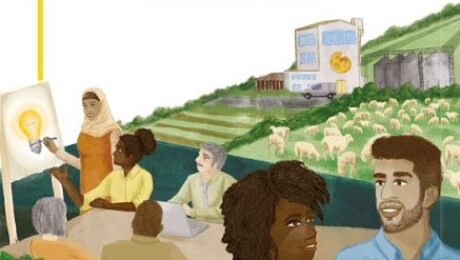
The achievement of the first two Sustainable Development Goals (SDGs) – end poverty and hunger by 2030 – requires substantial investments. To fully contribute to sustainable development, both public and private investments should be perfectly aligned with the SDGs. In this context, empowering youth to invest in their own farms and businesses along agricultural value chains should be a key component of sustainable development-centered investment promotion and mobilization strategy for three reasons: the improvement of food security; the promotion of the added value of food products; and the improvement of employment and economic well-being.
This strategic planning tool can help propel investments by young agri-entrepreneurs at national or regional levels, and help ensure their sustainability. It analyses the current environment and overall conditions young investors face while offering practical solutions to overcome the main challenges identified. The strategic planning tool also helps ensure that decision-makers take ownership of the results through a participatory and inclusive process.
- Published in GUIDE/TOOLS/MANUALS
Increasing the benefits and sustainability of irrigation through the integration of fisheries
This guide is a contribution to two CGIAR Research Programs: Fish Agri-Food Systems (FISH) (led by WorldFish) and Water, Land and Ecosystems (WLE) (led by IWMI), both of which are supported by funders contributing to the CGIAR Trust Fund.
This guide focuses on how to sustainably optimize and broaden the range of benefits from irrigation development – not only economic but also social and environmental benefits. It emphasizes the opportunities that fisheries could provide to increase food production and economic returns, enhance livelihoods and public health outcomes, and maintain key ecosystem services. The guide considers possible trade-offs between irrigation and fisheries, and provides recommendations on how these can be minimized.
- Published in GUIDE/TOOLS/MANUALS, LIVESTOCK / FISHERIES
Save Nature Please- A Behaviour Change Framework for Conservation
Bridging the disconnect between rational, fact-based decision-making and emotional or instinctive behaviour, behavioural science is helping civil society organizations, communities, governments, and corporations design strategies and approaches that unlock positive behaviour change, and encourage us to make choices for a carbon-neutral and nature-positive future.
Save Nature Please
To make the fundamentals of behavioural science as accessible as possible for organisations, teams and individuals seeking to drive positive change, WWF has produced a new practical framework, ‘SAVE NATURE PLEASE’, designed to support more effective interventions – from global communications and campaigns to citizen and community engagement.
In its essence, the framework proposes a three-step process – each comprising a flexible menu of subsidiary components – for applying behavioural science to the development, delivery, evaluation, and scaling of behaviour change.
- Published in GUIDE/TOOLS/MANUALS
Agricultural Extension Manual
Department of Agricultural Extension, Ministry of Agriculture
Government of the People’s Republic of Bangladesh
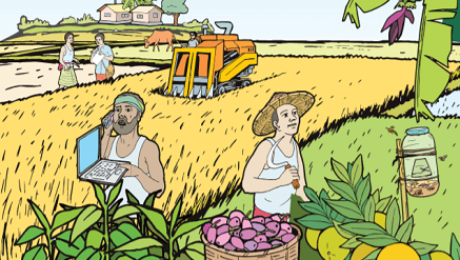
Agriculture has always been the main driving force behind Bengal’s heritage and socio-economic development. The energy from food, of life itself, of labour and intellect shares strong links and a single source of origin agriculture. More than 45% of the country’s labour force is involved with the agriculture sector. Therefore, the development of the country is dependent on the overall development of agriculture.
- Published in BANGLADESH, GUIDE/TOOLS/MANUALS
Conducting Tablet-Based Field Data Collection with Survey Solutions
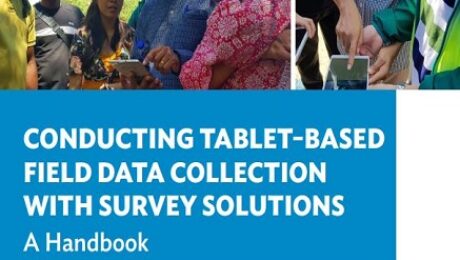
This handbook has been developed to complement the MOOC on Survey Solutions. It is suitable for anyone who has experience in conducting traditional face-to-face interviews and wishes to learn the workflows and skills needed to conduct a CAPI project. The handbook’s instructions are tailored toward people with beginner or intermediate experience in Survey Solutions, particularly if they are looking to reinforce existing knowledge or learn additional functionalities. handbook is designed to help national statistical officers and other interested readers embrace the efficiencies of CAPI-based data collection to supersede the traditional pen and paper interviewing method. We hope that it contributes to the adoption of other innovative tools and technologies that further strengthen national statistical systems.
- Published in GUIDE/TOOLS/MANUALS, ICTs
The GSMA AgriTech Toolkit for the Digitisation of Agricultural Value Chains
The Toolkit for the Digitisation of Agricultural Value Chains is a collection of resources that illustrate how digital technologies can address pain points for farmers and value chain actors, such as agribusinesses and cooperatives, in the agricultural last mile. These resources support the use of digital technologies for digital procurement, by enabling the transition from paper to digital for a range of systems and processes in the last mile. The toolkit explains how digitising the last mile offers a pathway to financial inclusion for farmers.
The toolkit has been designed to be read either as a complete document from start to finish, or as individual chapters if one is working through a particular challenge. Although each chapter may be more relevant to specific audiences, readers would benefit from reading the report in its entirety.
- Published in GUIDE/TOOLS/MANUALS, ICTs, VALUE CHAIN / MARKETS