Scientific writing for agricultural research scientists: A training resource manual
This new, fully revised edition aims to serve as a guide for agricultural research scientists and other practitioners in writing papers for publication. It also looks to provide a resource manual for training courses in scientific writing. There are three new chapters on reporting statistical results, communicating science to non-scientific audiences and electronic publishing. In addition, the original chapters have all been rewritten to reflect current developments and to make the content more complete and easily comprehensible.
- Published in GUIDE/TOOLS/MANUALS
Guidelines on strengthening gender equality in land registration

The present Guidelines form part of a joint effort by the Food and Agriculture Organization of the United Nations (FAO) and the Deutsche Gesellschaft für internationale Zusammenarbeit (GIZ) to help countries achieve indicator 5.a.2 of Target 5.a in the 2030 Agenda for Sustainable Development adopted by the United Nations in 2015. Target 5.a is to “Undertake reforms to give women equal rights to economic resources, as well as access to ownership and control over land and other forms of property, financial services, inheritance, and natural resources in accordance with national laws” and is measured by two indicators:
Indicator 5.a.1: (a) Percentage of people with ownership or secure rights over agricultural land (out of total agricultural population), by sex; and (b) share of women among owners or rights-bearers of agricultural land, by type of tenure.
Indicator 5.a.2: Proportion of countries where the legal framework (including customary law) guarantees women’s equal rights to land ownership and/or control.
- Published in GENDER, GUIDE/TOOLS/MANUALS
TAAT Gender Mainstreaming Guide

Gender considerations are of utmost importance in agricultural technology development, dissemination and use, as these considerations confer good dividend to the overall impact of technology adoption. Hence, the Technologies for African Agricultural Transformation (TAAT) Project consider gender as very important component and demand that gender should be integrated through designing and implementing interventions, amongst others.
To this effect, Capacity Development Outreach Compact (CDTO) delivery infrastructure led by Forum for Agricultural Research in Africa (FARA) has included the African Women in Agricultural Research and Development, AWARD, to facilitate gender mainstreaming in all CDTO activities to support the mainstreaming of gender into the CDTO enabler compact of the TAAT. In partnership with AWARD, the CDTO compact enabler designed this gender mainstreaming guide to systematically incorporate consideration for gender-related dimensions and ensure equitable access to agricultural technologies.
As part of developing the gender mainstreaming guide, AWARD undertook a gender assessment targeting CDTO partners. The gender assessment weighed gender inclusion within organizational technical capacity, political will, organizational culture and accountability; this process included reviewing organizational policies, project documents, structures, operations and budget development.
- Published in GENDER, GUIDE/TOOLS/MANUALS
Developing capacities in agricultural innovation systems: scaling up the Tropical Agriculture Platform Framework
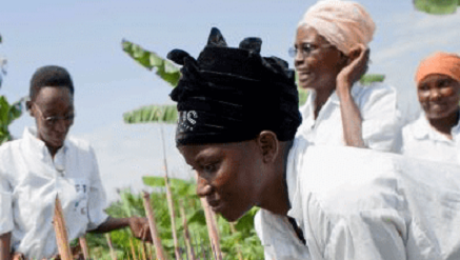
Impact evaluations can produce useful insights on how to design programs and policies that can increase women’s and girls’ empowerment and help us better understand the process of empowerment itself. Yet, it can be challenging to design a measurement strategy and to identify indicators that capture changes in empowerment, that are tailored to the local context, and that minimize reporting bias. Pulling insights from diverse disciplines and the experience of J-PAL affiliated researchers around the world, this guide offers practical tips for overcoming these challenges in impact evaluations. We emphasize the importance of conducting in-depth formative research to understand gender dynamics in the specific context before starting an evaluation, developing locally tailored indicators to complement internationally standardized ones, and reducing the potential for reporting bias in our instruments and data collection plan. We do not provide a single set of ready-to-go survey instruments; instead, we outline a process for developing indicators appropriate to each study along with extensive examples. In this way, we hope this guide can help provide researchers and practitioners the tools to select or develop their own indicators of empowerment that are right for their impact evaluations.
- Published in GUIDE/TOOLS/MANUALS
A practical guide to measuring women’s and girls’ empowerment in impact evaluations
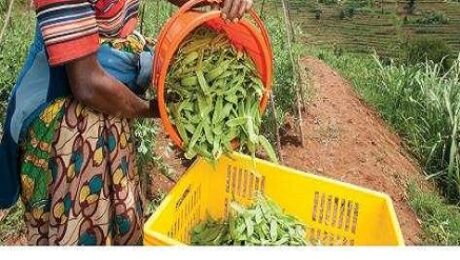
Impact evaluations can produce useful insights on how to design programs and policies that can increase women’s and girls’ empowerment and help us better understand the process of empowerment itself. Yet, it can be challenging to design a measurement strategy and to identify indicators that capture changes in empowerment, that are tailored to the local context, and that minimize reporting bias. Pulling insights from diverse disciplines and the experience of J-PAL affiliated researchers around the world, this guide offers practical tips for overcoming these challenges in impact evaluations. We emphasize the importance of conducting in-depth formative research to understand gender dynamics in the specific context before starting an evaluation, developing locally tailored indicators to complement internationally standardized ones, and reducing the potential for reporting bias in our instruments and data collection plan. We do not provide a single set of ready-to-go survey instruments; instead, we outline a process for developing indicators appropriate to each study along with extensive examples. In this way, we hope this guide can help provide researchers and practitioners the tools to select or develop their own indicators of empowerment that are right for their impact evaluations.
- Published in GENDER, GUIDE/TOOLS/MANUALS
Key Questions in Biodiversity | A Study and Revision Guide

This guide lays out the importance of genetic resources to protect human needs, by explaining how they underpin our food and nutritional security while sustaining our environments. It also explains how the public and private sectors can work together to conserve and share the benefits of these critical resources for future generations.
- Published in GUIDE/TOOLS/MANUALS
A Guide to Genetic Resources
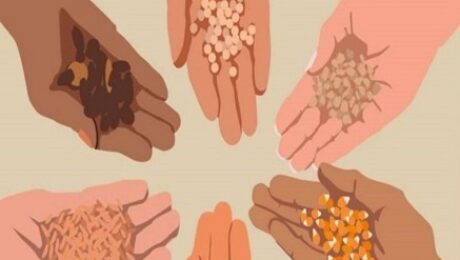
This guide lays out the importance of genetic resources to protect human needs, by explaining how they underpin our food and nutritional security while sustaining our environments. It also explains how the public and private sectors can work together to conserve and share the benefits of these critical resources for future generations.
- Published in GUIDE/TOOLS/MANUALS, ICTs
Guidelines on data disaggregation for SDG Indicators using survey data
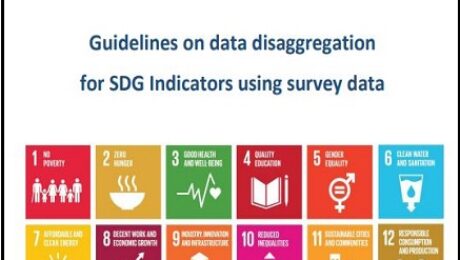
the working group on data disaggregation, the Food and Agriculture Organization of the United Nations (FAO) has taken numerous steps towards supporting Member Countries in the production of disaggregated estimates. Within this framework, these Guidelines offer methodological and practical guidance for the production of direct and indirect disaggregated estimates of SDG indicators having surveys as their main or preferred data source. Furthermore, the publication provides tools to assess the accuracy of these estimates and presents strategies for the improvement of output quality, including Small Area Estimation methods.
- Published in GUIDE/TOOLS/MANUALS, ICTs
Training Module on Facilitation for Development
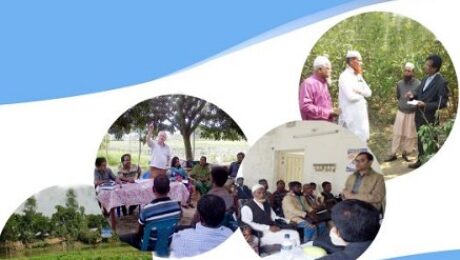
Development is the process of change and facilitation helps in accelerating this process through the change agents‘ or the extension service provider. While working with farmers, agri-traders and processors, facilitation refers to promote group learning, building consensus and enhancing participation in collective actions. A facilitator has multidimensional roles to play.
The module has been prepared to assist facilitators/ trainers engaged in training of agricultural extension and advisory services (EAS) staff and other mediators on facilitation for development by enhancing their knowledge on how to facilitate change in individuals, groups and organizations and also to facilitate multi-stakeholder engagements through brokering strategic partnerships and networking. While working through this module the trainers will find the relevance of facilitation for development in the context of agricultural innovation services (AIS).
- Published in GUIDE/TOOLS/MANUALS
A practical tool to enhance the chances of success of digital agriculture interventions for sustainable development in Africa and India
Effective and sustainable tools, mechanisms and strategies are needed to significantly improve the prevailing agricultural productivity, farmer remuneration, and food availability globally to be able to meet the food, livelihood, and nutritional needs of the projected population in coming decades. Digital agriculture has the potential to efficiently bring together the benefits of the advances in agricultural research and the developments in information and communication technology space to help positively transform the entire spectrum of pre-farm to post-fork activities in the agriculture sector. Through interactions with over 338 stakeholders across India and Africa, supplemented with study of various digital agricultural interventions across the globe, the author observed that most digital agricultural interventions did not succeed, causing great loss of time and resources, which the world can ill afford. The world is falling behind on achieving the Sustainable Development Goals (SDGs). Drawing lessons from the failures and successes of the past digital agricultural interventions, the author has developed an innovative MS Excel tool called HeDAPSEE, to help estimate the success of a digital agricultural intervention before implementing it. This can help strengthen it in planning stages and enhance its chances of success.
- Published in GUIDE/TOOLS/MANUALS, ICTs