
Taking a snapshot of Extension and Advisory Systems performance and outcomes

To evaluate pluralistic Extension and Advisory Services (EAS) systems performance and outcomes, and share the experiences made with applying a participatory semi-quantitative approach allowing for cross-country comparability.
Results revealed an overall weak performance on most assessed criteria. Experts pointed out a lack of adequate policies addressing agricultural extension, insufficient funding, and poor infrastructure. On the other hand, the increased focus on sustainability, increased inclusiveness levels, and steady uptake of digitalization technologies are areas where progress was recently made. On the outcomes side, users perceived EAS contributed mainly to acquiring technical skills, while less to entrepreneurial and social skills.
- Published in MONITORING & EVALUATION
Methodological recommendations to better evaluate the effects of farmer field schools mobilized to support agroecological transitions
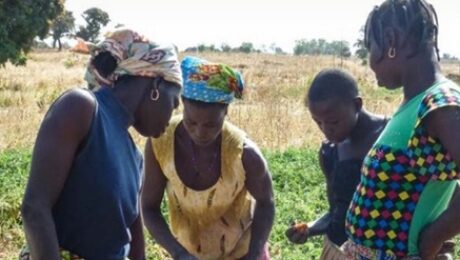
The farmer field school (FFS) approach, based on group experimentation of innovative practices and/or farming systems, is in line with participatory farm advisory efforts. This approach has an ambitious goal: strengthening farmers’ skills so that they can adapt their practices, or even invent new ones, and move towards more agroecological farming systems. Assessing such an advisory intervention poses significant challenges. The purpose of this document is to propose fresh ways to update FFS assessment methods, notably the study of changes in farming practices and the detailed analysis of FFS outcomes. Project designers, managers, and evaluators are the target audience for this document, which may also interest teachers, researchers, students, and policymakers. The elements of the FFS assessment methodology presented here stem from the collaboration between three institutions, CIRAD, FAO (Food and Agriculture Organization of the United Nations), and the NGO AVSF (Agronomists and Veterinarians Without Borders), and fieldwork carried out in cotton-growing areas of Burkina Faso and Togo between 2018 and 2019.
This document is divided into four parts. We first define FSS and the principles of the approach, then we detail the methods commonly used to assess FSS and the challenges involved. We then present a comprehensive assessment method using a case study in northern Togo. The final part of the report provides a basis for placing the proposed method within the process of designing an assessment for a project involving FSS.
- Published in MONITORING & EVALUATION
Achieving Rural Transformation: Results and Lessons from IFAD Impact Assessments

This synthesis draws on 17 recent IFAD Impact Assessments conducted in various countries and production systems to analyse project activities and theories of change.
Overall, this synthesis aims to inform IFAD’s stakeholders about the typology of projects evaluated and lessons learned from them to improve the design of similar future projects and to draw insights into successful drivers of rural transformation.
- Published in MONITORING & EVALUATION
Design and monitor nutrition-sensitive agriculture and food systems programmes
This fact sheet describes the fourth of a series of e-learning courses on Nutrition and Food Systems, which will guide you through the steps required to design of a nutrition-sensitive agriculture and food system programme. By the end of the course, you will be aware of key issues to consider at each step and be equipped with tools to address them.
- Published in MONITORING & EVALUATION, NUTRITION
An integrated approach to ex-post impact assessment
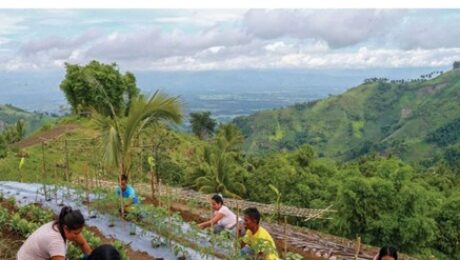
In commissioning this impact evaluation, ACIAR and the Philippine Council for Agriculture, Aquatic and Natural Resources Research and Development (PCAARRD) designed a process that would enable us to jointly review identify, develop and apply impact assessment approaches that explore multiple impacts of complex agricultural research for development investments, including economic, social, environmental, policy and capacity impacts.
The evaluation, published as An integrated approach to ex-post impact assessment, ACIAR Impact Assessment Report No. 102, has 2 parts. Part 1 provides a framework to guide an integrated approach to ex-post impact assessment. It includes insights and lessons from the process of collaboratively developing this framework and in trialling such an approach.
Part 2 provides an example of how the framework was applied to Landcare projects in the Philippines. This section details the experiences of the University of the Philippines, Los Baños and Visayas State University in implementing the integrated approach to impact assessment outlined in Part 1. Part 2 also includes reflections and implications from the Philippines team, based on their experiences implementing the approach.
- Published in MONITORING & EVALUATION
Evaluation of the project “Increasing smallholder productivity and profitability”
FAO’s “Increasing smallholder productivity and profitability” (ISPP) project funded by the United States Agency for International Development (USAID) and implemented by FAO in Kenya had the objective to improve livelihoods through enhanced productivity, market linkages and better nutrition. The evaluation assessed the relevance of the project and the achievement and sustainability of results. The evaluation found increased technical capacity among farmers, but significant limitations to apply the knowledge. Increased access to diverse types of fruits and vegetables at household level was reported. Anecdotal evidence shows change of dietary habits. Farmers were trained on contract farming, negotiation skills, marketing strategies, financial access and agro-entrepreneurship, but access to markets remained a challenge across all value chains promoted, and equitability of support services could not be established. For future, similar projects, the recommendations include i) the establishment of a community-based collaboration platform to foster long-term sustainability; ii) framework and guidelines for gender mainstreaming; iii) enhancing operational transparency and adaptive management; iv) exit strategy with sustainability action plan; v) comprehensive support for access to markets; and vi) focus on monitoring, learning and evaluability when designing and implementing reporting mechanisms.
- Published in MONITORING & EVALUATION
Good practices for monitoring and evaluation of national phytosanitary systems
This publication seeks to support practitioners by providing methodological guidelines for conducting rigorous impact assessments of Home Grown School Feeding (HGSF) programmes. It presents an overview of the main technical issues to be addressed depending on the characteristics of the context and of the intervention itself. While these guidelines are mainly designed for monitoring and evaluation officers working for United Nations agencies, local governments or non-governmental organizations, its contents can be of interest to a wider audience of policymakers, researchers and practitioners interested in multi-sectoral, complex programmes linking agriculture and nutrition.
- Published in MONITORING & EVALUATION
Impact evaluation of home-grown school feeding programmes

This publication seeks to support practitioners by providing methodological guidelines for conducting rigorous impact assessments of Home Grown School Feeding (HGSF) programmes. It presents an overview of the main technical issues to be addressed depending on the characteristics of the context and of the intervention itself. While these guidelines are mainly designed for monitoring and evaluation officers working for United Nations agencies, local governments or non-governmental organizations, its contents can be of interest to a wider audience of policymakers, researchers and practitioners interested in multi-sectoral, complex programmes linking agriculture and nutrition.
- Published in MONITORING & EVALUATION
Evaluation of “Monitoring and Analysing Food and Agricultural policies – Phase II”
Governments have turned to FAO for support in identifying and assessing options for reforming policies on food and agriculture through the “Monitoring and Analysing Food and Agricultural Policies” (MAFAP) programme. While the first phase of FAO’s efforts concentrated more on conducting policy analysis and measuring public expenditures, this second phase built on the first phase’s outcomes to support policy reforms across Southern Asia and sub-Saharan Africa. MAFAP has been found to be an effective and well-positioned influencer of policy reforms in the agricultural sector. However, there are areas of improvement for this programme, including: i) increased resources to better address increasing policy support demand; ii) more strategic planning; iii) more formal institutionalization and more engagement with civil society and the private sector; iv) more coherence at country level in conducting preliminary analysis; and v) improvement to its knowledge management system in order not to lose its institutional memory.
- Published in MONITORING & EVALUATION
Evaluation of the project “Integrated national monitoring and assessment system on forest ecosystems (SIMEF)

Chile has a native forest that constitutes 18 percent of its continental surface area and over 60 million hectares of protected areas. The country is considered a global hotspot of conservation priority due to its endemism and a high degree of habitat loss. The loss of ecosystems could increase if economic development does not progressively adopt sustainability standards that create less of an impact on biodiversity. From August 2015 to May 2020, FAO implemented the project in order “to develop and implement an integrated monitoring and assessment system on carbon stocks and biodiversity in forest ecosystems (SIMEF) supporting the National Greenhouse Gases Inventory (INGEI) and the design of policies, regulations and SFM practices incorporating the REDD+ Programme and biodiversity conservation in forest ecosystems”. The project established sound foundations that improve the monitoring of the conditions of forest ecosystems and, consequently, more robust information is generated and with greater frequency. It is worth highlighting the creation of an interinstitutional structure that will support the continuity of the SIMEF and the creation of a digital platform with five tools. The SIMEF is, at present, a regular programme of the Chilean State with a governance system and with a permanent annual budget. Given this, the sustainability of the achievements made in the project can be maintained and strengthened. However, a low level of appropriation of the system at local level was identified, which could affect its sustainability.
- Published in MONITORING & EVALUATION