
Rethinking Resilience: Adapting to a Changing Climate

Climate change is accelerating, and harmful weather events—such as extreme storms, droughts, heat waves, or wildfires—are becoming more frequent and severe. Lower-income countries suffer more deaths and lasting losses from disasters than richer countries. Climate shocks push vulnerable households into poverty and cause small businesses to fail, reversing development gains.
“Rethinking Resilience” urges developing countries to adopt policies that empower individuals, households, farms, and firms to take proactive measures. Current approaches rely too heavily on government programs and investments, such as subsidies and cash transfers, which are reactive rather than preventive. Developing economies lack the resources of high-income countries, making them more vulnerable.
- Published in CLIMATE CHANGE, NEW PUBLICATIONS
Dietary diversity and its associated factors among rural labourers in South India

Malnutrition continues to be a major global health challenge affecting millions of vulnerable populations across countries. Despite their critical contribution to agricultural productivity, limited evidence exists regarding the dietary diversity and nutritional status of rural labourers in South India. Therefore, the present study aimed to assess dietary diversity and its associated factors among rural labourers in South India.
- Published in NUTRITION
Operational guide on agroecology
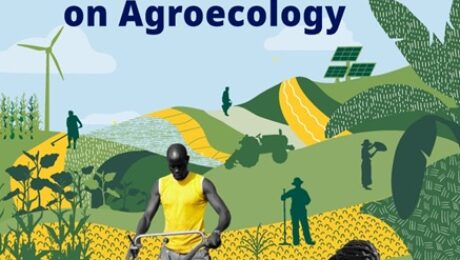
Agroecology is a polysemic concept whose contours have evolved over almost a century. There is not a single definition but a large number that reflect the concerns and commitments of the different authors and practitioners. Thus, the scientific and technical perspective adopted by the High Level Panel of Experts (HLPE) in 2016 when it described agroecology as ‘the application of ecological concepts and principles to agricultural systems, focusing on the interactions between plants, animals, humans and the environment, to foster sustainable agricultural development in order to ensure food and nutrition security for all today and tomorrow’ has become too restrictive. Indeed, the concept has become more complex as it addresses agri-food systems as a whole, and not just agricultural systems, by overcoming the divide between the scientific and technical dimensions of agroecology and its social and political dimensions, and by adopting a holistic perspective. The resulting concept of agroecology, which is widely shared today, is that of a transdisciplinary, participatory and action-oriented approach, relating at the same time to a transdisciplinary science, a set of practices and a social movement.
- Published in AGROECOLOGY
From Digital Divide to Opportunity
As the digital revolution proceeds, it becomes critical to understand the impacts on productivity and income, but also impacts on smallholders across a spectrum of sociodemographic groups, and unintended environmental externalities. The digital transformation of agriculture is multi-faceted. Concentrating on just one or a few aspects is insufficient. Challenges include infrastructure access (electricity, mobile, or internet connectivity), affordability (ability to pay for digital tools and services), awareness, skills and literacy (Roberts and Hernandez 2019). Certain groups—such as women, rural youth, the poor, and people with disabilities or limited formal education—face greater barriers to digitalization (Staab et al. 2024).
Without the understanding to transform inequalities, digitalization could deepen gender inequalities and even create new forms of discrimination (Staab et al. 2024; Sterling 2021). Some fear that digitalization might even make for a new form of gender inequality (Judy Wajcman et al., 2020). As the CGIAR institutionalizes digital innovations to drive transformative changes in FLWs, it is crucial to understand and address gender inequality and social exclusion, so that digital innovations can catalyze greater social inclusion.
- Published in ICTs
Financial Inclusion in Food, Land and Water Systems: What Works for Women?
This brief draws on distilled evidence from research and practice from CGIAR and beyond to highlight how to design financial products, approaches and processes to reach, benefit and empower women through financial inclusion.
Women across Low- and Middle-Income Countries (LMICs) contribute to food, land and water systems (FLWS) as agricultural producers, entrepreneurs, consumers, and conservationists. They produce 60 to 80 percent of the food in most developing countries, are responsible for half of the world’s food production but remain disproportionately excluded from financial services. 742 million rural women who are also least educated, among the poorest and have low or no access to mobile phones are left out of formal financial services, globally. This exclusion discounts their essential roles in the sector, stymies their potential, and hinders their well-being and that of their households and communities. Barriers to women’s financial inclusion include lack of collateral, cumbersome documentation and procedural requirements, legal discrimination, financial illiteracy, discriminatory social norms, financial risk aversion and lack of gender disaggregated data. Financial service providers generally view rural women as risky or unprofitable, moreover, financial services are poorly adapted for low-literacy, low-income women.
- Published in GENDER, NEW PUBLICATIONS
Investigating the roles and challenges of female extension workers: a systematic review

As the demographics of farming communities change and innovations evolve, the role of female extension workers becomes more critical, especially in reaching out to women farmers who are often primary agricultural laborers in rural households and supporting them to adopt new practices and technologies. This study investigates how the roles and challenges of female extension workers are represented in the literature and what assumptions and implications underpin these representations.
- Published in GENDER, NEW PUBLICATIONS
Smart Agricultural Technology

Agriculture is undergoing a rapid digital transformation that challenges its ecological, social, and ethical foundations. A total of 136 documents were analysed through bibliometric and thematic synthesis. Results show that A5.0 represents a philosophical and structural evolution beyond the efficiency-oriented logic of A4.0, integrating distributed computing, explainable artificial intelligence, digital twins, and collaborative robotics within ecologically restorative and socially inclusive frameworks. However, while A5.0 strengthens resource efficiency, resilience, and certain social segments through open-source technologies and participatory design, gaps remain in policy coherence, emotional engagement, and human–machine co-learning. To address these, the study proposes two complementary agroecological principles, cognitive symbiosis and emotional ecology, emphasising shared intelligence and affective stewardship between humans, machines, and ecosystems. Overall, Agriculture 5.0 reframes digitalisation as a human-ecological partnership that can operationalise agroecology’s ethical goals if governed by inclusion, transparency, and regeneration rather than control and optimisation.
- Published in AGROECOLOGY, NEW PUBLICATIONS
Training Module on Value Chain Extension

Agriculture is critical tothe overall development and transformation of Odisha. With crops covering 35 per cent of the state’s geographical area and more than 60 per cent of its workforce depending on farming for livelihood, the welfare of Odisha’s people cannot be separated from its agriculture. The State Government is keen to increase agricultural production and raise incomes and productivity by leveraging science and technology, improving resource use efficiency, diversifying to high value agriculture and supporting efficient functioning of agricultural markets.
- Published in GUIDE/TOOLS/MANUALS, VALUE CHAIN / MARKETS
Training Module on Facilitation for Development
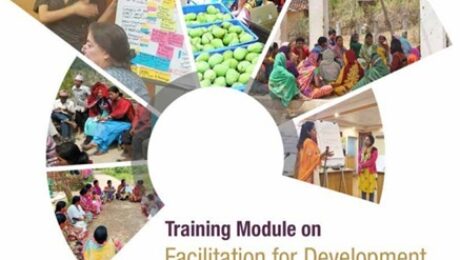
Agriculture is critical to the overall development and transformation of Odisha. With crops covering 35 per cent of the state’s geographical area and more than 60 per cent of its workforce depending on farming for livelihood, the welfare of Odisha’s people cannot be separated from its agriculture. The State Government is keen to increase agricultural production and raise incomes and productivity by leveraging science and technology, improving resource use efficiency, diversifying to high value agriculture and supporting efficient functioning of agricultural markets.
- Published in GUIDE/TOOLS/MANUALS
Training Module on Designing and Delivering Gender-Responsive Extension and Advisory Services (EAS)

The overall aim of this Manual is to develop capacities to identify, integrate, and address gender issues in Extension and Advisory Services (EAS). This Module is intended to assist trainers involved in training of agricultural extension and advisory services (EAS) staff and other knowledge mediators on designing and delivering a Gender-Responsive EAS.
- Published in GENDER, GUIDE/TOOLS/MANUALS