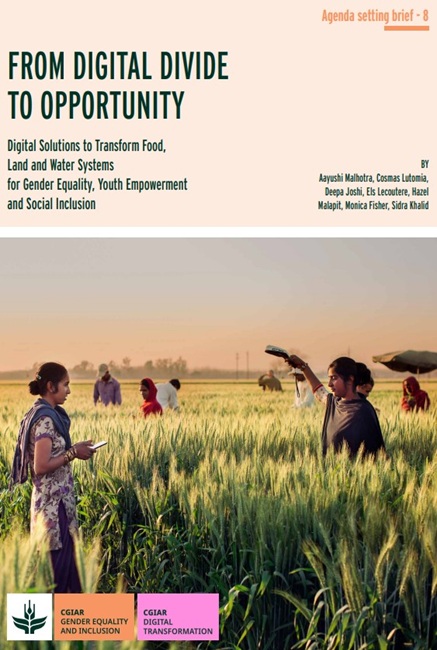
From Digital Divide to Opportunity
As the digital revolution proceeds, it becomes critical to understand the impacts on productivity and income, but also impacts on smallholders across a spectrum of sociodemographic groups, and unintended environmental externalities. The digital transformation of agriculture is multi-faceted. Concentrating on just one or a few aspects is insufficient. Challenges include infrastructure access (electricity, mobile, or internet connectivity), affordability (ability to pay for digital tools and services), awareness, skills and literacy (Roberts and Hernandez 2019). Certain groups—such as women, rural youth, the poor, and people with disabilities or limited formal education—face greater barriers to digitalization (Staab et al. 2024).
Without the understanding to transform inequalities, digitalization could deepen gender inequalities and even create new forms of discrimination (Staab et al. 2024; Sterling 2021). Some fear that digitalization might even make for a new form of gender inequality (Judy Wajcman et al., 2020). As the CGIAR institutionalizes digital innovations to drive transformative changes in FLWs, it is crucial to understand and address gender inequality and social exclusion, so that digital innovations can catalyze greater social inclusion.